
[ad_1]
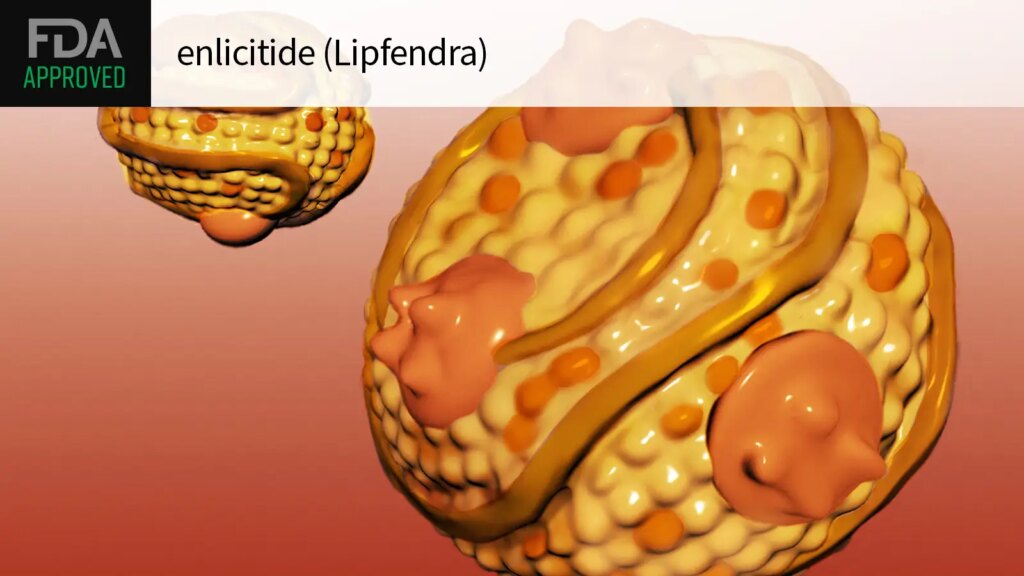
The FDA approved enlicitide (Lipfendra) as the first oral PCSK9 inhibitor for lowering cholesterol.
Enlicitide is now approved as an adjunct to diet and exercise to reduce LDL cholesterol in adults with high cholesterol or heterozygous familial hypercholesterolemia (HeFH).
Enlicitide comes as a 20-mg tablet taken by mouth once a day, the suggestion being after a 6- to 8-hour fast and then avoiding food for 30 minutes after taking the pill.
The drug’s approval was based on CORALreef Lipids and CORALreef HeFH, two phase III trials in which enlicitide slashed LDL cholesterol by 56% and 59%, respectively, against placebo at week 24. CORALreef Lipids and CORALreef HeFH together counted 3,207 participants with severe hypercholesterolemia, the former enrolling adults with a history or at high risk of atherosclerotic cardiovascular disease and the latter only HeFH patients.
Another phase III trial, CORALreef AddOn, had also shown enlicitide’s cholesterol-lowering efficacy when compared with oral nonstatin therapies ezetimibe (Zetia), bempedoic acid (Nexletol), or both in combination (Nexlizet).
Enlicitide’s approval thus marks the arrival of another nonstatin treatment for high LDL cholesterol, a major risk factor for atherosclerotic cardiovascular disease, the leading cause of death worldwide.
“Although we have a number of lipid-lowering therapies that effectively lower LDL cholesterol, the majority of patients, even our highest-risk patients with atherosclerotic cardiovascular disease, fail to reach LDL cholesterol goals,” said Ann Marie Navar, MD, PhD, of the University of Texas Southwestern Medical Center in Dallas, in a presentation of CORALreef Lipids’ results at last year’s American Heart Association meeting.
“Some of the most powerful agents we have after statins are PCSK9 inhibitors. But, unfortunately, the injectable PCSK9 inhibitors that are currently available remain remarkably underutilized,” Navar said.
Indeed, existing PCKS9 drugs have the downside of being needle-based, limiting their accessibility. These include the monoclonal antibodies evolocumab (Repatha) and alirocumab (Praluent), the small interfering RNA therapy inclisiran (Leqvio), and the adnectin-based lerodalcibep (Lerochol).
Meanwhile, statins — still considered the cornerstone cholesterol-lowering medicines — have been blamed for muscle pain and weakness. Controversially, statin product labels also list other adverse events such as abnormal liver transaminases, other liver function test abnormalities, urinary composition alteration, and edema.
The FDA noted that no excess safety events occurred with enlicitide in CORALreef Lipids. In CORALreef HeFH, diarrhea and dizziness occurred more frequently with the oral PCSK9 inhibitor than with placebo.
Please enable JavaScript to view the comments powered by Disqus.
[ad_2]
Source link : https://www.medpagetoday.com/cardiology/generalcardiology/122217
Author :
Publish date : 2026-07-16 17:18:00
Copyright for syndicated content belongs to the linked Source.