
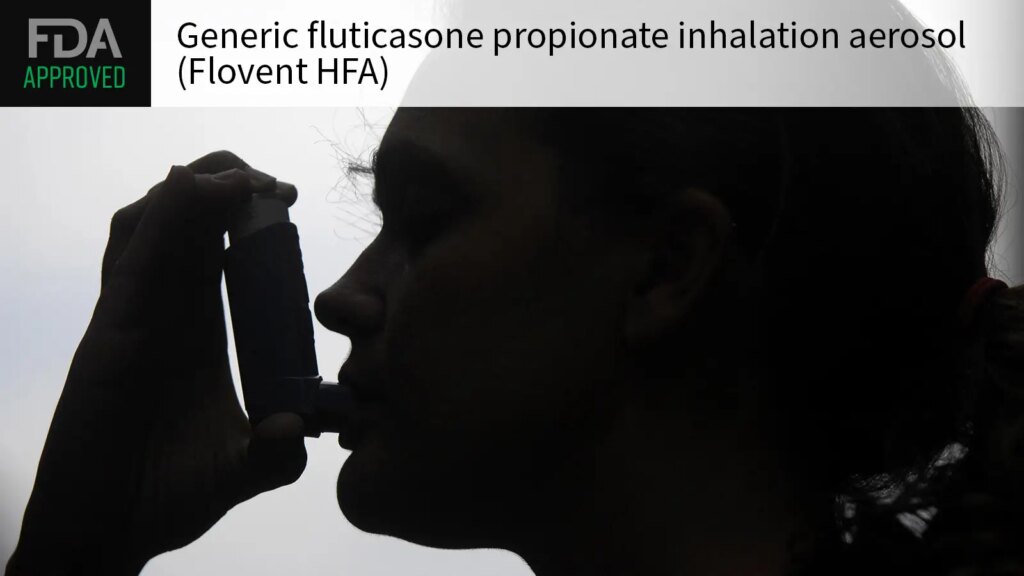
The FDA has approved a generic form of fluticasone propionate inhalation aerosol (Flovent HFA) as a prophylactic maintenance treatment for asthma, the agency announced on Tuesday.
Delivered as a metered-dose inhaler, the generic contains 44 mcg of the corticosteroid per actuation and is indicated for adults and kids as young as 4 years with asthma, a condition that affects roughly 20 million adults and 4.6 million kids in the U.S.
“Today’s approval of the first generic fluticasone propionate inhalation aerosol represents an important step in expanding access to affordable asthma treatment,” said Iilun Murphy, MD, the FDA’s top official for generic drugs.
The approval comes roughly 2 years after the controversial withdrawal of brand-name Flovent products from the market. The move by drugmaker GSK, which introduced authorized generics for the metered-dose inhaler formulation and a dry powder inhaler (Flovent Diskus), forced some patients to switch treatment due to insurance hurdles and led to a Senate investigation. (Of note, authorized generics do not require a separate FDA approval.)
One study found that after the exit, kids who had been using the brand-name versions were more likely to stop inhaled steroids for asthma completely.
The new generic should be available as soon as this month, according to maker Glenmark Specialty SA.
Clinical trial data supporting the initial fluticasone propionate approval showed improvements in lung function, as measured by forced expiratory volume in 1 second, and typical asthma symptoms such as wheezing or shortness of breath. Regular maintenance use of the inhaled corticosteroid has been linked to fewer asthma-related hospitalizations and need for intensive care, the FDA noted.
Safety information for the generic is the same as the branded product.
Common adverse events associated with fluticasone propionate, as noted in the drug labeling, include upper respiratory tract infections or inflammation, throat irritation, sinusitis, dysphonia, candidiasis, cough, bronchitis, and headache.
It is contraindicated for the primary treatment of acute episodes of asthma that need intensive measures or for status asthmaticus.
Warnings and precautions include risks for Candida albicans infections in the mouth or throat, worsening of existing infections (including leading to more serious or even fatal chickenpox or measles cases), and development of glaucoma or cataracts after long-term use. Prescribing information also warns about the risk for impaired adrenal function after switching from systemic corticosteroids, hypercorticism and adrenal suppression, and the need to monitor bone mineral density and growth in kids.
Please enable JavaScript to view the comments powered by Disqus.
Source link : https://www.medpagetoday.com/pulmonology/asthma/120159
Author :
Publish date : 2026-03-04 18:12:00
Copyright for syndicated content belongs to the linked Source.