
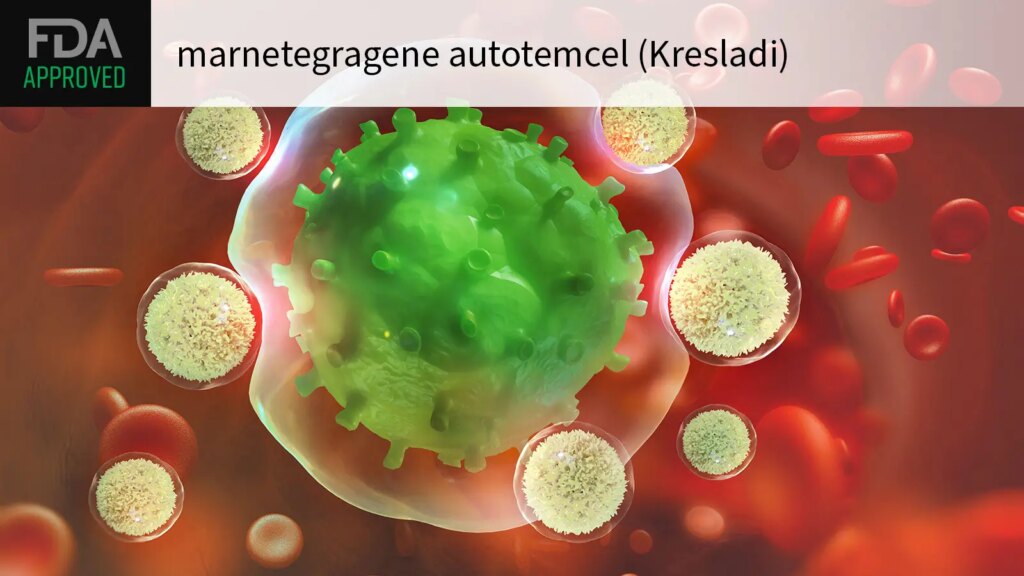
The FDA on Thursday granted accelerated approval to marnetegragene autotemcel (Kresladi) as the first gene therapy for treating kids with severe leukocyte adhesion deficiency type I (LAD-I), an ultra-rare inherited immune deficiency.
Approval stipulates use in LAD-I cases caused by biallelic variants in the ITGB2 gene and in which no human leukocyte antigen (HLA)-matched sibling donor is available for allogeneic hematopoietic stem cell transplant.
LAD-I has an estimated incidence of 1 per 100,000-200,000 live births, and the disorder brings substantial morbidity and mortality in a child’s first decade of life. Roughly two-thirds of patients have the severe form of the disease, which is characterized by recurrent, life-threatening infections that don’t respond well to antimicrobials and time spent in and out of hospitals.
Using patients’ own genetically modified stem cells, a single infusion of marnetegragene autotemcel is administered to introduce functional copies of ITGB2 and help patients fight off infections by restoring CD18 and CD11a cell surface expression in white blood cells, including neutrophils.
CD18 is “a key protein that is expressed along CD11 integrins to facilitate leukocyte adhesion to the blood vessel wall and migration to tissues to confine and clear infections and orchestrate wound repair,” according to drugmaker Rocket Pharmaceuticals.
An open-label, single-arm phase I/II trial supporting approval showed that following stem cell mobilization and myeloablative conditioning, the autologous hematopoietic stem cell-based gene therapy led to an increase in neutrophil CD18 and CD11a surface expression at 1 year post-infusion. Expression of the LAD-I-specific biomarkers of improved immune activity were sustained at 2 years.
“As a clinician, I have seen firsthand the serious impact that severe LAD-I can have on young children and their families,” investigator Donald Kohn, MD, of the University of California Los Angeles, said in a press release from the drugmaker. “The approval of Kresladi represents the culmination of many years of scientific research and clinical collaboration aimed at addressing the underlying cause of this devastating disease.”
FDA said that continued approval may be contingent on a confirmatory trial to verify clinical benefit.
Common adverse events (30% or more) cited in the labeling included mucositis; viral, skin, device-related, and upper respiratory tract infections; febrile neutropenia; skin lesions; nausea or vomiting; dermatitis; pyrexia; decreases in hemoglobin, leukocytes, platelets, and neutrophils; and increases in liver enzymes.
The warnings and precaution section notes potential risks of serious infections, veno-occlusive disease, neutrophil engraftment failure or delayed platelet engraftment, lentiviral vector-mediated insertional oncogenesis, and hypersensitivity reactions.
Please enable JavaScript to view the comments powered by Disqus.
Source link : https://www.medpagetoday.com/genetics/generalgenetics/120525
Author :
Publish date : 2026-03-27 16:37:00
Copyright for syndicated content belongs to the linked Source.