
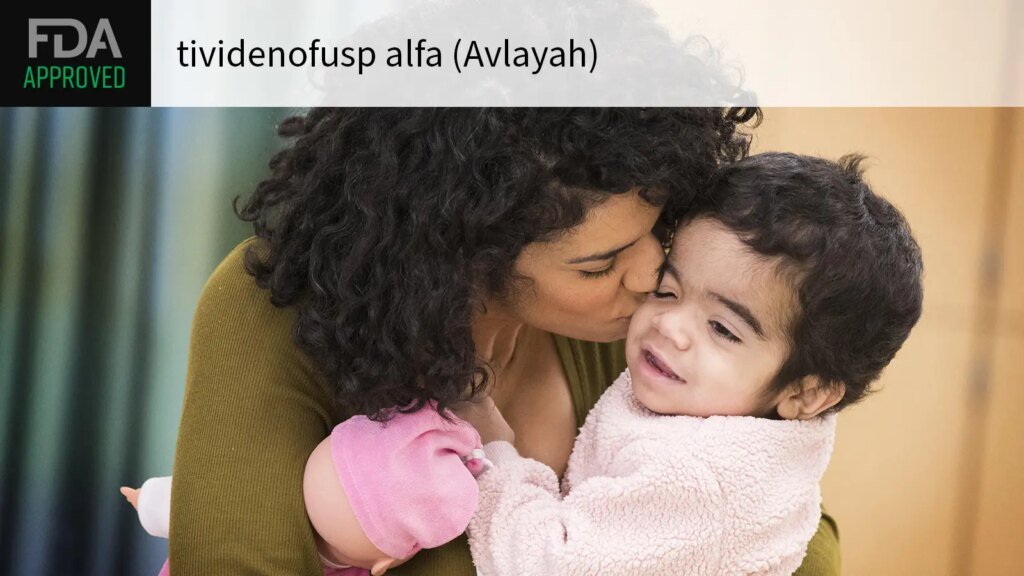
The FDA granted accelerated approval to tividenofusp alfa (Avlayah) for the treatment of mucopolysaccharidosis type II (MPS II), a rare disease also known as Hunter syndrome, the agency announced Wednesday.
The IV infusion, given once weekly, is approved to treat neurologic manifestations of MPS II when started in presymptomatic or symptomatic pediatric patients weighing at least 5 kg before advanced neurologic impairment.
The decision came on the heels of criticism about recent FDA rejections of treatments for other rare diseases, including Duchenne muscular dystrophy and Huntington’s disease.
“Today is a milestone day for children and their families battling Hunter syndrome,” said FDA Commissioner Marty Makary, MD, MPH.
“The FDA is capable of doing two things: one, exercising regulatory flexibility; and two, complying with our obligation under the law to approve drugs based on ‘substantial evidence’ of effectiveness,” Makary stated. “We will continue to do everything we can to accelerate treatments for rare diseases.”
MPS II is a lysosomal storage disorder in which glycosaminoglycans like heparan sulfate accumulate in tissue and in the central nervous system (CNS) because of a genetic deficiency in iduronate-2-sulfatase. The disorder affects an estimated 500 people in the U.S. and occurs only in males.
Replacement therapy with iduronate-2-sulfatase is available, but the enzyme can’t cross the blood-brain barrier. Tividenofusp alfa fuses iduronate 2-sulfatase to a proprietary transport vehicle platform that delivers iduronate 2-sulfatase to peripheral tissues and the CNS through receptor-mediated transcytosis across the blood-brain barrier.
The treatment is the first product approved to address neurologic complications of MPS II, said Tracy Beth Hoeg, MD, PhD, acting director of the FDA’s Center for Drug Evaluation and Research. Accelerated approval was based on a surrogate endpoint, reduction of cerebrospinal fluid (CSF) heparan sulfate, she noted.
“The drug’s application holder, Denali Therapeutics, is now conducting a randomized clinical trial that is more than 95% enrolled to evaluate the clinical benefit of this product,” Hoeg stated. “In the meantime, families with young children with Hunter syndrome will have access to a product that may favorably alter the course of the disease at the crucial time in life when there is the greatest potential for benefit.”
The FDA decision was supported by a phase I/II single-arm, open-label trial of 47 patients ages 3 months to 13 years with Hunter syndrome, in which tividenofusp alfa significantly reduced levels of CSF heparan sulfate.
At week 24, CSF heparan sulfate dropped by an average of 91% from baseline and 93% of patients had levels below the upper limit of normal. The most common adverse reactions were infusion-related reactions.
Prescribing information for tividenofusp alfa carries a boxed warning for hypersensitivity reactions including anaphylaxis. Patients should start therapy in a healthcare setting with appropriate medical monitoring and support measures, the FDA advised.
Other side effects associated with treatment included upper respiratory tract infection, ear infection, fever, anemia, cough, vomiting, diarrhea, rash, COVID-19, runny nose, nasal congestion, fall, headache, skin abrasion, and hives. Hemoglobin levels should be checked due to risk of anemia, and kidney function and urine protein levels should be monitored due to risk of membranous nephropathy, the FDA said.
Continued approval for tividenofusp alfa may be contingent on the results of the phase II/III COMPASS confirmatory trial, which is randomizing participants to either tividenofusp alfa or idursulfase (Elaprase).
In February, the FDA rejected another potential MPS II treatment, the gene therapy clemidsogene lanparvovec (RGX-121) from RegenxBio. The agency halted studies of RGX-111 and RGX-121, therapies designed to treat MPS I and MPS II, respectively, after a child treated in a clinical trial of RGX-111 developed a brain tumor. In its rejection letter to RegenxBio, the FDA questioned the appropriateness of CSF heparan sulfate D2S6 as a surrogate endpoint.
Please enable JavaScript to view the comments powered by Disqus.
Source link : https://www.medpagetoday.com/neurology/generalneurology/120510
Author :
Publish date : 2026-03-26 19:56:00
Copyright for syndicated content belongs to the linked Source.