
[ad_1]
- A new U.S. guideline covers the prevention, detection, evaluation, and management of cardiovascular-kidney-metabolic (CKM) syndrome.
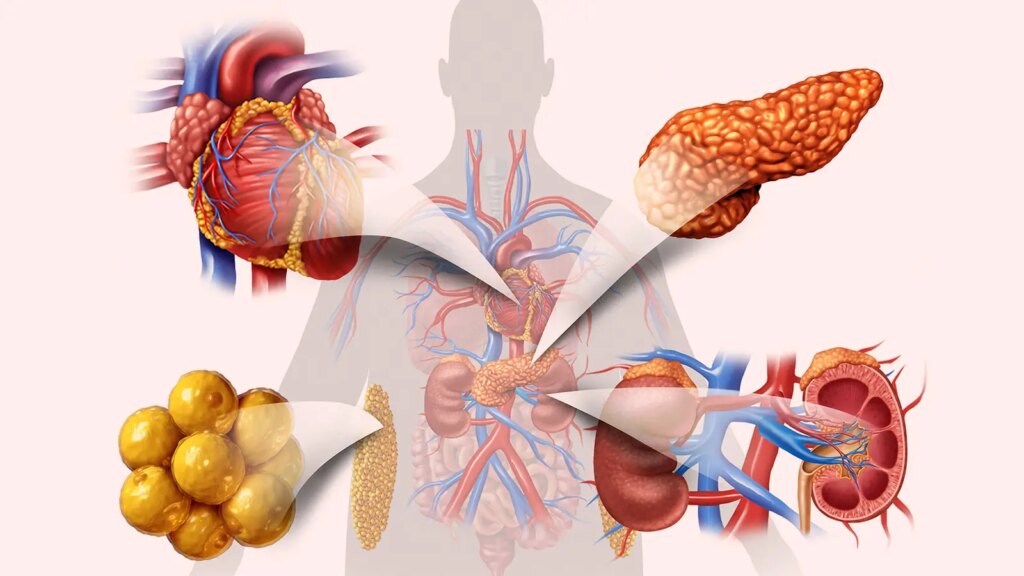
- CKM syndrome is defined as a health disorder stemming from connections among heart disease, kidney disease, diabetes, and obesity.
- Healthy lifestyle and weight management are strongly recommended for all patients, and GLP-1 drugs and other medications are also recommended starting in the early course of the condition.
The first dedicated U.S. guideline for cardiovascular-kidney-metabolic (CKM) syndrome makes a big push to unite primary and specialty care in managing large swaths of the population.
The American Heart Association (AHA) and the American College of Cardiology (ACC) now stress interdisciplinary collaboration among cardiologists, endocrinologists, nephrologists, and primary care clinicians caring for patients at various stages of or at risk for CKM syndrome in the new guideline, which was published in the Journal of the American College of Cardiology.
CKM syndrome is defined as a health disorder stemming from connections among heart disease, kidney disease, diabetes, and obesity. Nearly 90% of U.S. adults are said to have at least one CKM syndrome risk factor (e.g., excess weight, high blood pressure, abnormal lipids, high blood glucose, or reduced kidney function).
“The multisystem interplay highlighted in the CKM syndrome definition further supports the avoidance of siloed subspecialty care for the management of the component conditions within CKM syndrome, emphasizes the importance of screening for CKM syndrome in both primary care and relevant subspecialty clinics, and underscores the value of interdisciplinary collaboration,” noted Chiadi Ndumele, MD, PhD, of Johns Hopkins University School of Medicine in Baltimore, and co-authors.
The CKM syndrome framework was first introduced by the AHA in 2023. The new guideline replaces the one on overweight and obesity from 2013.
“Heart, kidney, and metabolic conditions don’t occur in isolation — they are deeply connected,” said Ndumele in a press release. “This guideline calls for earlier screening and care, focusing on prevention and coordinated action to reduce the risk of cardiovascular disease before serious complications develop or a major cardiac event occurs.”
The AHA and ACC say that, for starters, staging for CKM syndrome is now strongly endorsed in all youths and adults alike, with important assessments including metabolic risk factors, kidney function, and cardiovascular disease (CVD) status (class I recommendation).
Of note, the PREVENT outcome-specific equations are to be used to quantify 10-year risk related to CKM syndrome and to inform prevention strategies in people without CVD (class I); as for calculating 30-year risk, the PREVENT equations get a weaker recommendation (class IIa).
The guideline further describes how implications for monitoring and treatment vary depending on where a given person falls within the five-stage CKM syndrome framework.
For example, among adults without CKM syndrome (CKM stage 0), lipids, glycemia, and kidney function should be assessed at least every 5 years to ensure timely identification of CKM syndrome risk factors for optimal CVD prevention (class I). Recommended monitoring frequency increases to at least once every 2 to 3 years in individuals with overweight/obesity or prediabetes (CKM stage 1; class I), and once a year once metabolic risk factors and/or chronic kidney disease (CKD) enter the picture (CKM stage 2-3; class I).
Meanwhile, for all adults with or at risk for CKM syndrome, it is recommended that body mass index and waist circumference be measured at least annually to identify the risk for CKM stage progression (class I). It is also noted that blood pressure should be measured at least once a year, though a more focused blood pressure guideline already exists.
Additionally, healthy lifestyle and weight management are emphasized to avoid advancing CKM syndrome stages.
Add-on pharmacotherapy is also listed for some groups starting with the earliest stage of disease. GLP-1 receptor agonists are weakly recommended for CKM stage 1 for weight loss and improving blood sugar (class IIa) and non-GLP-1 medications are noted as reasonable for the purpose of weight loss (class IIb).
By CKM stage 2 or 3, SGLT2 inhibitors or GLP-1 receptor agonists are more strongly endorsed in patients who have type 2 diabetes with CVD or increased risk for CVD per the PREVENT risk equations (class I).
Meanwhile, for people with CKD and type 2 diabetes or CKD and albuminuria, renin-angiotensin system inhibitors and SGLT2 inhibitors are promoted as first-line therapy (both class I). If albuminuria persists among patients with CKD and type 2 diabetes, a nonsteroidal mineralocorticoid receptor antagonist or a GLP-1-based therapy may be added for further kidney and cardiovascular protection (both class I).
“The recommended approach is aligned with the overarching premise of targeting individuals at the highest absolute risk for the most intensive treatments,” wrote Ndumele and colleagues. “As such, individuals with CKD and T2D [type 2 diabetes] or CKD and albuminuria represent key benefit groups at high baseline absolute risk, with population-based analyses demonstrating that the overwhelming majority of individuals with CKD and T2D or albuminuria have a 10-year PREVENT-CVD score ≥7.5%.”
The CKM guideline was developed by the AHA and the ACC in collaboration with the American Diabetes Association, the Obesity Association, and the American Society of Nephrology.
Please enable JavaScript to view the comments powered by Disqus.
[ad_2]
Source link : https://www.medpagetoday.com/cardiology/generalcardiology/121681
Author :
Publish date : 2026-06-09 21:16:00
Copyright for syndicated content belongs to the linked Source.