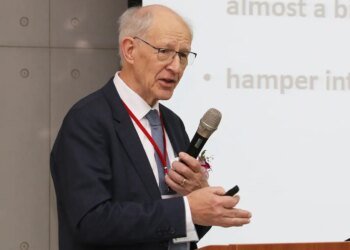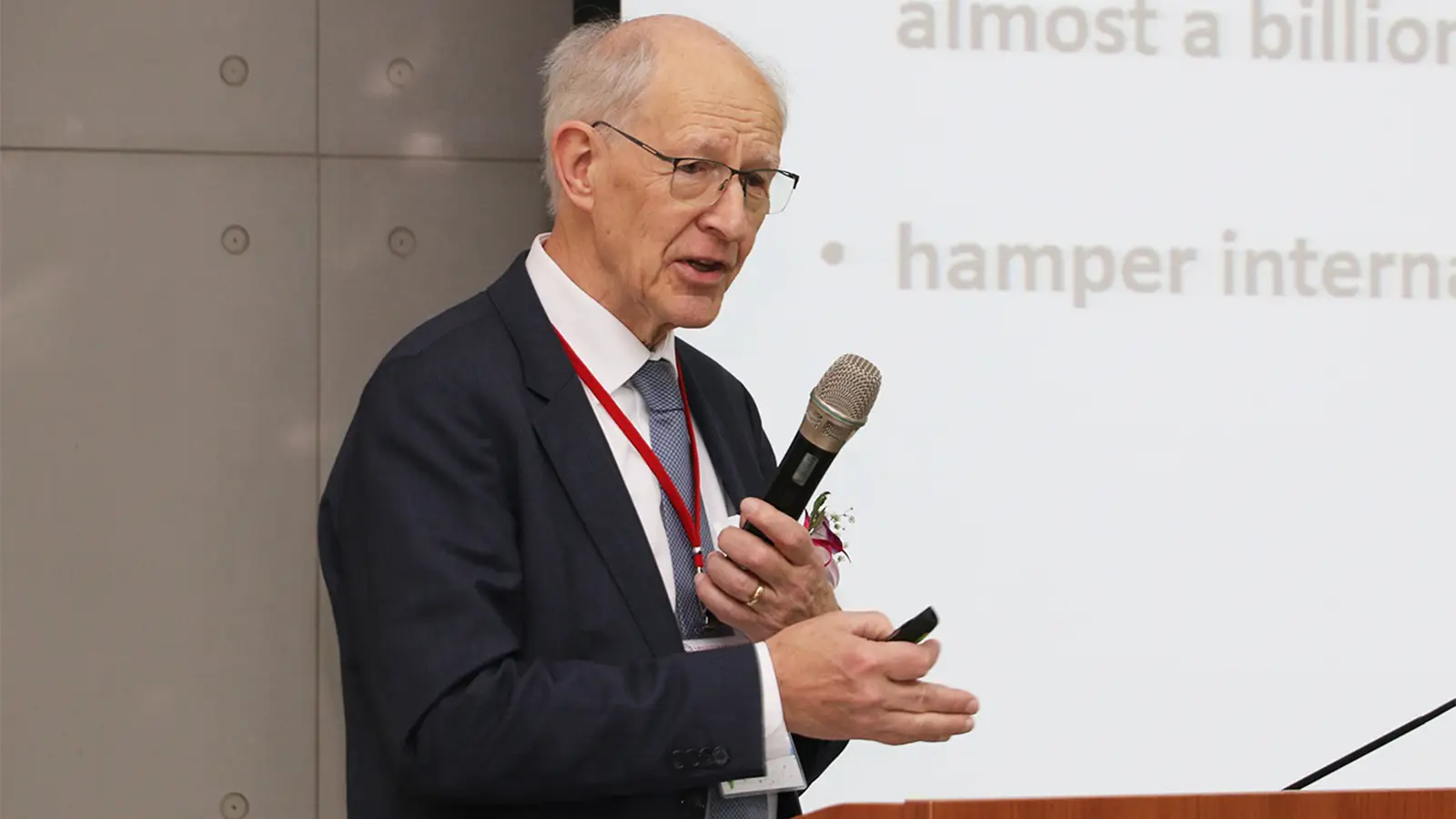
A scientist who pioneered the modern food processing safety standards used around the world was awarded this year’s World Food Prize, the organization announced Wednesday, crediting his work for averting millions of cases of foodborne illness and reducing food waste.
Huub Lelieveld, PhD, of the Netherlands earned the award after six decades spent advancing ways to improve food safety and advocating for trade regulations that allow safe food to get around the world more easily.
“I just did what I thought was right,” Lelieveld said in an interview with the Associated Press. “I want everybody to have enough food but … it should also be safe.”
Lelieveld began his career as a food researcher at Unilever at a time when mechanisms for manufacturing safe food products were, to him, “illogical,” he said.
Food was often sterilized or chemically preserved after production, and equipment needed to be shut off once or twice each day to be cleaned, which was both difficult and time consuming. The processed food also required heavy use of preservatives, salt, sugar, and acids to reduce the risk of contamination, which detracted from flavor and nutrition.
“I realized very soon that they did things in the wrong way, in my view,” Lelieveld said. “From the beginning, I’ve been working on … convincing people that you should do it in a different way.”
Lelieveld worked with colleagues to develop hygienic production methods and equipment, making food manufacturing more efficient and less reliant on chemicals.
Having scaled the processes at Unilever and shown that they worked, Lelieveld said the company gave him permission to publish the research for dissemination and use globally.
“My philosophy was: You should not compete on food safety,” Lelieveld said. “Spreading the technology, the hygienic technology, was very important.”
Unsafe food causes 600 million foodborne illnesses and 420,000 deaths each year, according to the World Health Organization.
“Lelieveld was selected for translating food safety science into global regulations, legislation, and practice, a movement spanning dozens of countries,” Gebisa Ejeta, PhD, chair of the Laureate selection committee, said in a statement. “His initiatives are estimated to have benefited millions of consumers worldwide.”
The Iowa-based World Food Prize was founded by Norman Borlaug, PhD, who received the Nobel Peace Prize in 1970 for his work to dramatically increase crop yields and reduce the threat of starvation in many countries. The agricultural science honor includes a $500,000 award.
“Lelieveld lives by his conviction that access to safe food is a universal right — a philosophy shared by the late Dr. Norman Borlaug,” Mashal Husain, World Food Prize Foundation president, said in a statement.
After four decades at Unilever, Lelieveld founded the Global Harmonization Initiative (GHI) in 2004 to promote consensus in food and trade regulations around the world. Drawing on a network of a few thousand scientists around the world, the nonprofit organization also works to address critical food security challenges and to facilitate food safety education.
GHI “is extremely useful because it has this enormous pool of knowledge about food safety and food protection,” Lelieveld said.
Lelieveld said challenges for broad access to safe food and water persist, and he hopes to see a system where people can produce safe food and water locally even if the movement of goods across borders is restricted.
“You can’t stop the transport of water through the air, with the clouds,” he said. “You can produce safe water everywhere, but we need to distribute this knowledge to the people that need it and that is the biggest challenge.”
Source link : https://www.medpagetoday.com/publichealthpolicy/publichealth/120487
Author :
Publish date : 2026-03-25 18:48:00
Copyright for syndicated content belongs to the linked Source.