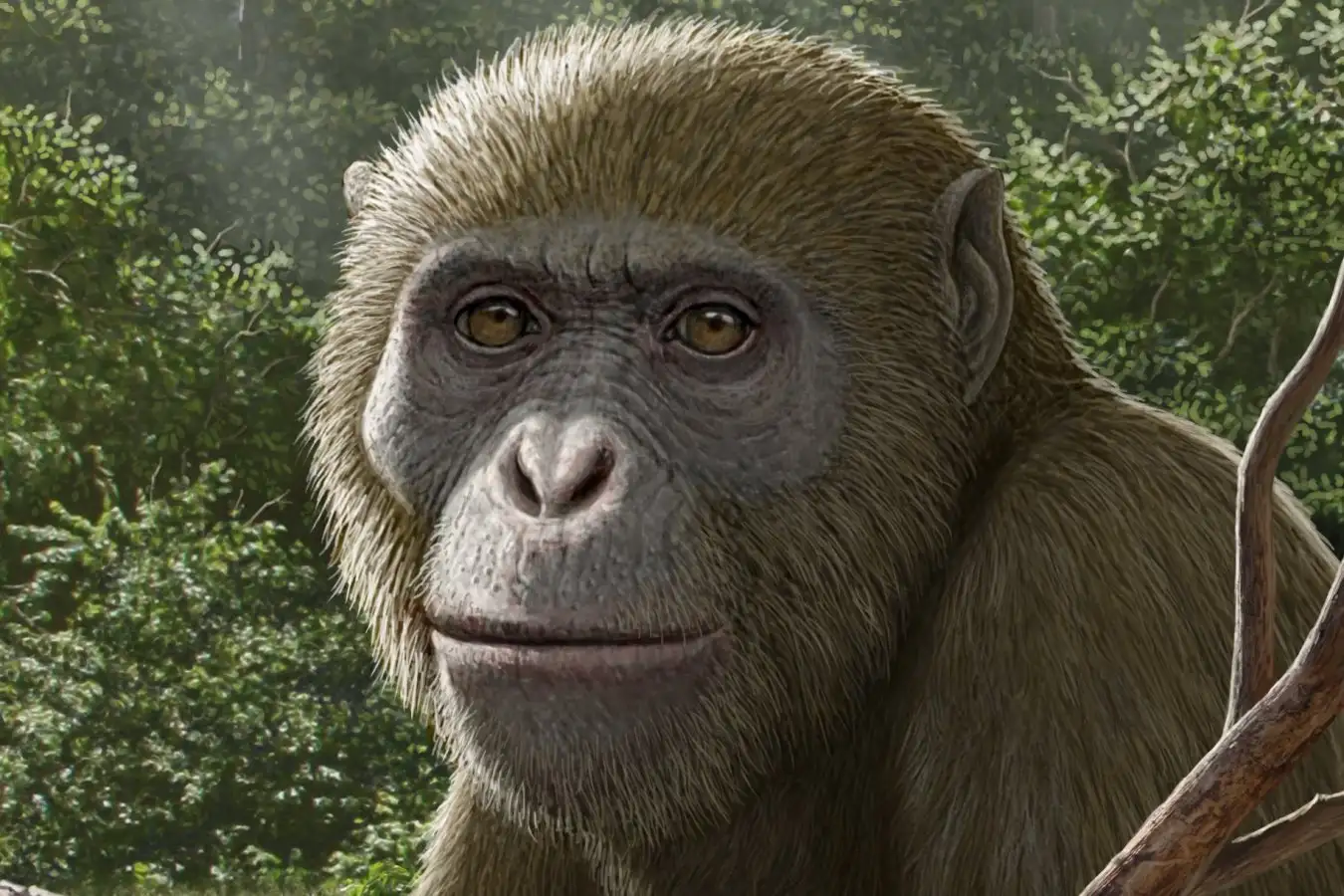
Artist’s reconstruction of Masripithecus moghraensis, an ape that lived around 17 million years ago
Mauricio Antón/Professor Hesham Sallam
A newly discovered ape species that lived around 17 million years ago suggests that the first apes may have evolved in North Africa, not East Africa as previously thought.
In 2023 and 2024, at the Wadi Moghra archaeological site in northern Egypt, Shorouq Al-Ashqar at Mansoura University, Egypt, and her colleagues found teeth and jawbones from two ancient apes in deposits dated to approximately 17 million to 18 million years old.
Altogether, the team found four specimens, including the front of a mandible, or jawbone, along with two molar teeth found next to it, belonging to one individual. The other fossil is a separate mandibular fragment, with no tooth crowns, from another individual.
Al-Ashqar and her colleagues think the animal, named Masripithecus moghraensis, is the closest known ancestor of all living great apes, including humans, gorillas and chimpanzees, and lesser apes such as gibbons and siamangs. Apes are distinguished from monkeys because they do not have tails.
The earliest apes are thought to have all evolved in Africa, but by 16 million years ago, some members of the group were living in Europe and Asia.
The surprise for researchers is that the fossils were found in North Africa rather than in the east of the continent, which is where the main leaps in ape evolution were previously thought to have taken place.
Al-Ashqar says the “clincher” for placing the creature as a hominoid was a combination of ape-like features in the mandible, particularly where the two halves of the mandible join, called the symphysis, which shows similarities in structure to later apes.
“The molars are also very telling — they are low, rounded and heavily crenulated [ridged],” she says. “Also, the second and third molars are nearly equal in size.”
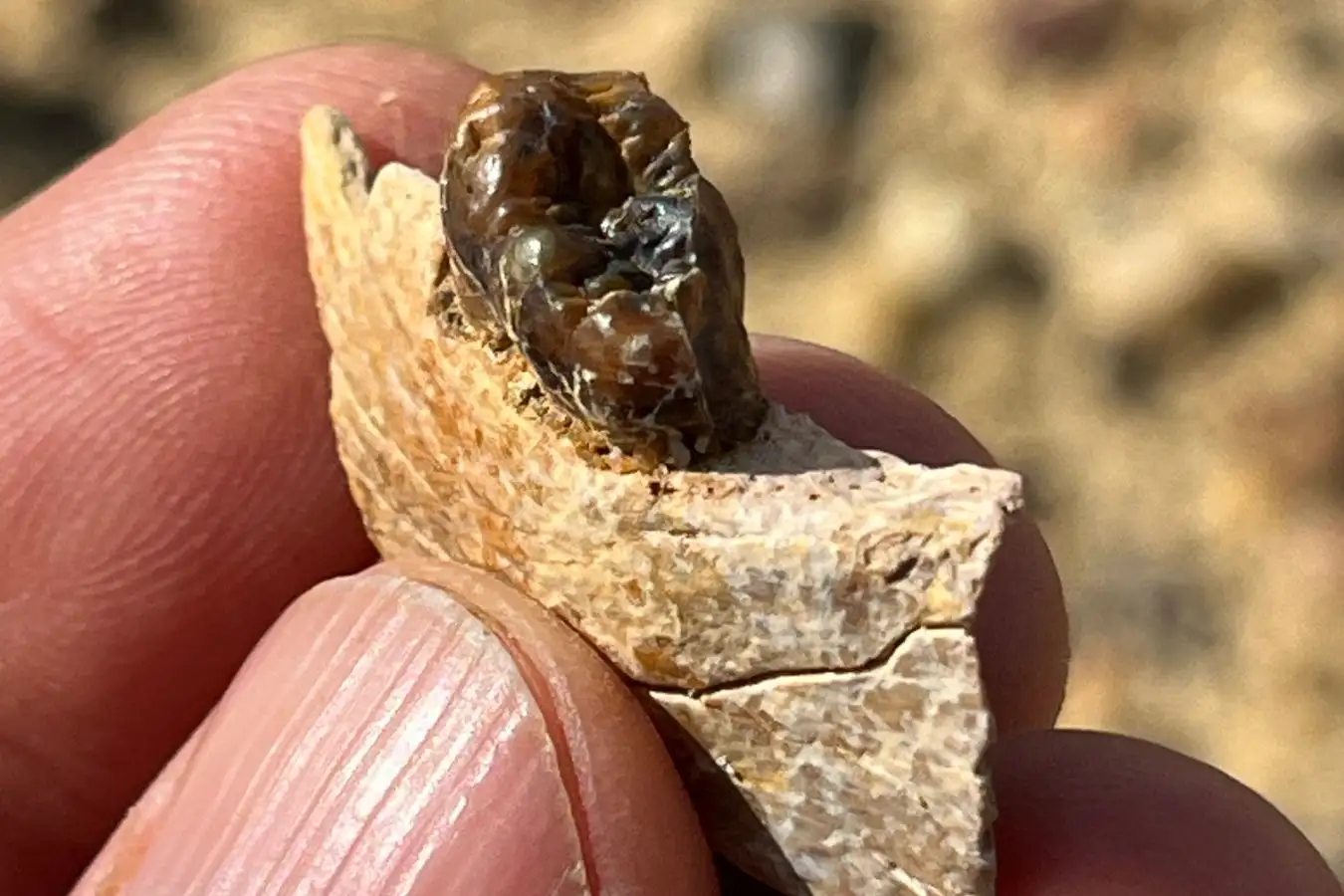
Fragment of a jawbone from M. moghraensis
Professor Hesham Sallam
M. moghraensis is thought to have weighed about 25 kilograms, larger than monkeys from that time, and a phylogenetic analysis showed it clearly fell within the hominoid lineage, says Al-Ashqar.
The teeth and mandible suggest M. moghraensis had a flexible diet, she says. “It likely depended mainly on fruits, but could also process harder foods like nuts and seeds, especially with that robust jaw and complex molars.”
However, until limb bones are found, it is impossible to tell how it moved or whether it lived primarily in trees or on the ground.
The size of the specimens’ canines suggests both individuals were male, says Erik Seiffert, at the University of Southern California, Los Angeles, who was also part of the team. But they would have been about the size of a small female chimpanzee.
“For decades, palaeontologists have been, to some extent, sort of stuck finding the same kinds of species in the early Miocene of East Africa. Now we know that the story was different in northern Africa,” says Seiffert.
Topics:
Source link : https://www.newscientist.com/article/2521073-fossils-discovered-in-egypt-may-be-the-closest-ancestor-of-all-apes/?utm_campaign=RSS%7CNSNS&utm_source=NSNS&utm_medium=RSS&utm_content=home
Author :
Publish date : 2026-03-26 18:00:00
Copyright for syndicated content belongs to the linked Source.