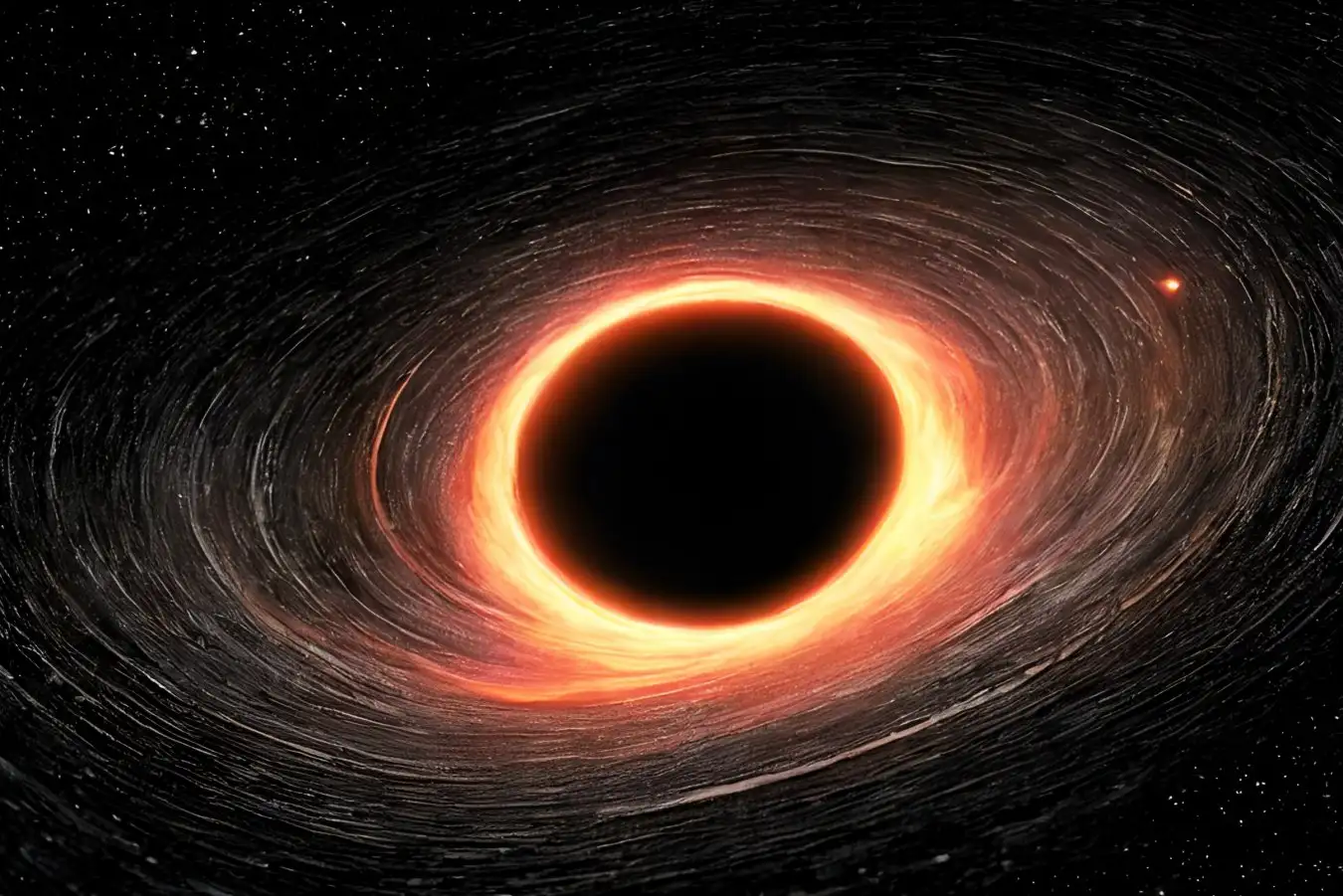
Primordial black holes are hypothesised to have formed shortly after the big bang
Shutterstock/Mohd. Afuza
An unusually massive black hole in the very early universe may be a kind of exotic, star-less black hole first theorised by Stephen Hawking.
In August, Boyuan Liu at the University of Cambridge and his colleagues spotted a strange galaxy from 13 billion years ago, called Abell 2744-QSO1, with the James Webb Space Telescope (JWST). The galaxy appeared to host an enormous black hole, around 50 million times the mass of the sun, but it was almost entirely devoid of stars.
“This is a puzzle, because the traditional theory says that you form stars first, or together with black holes,” says Liu. Black holes are typically thought to form from very massive stars when they run out of fuel and collapse.
Liu and his team ran some basic simulations, which showed that QSO1 could have instead started out as a primordial black hole, an exotic object first put forward by physicists Stephen Hawking and Bernard Carr in 1974. Rather than forming from a star, these objects would have coalesced out of fluctuations in the universe’s density shortly after the big bang.
Primordial black holes should have largely evaporated and disappeared by the time we can see back to with JWST, but there is a chance that some may have survived and grown into much larger black holes, like QSO1.
While Liu and his team’s calculations roughly matched their observations, they were simple, and didn’t take into account the complex interplay between the primordial black holes, clouds of gas and stars.
Now, Liu and his team have run more detailed simulations of how primordial black holes would have grown in the universe’s first hundreds of millions of years. They calculated both how the gas would have swirled around a small, initial primordial black hole, and also how newly formed stars and dying stars would have interacted with it.
Their predictions for the final mass of the black hole and the heavier elements in it match what they observed for QSO1.
“It’s not decisive, but it’s an interesting and a kind of important possibility,” says Liu. “With these new observations that normal [black hole formation] theories struggle to reproduce, the possibility of having massive primordial black holes in the early universe becomes more permissible.”
The simulations show that primordial black holes could actually be a viable source for QSO1, says Roberto Maiolino at the University of Cambridge, who was part of the team that originally discovered the black hole. “The fact that they manage to match the properties of QSO1, both in terms of the black hole mass, the stellar mass and the chemical enrichment, is very interesting and encouraging.”
However, the largest supermassive black holes in standard primordial black hole simulations tend to be around 1 million solar masses, says Maiolino. “Here we are 50 times more massive,” he says. “However, it is true that these primordial black holes are expected to be strongly clustered, and so it may well be that they managed to merge to quickly become much more massive.”
Another problem is that primordial black holes should require a blast of high-energy radiation to initially collapse and form, such as a nearby exploding star, but we don’t see any potential sources anywhere close to QSO1, says Maiolino.
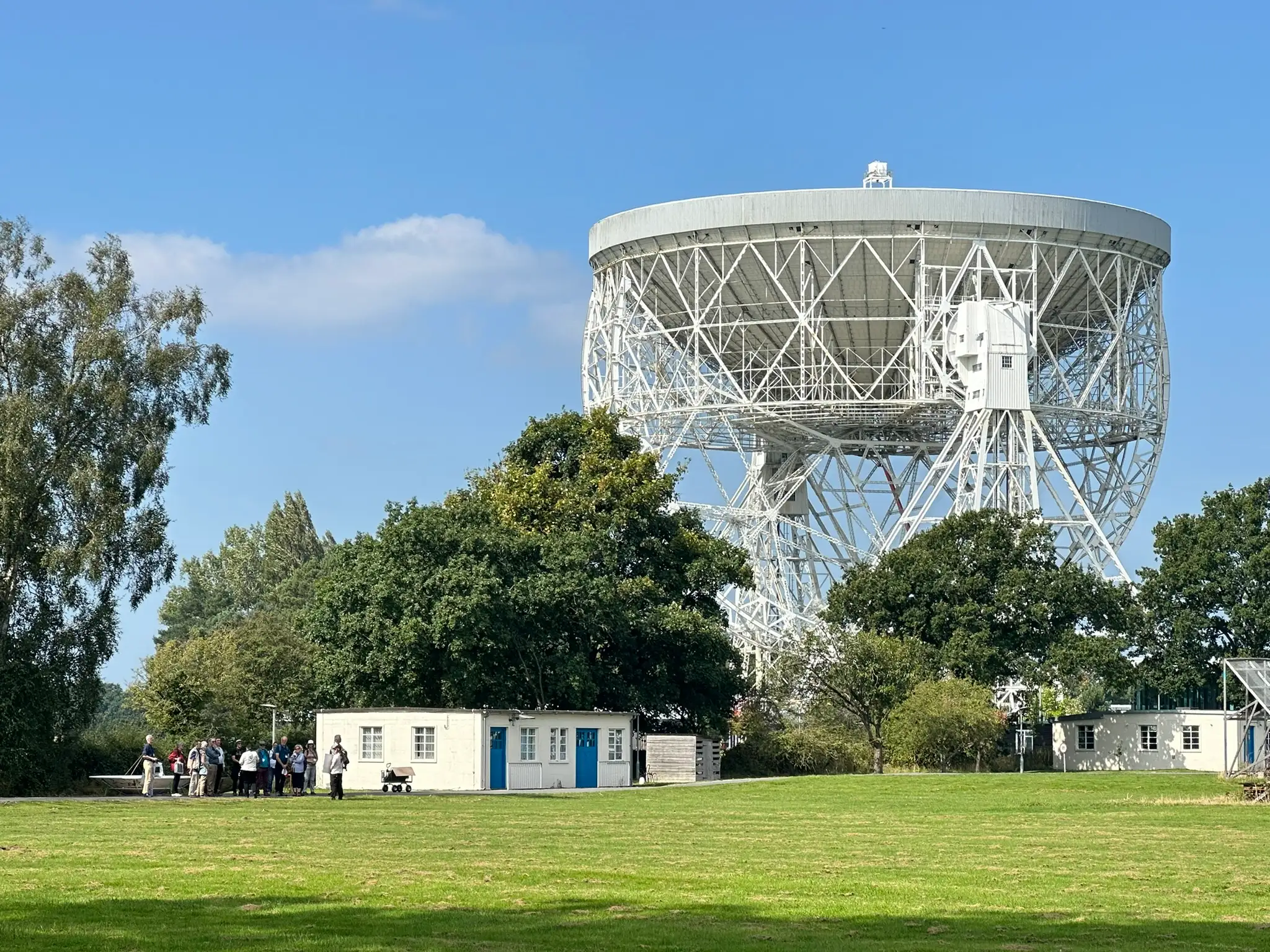
Mysteries of the universe: Cheshire, England
Spend a weekend with some of the brightest minds in science, as you explore the mysteries of the universe in an exciting programme that includes an excursion to see the iconic Lovell Telescope.
Topics:
Source link : https://www.newscientist.com/article/2509631-gargantuan-black-hole-may-be-a-remnant-from-the-dawn-of-the-universe/?utm_campaign=RSS%7CNSNS&utm_source=NSNS&utm_medium=RSS&utm_content=home
Author :
Publish date : 2026-01-02 12:00:00
Copyright for syndicated content belongs to the linked Source.