


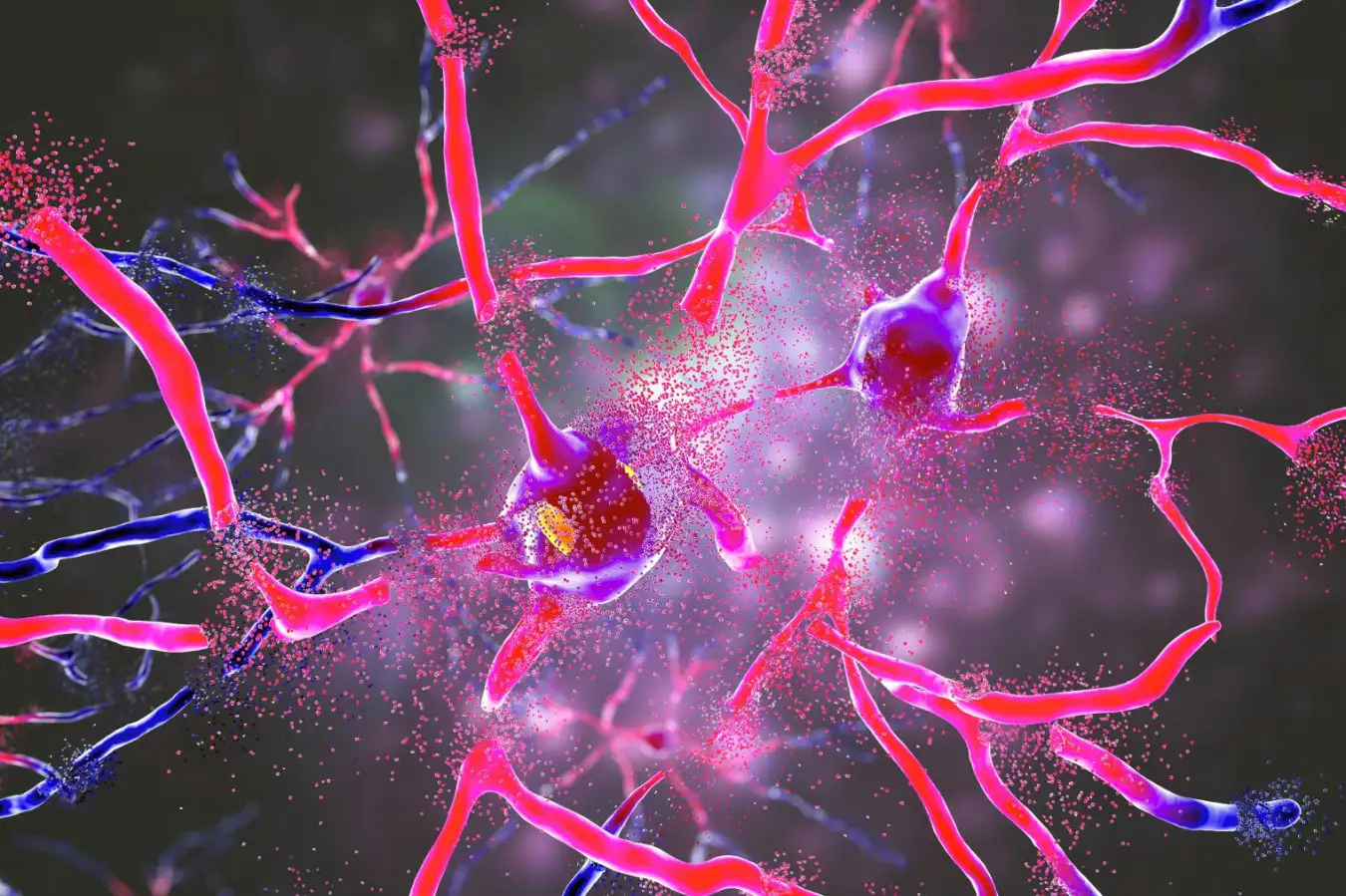
Huntington’s disease gradually kills brain cells, affecting movement, mood and thinking
Science Photo Library/Alamy
This year marked a pivotal moment in the quest to treat Huntington’s disease, a rare but devastating form of dementia. Scientists found that an experimental gene therapy slowed the condition’s progression – the first time this has ever been achieved. Although a huge feat, delivering the therapy is challenging, so researchers are already working on a more practical intervention.
“It is a giant step forward,” says team member Sarah Tabrizi at University College London, referring to the existing therapy’s success in a late-stage trial earlier this year. “It tells you that Huntington’s disease has the potential to be treatable. This gives us a huge window of opportunity.”
Huntington’s disease occurs due to a genetic mutation that causes the normally harmless huntingtin protein to accumulate in toxic clumps inside the brain. Over time, this kills brain cells, leading to difficulties with movement, thinking and mood. There are no approved treatments that stop symptoms from worsening, with interventions instead focusing on supporting people through the process.
But the experimental therapy, known as AMT-130, targets these abnormal proteins by carrying genetic instructions to brain cells, directing them to make a molecule that blocks their production.
In the trial, Tabrizi and her colleagues gave 17 people with Huntington’s disease a high dose of the treatment, then compared their cognition, movement and daily functioning with those of untreated individuals three years later. The drug’s developer, biotechnology company uniQure, shared preliminary results in September, which showed the treatment slowed the condition’s progression by about 75 per cent, on average.
“We have had so many setbacks in therapies for Huntington’s disease in the last couple of years,” says Sarah O’Shea at Mount Sinai in New York, who wasn’t involved in the research. “So this was huge, not just because it is a breakthrough in terms of slowing disease progress, but also [because] it came at a time where we really needed this hope.”
Yet the treatment isn’t without its setbacks. It is delivered deep into the brain over a 12-to-18-hour surgery – an operation only a few facilities are capable of, even in countries like the US and the UK, says Tabrizi. What’s more, if it were approved for use, it would almost certainly come with an exorbitant price tag. “So, do I think it is going to be able to get to everyone? It is going to be challenging,” she says.
To get around this, she and her colleagues have since developed a similar treatment that is injected into the fluid surrounding the spinal cord. “That is currently in a phase I study. We dosed the first patient in November 2024,” says Tabrizi, noting that the results, which should inform us about the approach’s safety, are expected around July 2026.
In the meantime, uniQure executives said in September that they planned to submit AMT-130 to the US Food and Drug Administration (FDA) for approval in early 2026. But in a statement in November, they said the submission timeline was now unclear after the FDA expressed reservations about the study’s design, particularly its makeshift control group, which was made up of individuals from a database of people with Huntington’s who received no intervention.
The lack of a control group within the trial makes it difficult to know the degree to which the placebo effect may have influenced the results. But the invasive nature of the surgery makes it difficult to justify creating such a group.
“We strongly believe that AMT-130 has the potential to bring substantial benefit to patients, and we remain fully committed to working with the FDA to determine the best path forward to rapidly bring AMT-130 to patients and their families in the US,” Matt Kapusta, CEO of uniQure, said in the statement.
Topics:
- dementia/
- 2025 news review
Source link : https://www.newscientist.com/article/2504428-gene-therapy-for-huntingtons-disease-showed-great-promise-in-2025/?utm_campaign=RSS%7CNSNS&utm_source=NSNS&utm_medium=RSS&utm_content=home
Author :
Publish date : 2025-12-23 11:00:00
Copyright for syndicated content belongs to the linked Source.