

[ad_1]

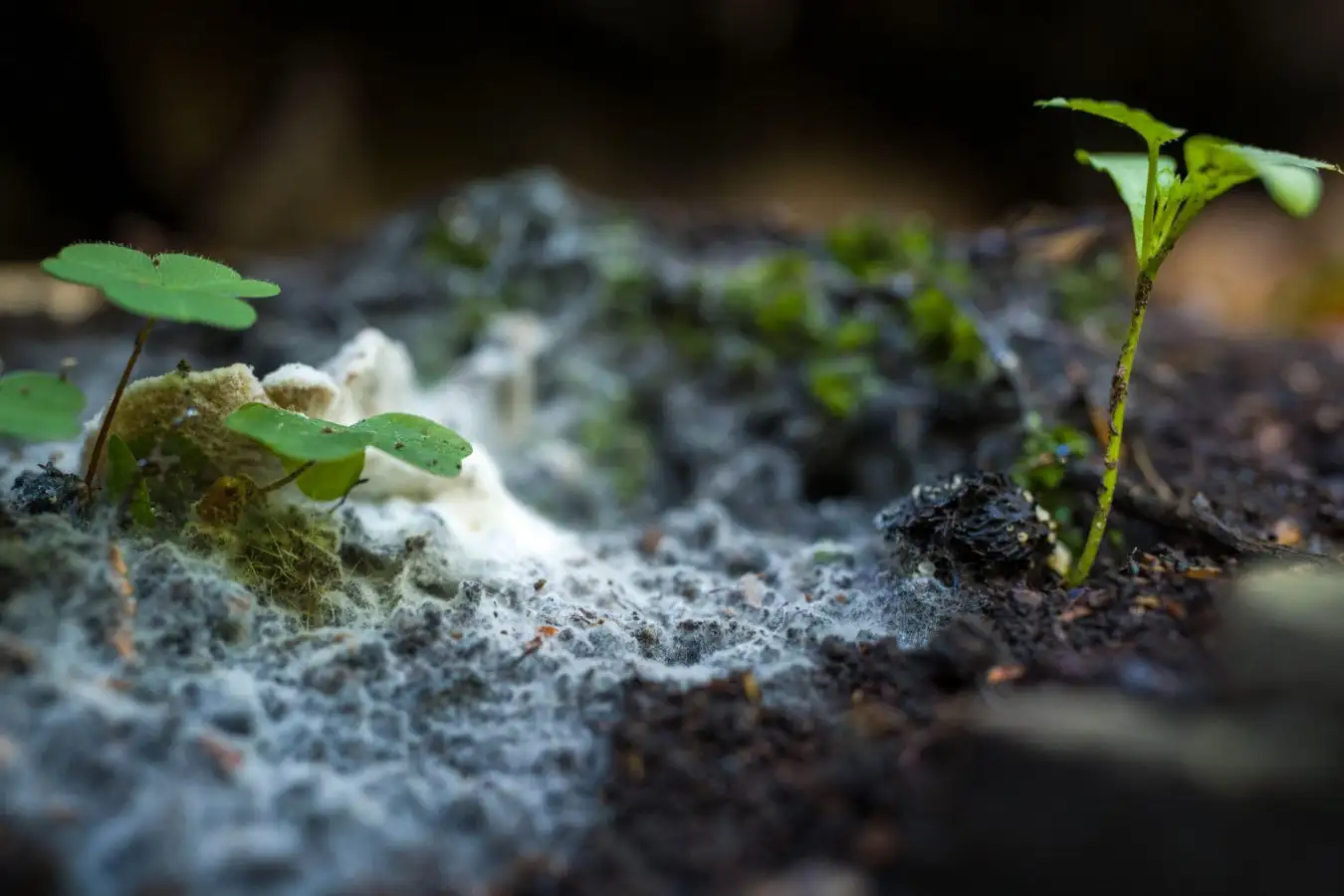
Plants and fungi are interacting beneath our feet
Andrea Obzerova/Alamy
Just under Earth’s surface, 110 quadrillion kilometres of carbon-rich fungi intersect with plant roots. This vast network has been laid bare in the first global digital map of our planet’s mycelial networks. Not only do these fungi exchange nutrients with plants, they also help regulate our climate.
Arbuscular mycorrhizal fungi, an ancient group of soil fungi found throughout most terrestrial ecosystems, form symbiotic relationships with about 70 per cent of the world’s plant species, providing nutrients and water in exchange for carbon. “Some people call plants the saviours of these fungi, but these fungi are also the saviours of plants,” says Justin Stewart at the Society for the Protection of Underground Networks. “If you’re not in symbiosis with arbuscular mycorrhizal fungi, you’re kind of the weirdo of the plant world.”
Given the fungi’s importance, Stewart and his colleagues set out to quantify this hidden infrastructure. “We asked the question: can we map the Earth’s underground circulatory system?” says team member Toby Kiers, also at the Society for the Protection of Underground Networks.
First, the researchers analysed data from 16,000 soil samples from across Earth, derived from 322 previous studies. They also used robotic imaging to measure more than 300,000 fungal threads grown in the lab, allowing them to estimate the total biomass and carbon stored in the networks. Next, the team combined that data and used it to extend estimates across deserts, tundra, forests and other regions where direct measurements were sparse or unavailable.
The results suggest that worldwide arbuscular mycorrhizal fungi networks harbour a mass of carbon equivalent to about five times that of all living humans combined. “They’re very important for a lot of the different functions of our planet,” says Stewart. “For example, they pull carbon underground – that’s important for climate change.”
The researchers also estimate that around 40 per cent of the world’s arbuscular mycorrhizal fungi live in grassland ecosystems, especially those of South Sudan, the Florida Everglades and the Tibetan plateau. That’s concerning, they say, since grasslands are rapidly being transformed into farmlands.
Croplands, meanwhile, show significantly reduced fungal presence, with large-scale crop-growing soils associated with about 50 per cent lower network densities than those in uncultivated ecosystems, despite their high presence of plants. That could be because fungicides can kill fungi directly, while tilling can break apart their networks and heavy fertiliser use may undermine the nutrient-for-carbon trade that normally sustains the symbiosis, says Stewart.
Last year, Laura Carter at the University of Leeds, UK, and her colleagues revealed that azole antifungals – a widely employed class of chemicals used to control fungal diseases like mildew and rot in crops – cut the density of hyphae (the long, straw-like tube cells of fungi) by around 70 per cent and reduced the extent to which beneficial fungi colonise plant roots by up to 80 per cent. That, combined with the new findings, “suggests current practices may be undermining a key natural ally of crops”, says Carter. “Supporting arbuscular mycorrhizal fungi isn’t just an ecological issue; it is a practical route to improving soil health, resilience and long-term crop productivity.”
Steven Allison at the University of California, Irvine, says he is particularly concerned about the thinner network under croplands. “With that biomass being knocked down so much, our agricultural crops may be missing out on some key benefits like nutrient access, drought resilience and carbon storage.”

Arbuscular mycorrhizal fungal networks producing reproductive spores (bright circles) that store a large amount of plant-derived carbon underground
Loreto Oyarte Gálvez – VU Amsterdam, AMOLF
But there is a positive side as well, he adds. Now the researchers have quantified the scale of the losses, it should be easier to design interventions to rebuild fungal biomass. “Farmers could add fungal spores to their soils,” says Allison. “The study might also prompt farmers to adjust their practices, by reducing tillage or adding less fertiliser.”
While the work reveals expansive networks, it doesn’t mean all fungi are connected in a global “wood wide web” – a hypothesised underground network through which plants exchange resources and information, says Stewart. “Our research here was just asking how many threads are there on Earth, not if this is one large, continuous network.”
Alongside the study, the researchers have launched an interactive map that reveals the global distribution of fungal networks in unprecedented detail. Kiers says they plan to present the findings to policy-makers at the United Nations desertification summit in Mongolia this August.
Topics:
[ad_2]
Source link : https://www.newscientist.com/article/2530122-global-map-reveals-the-vast-scale-of-underground-fungal-networks/?utm_campaign=RSS%7CNSNS&utm_source=NSNS&utm_medium=RSS&utm_content=home
Author :
Publish date : 2026-06-11 19:00:00
Copyright for syndicated content belongs to the linked Source.