[ad_1]
How does Rachel Carson’s Silent Spring hold up today?
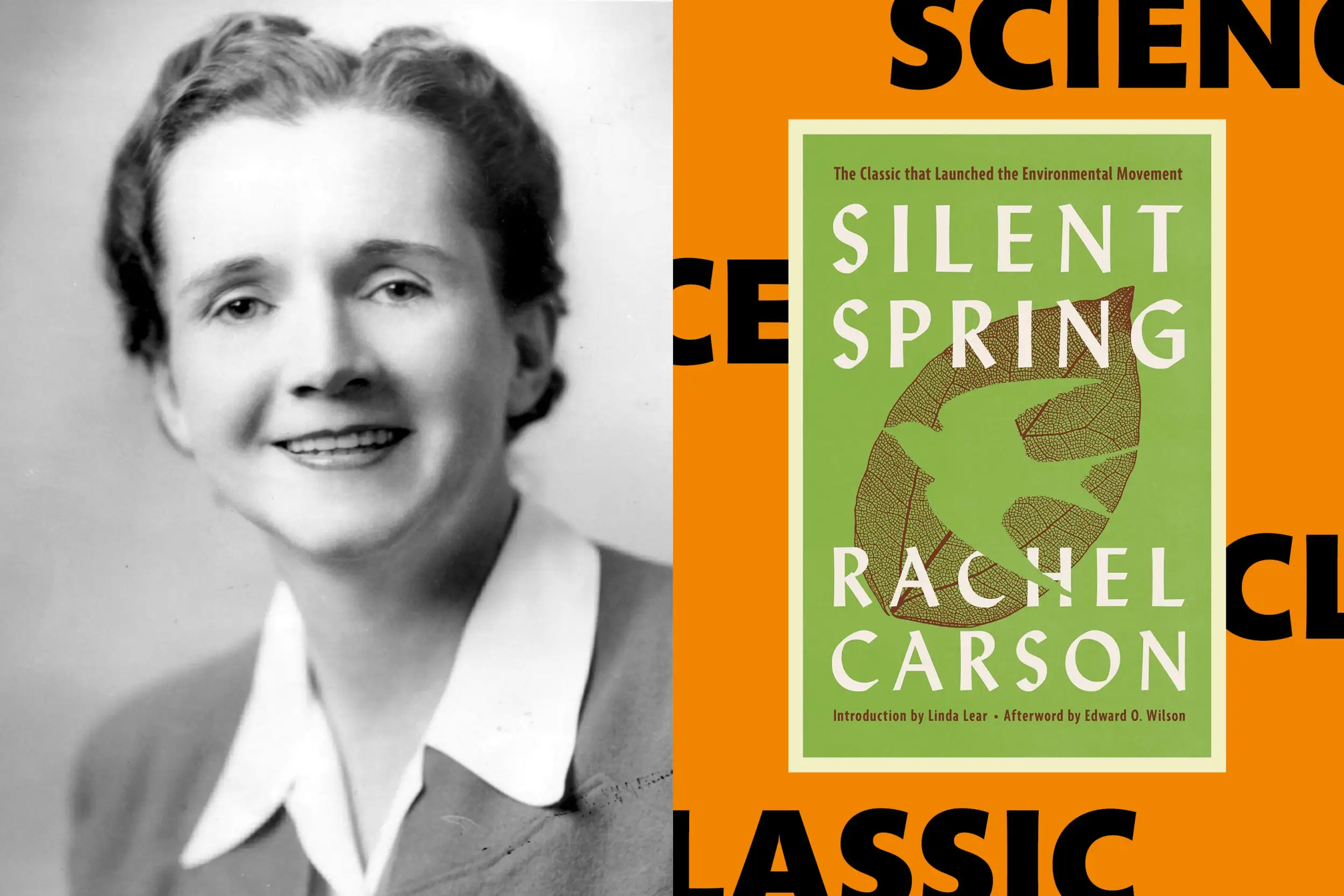
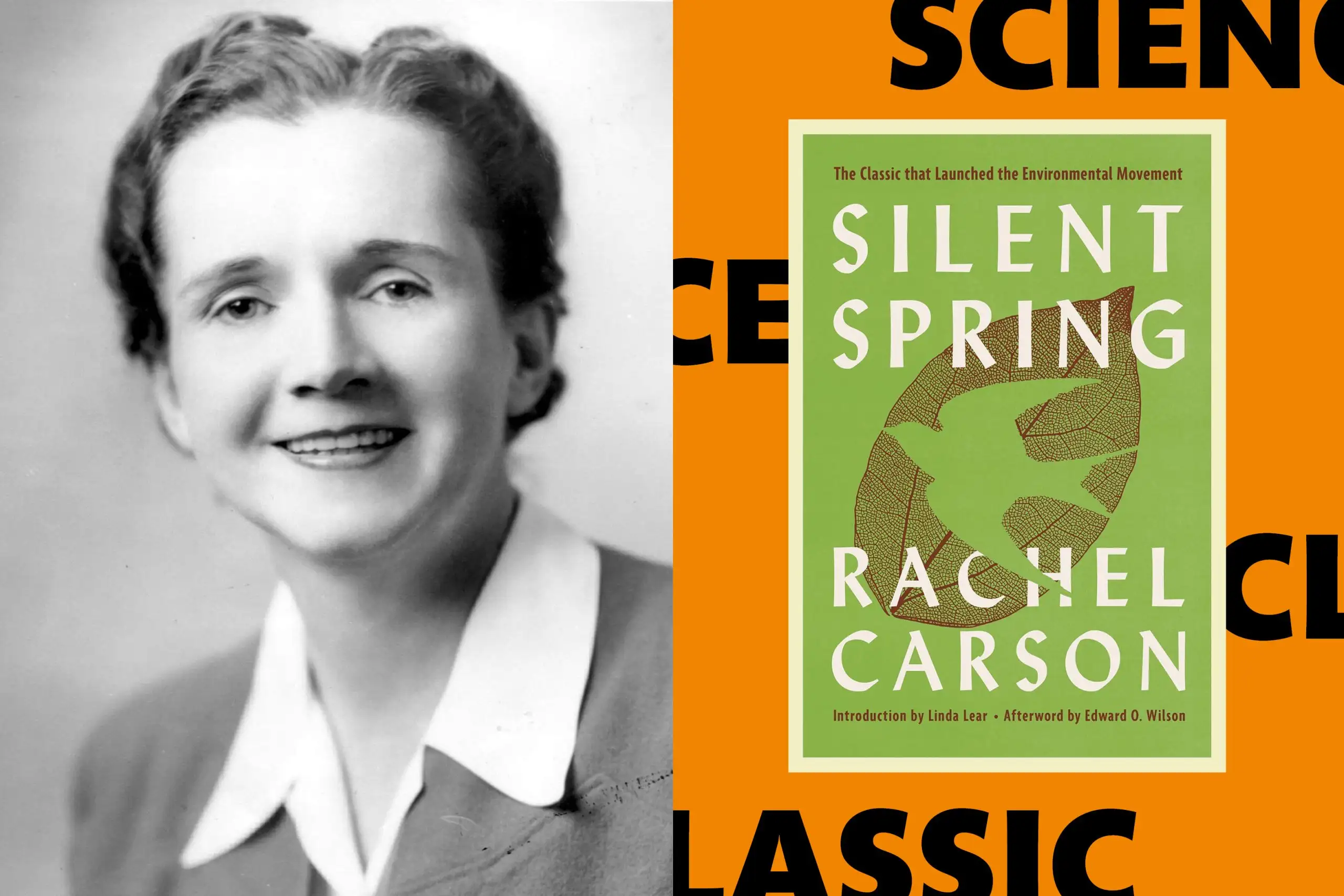
Rachel Carson was a marine biologist who wrote three books about life in the ocean, before a letter, published in The Boston Herald, prompted a change of focus. The letter described the deadly impact of the pesticide DDT (dichlorodiphenyltrichloroethane) on a bird population in Massachusetts. Carson set off to research the environmental effects of pesticides: she pencilled in “Silent Spring” as the title for a chapter on birds, but her agent suggested that it worked for the book as a whole.
And what a move that was. Silent Spring was pivotal in a way very few books are, birthing the modern environmental movement. As the writer Margaret Atwood has said, people thought one way before Carson’s book was published in 1962 and another way after it. President John F. Kennedy was moved to order an investigation into the effects of DDT and other pesticides, citing Silent Spring as the reason why. The book led to the creation of the Environmental Protection Agency in 1970, and also inspired laws like the US Clean Air Act (1963), the Wilderness Act (1964), the National Environmental Policy Act (1969), the Environmental Protection Agency (1970), the Clean Water Act (1972) and the Endangered Species Act (1973).
Carson begins Silent Spring with a description of a fictional town in the US. Trees and flowers once thrived there, and the town was noisy with birds and insects, but now it is threadbare and quiet. Reflecting what people all over the US were seeing in their own backyards, Carson shows how industrial and agricultural pollution had killed off large amounts of the living world and was directly affecting human health. The destruction had taken only a few decades.
DDT was first employed as an insecticide in 1939, and was used by the Allies to wipe out mosquitoes and lice in Asia during the second world war. After 1945, DDT was widely used to kill insect pests such as fire ants and, in a campaign against malaria backed by the World Health Organization, mosquitoes. Other chemically related compounds called organophosphates were also developed and used on an industrial scale, sprayed over crops and private land with an indiscriminate impact. Silent Spring documents the spread of insecticides and herbicides through groundwater and the air, exerting their effects far from the intended target. The book changed the world – to an extent. Its reputation shouldn’t make us assume we have averted ecosystem destruction.
As biologist Dave Goulson has noted in his book Silent Earth, in Carson’s day there were 37 types of chemical pesticide on the market, but today there are 900 different active ingredients licensed in the US and 500 in the European Union. The Trump administration is dismantling the environmental legislation brought in after Silent Spring, and organophosphates are still used in many parts of the world. Even in countries where they have been banned, other kinds of pesticides, such as neonicotinoids, have taken their place.
Carson put her knowledge of ecology, and of the interconnectedness of food webs, into her writing. It seems strange now, but that understanding was poorly developed among scientists and the public in the 1960s. “Seldom if ever does nature operate in closed and separate compartments,” she wrote. “We spray our elms and the following springs are silent of robin song, not because we sprayed the robins directly but because the poison travelled, step by step, through the now familiar elm-earthworm-robin cycle. These are matters of record, observable, part of the visible world around us. They reflect the web of life – or death – that scientists know as ecology.”
Silent Spring was also a work of personal bravery. The chemical industry spent hundreds of thousands of dollars trying to discredit Carson. Tragically, in 1964, two years after the book’s publication and aged only 56, she died of cancer. It’s possible that the very chemical carcinogens Carson documented in her book caused her condition.
Thanks to Carson and generations of biologists after her, we know that pesticides have off-target impacts on dozens of species in an ecosystem. As I found in my book Togetherness, we are now discovering that pesticides also affect symbiosis, when two different species form an intimate, often mutually beneficial, relationship. Though Carson doesn’t use the word “symbiosis”, she knew about the deep effect that pollution was having on inter-species relationships, writing about experiments that showed pesticides disrupted the fungal-root relationship at the heart of what would become known as the wood wide web.
Carson was pro-science, offered solutions to crop protection from insects and was already aware of the impact of climate change. Most important of all, perhaps, was her ecological sensibility. “The history of life on Earth,” Carson writes, “has been a history of interaction between living things and their surroundings.”
Silent Spring is essential reading for this insight into the history of life – but into its future, too. As Carson said: “Man is a part of nature, and his war against nature is inevitably a war against himself”.
Topics:
[ad_2]
Source link : https://www.newscientist.com/article/2528940-how-rachel-carsons-silent-spring-changed-the-world-in-1962/?utm_campaign=RSS%7CNSNS&utm_source=NSNS&utm_medium=RSS&utm_content=home
Author :
Publish date : 2026-06-04 12:00:00
Copyright for syndicated content belongs to the linked Source.