
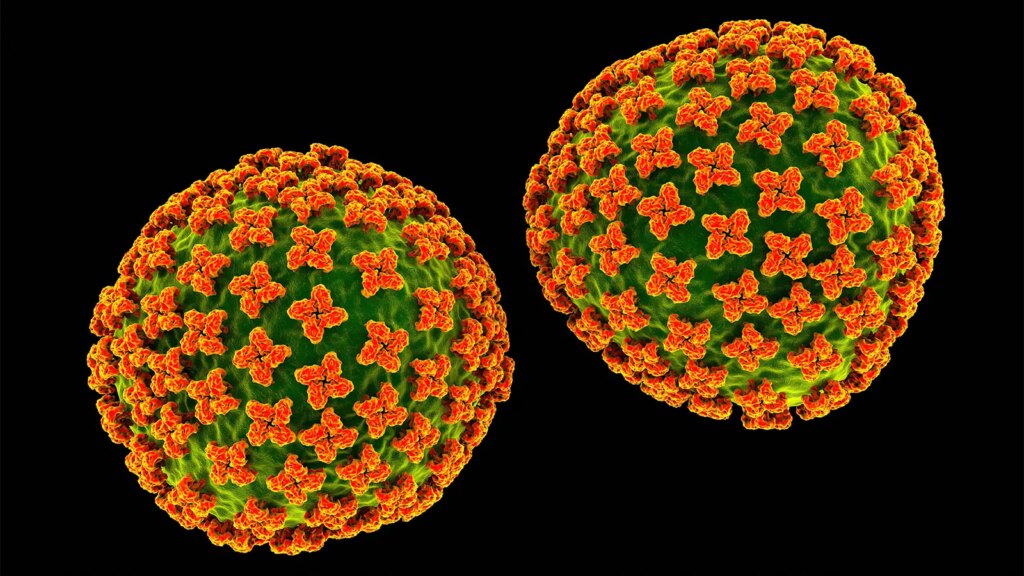
The cruise ship-related hantavirus outbreak is not going to be the next COVID-like global pandemic, but experts are still concerned by the potential number of people exposed — particularly during a flight from St. Helena to Johannesburg that carried a symptomatic passenger.
“Other people were sitting close to that passenger and if she was as sick as it seems she was … that could spark a pretty serious chain of transmission,” Jeanne Marrazzo, MD, MPH, the CEO of the Infectious Diseases Society of America (IDSA), said during a press briefing.
A flight attendant on that trip who presented to the hospital with possible symptoms has tested negative for hantavirus.
Marrazzo said that while the level of concern should be high, it’s “not going to be a situation where it’s going to start an outbreak everywhere in the world … from probably these little kindling cases.”
Carlos del Rio, MD, of Emory University in Atlanta, agreed with Marrazzo during the IDSA briefing: “Is this going to become another pandemic? No. Are we learning a lot? Yes.”
Another point of concern is that dozens of passengers who were potentially exposed to hantavirus on the ship had disembarked at St. Helena on April 24 and returned to their home countries, including the U.S. One Swiss national who did so has already been hospitalized with symptoms confirmed to be due to the Andes virus strain at the center of the outbreak.
Experts have expressed optimism that the virus is thought to be most contagious when a person is symptomatic, but James Lawler, MD, MPH, of the University of Nebraska Medical Center’s Global Center for Health Security in Omaha, pointed out that there are many unknowns about the virus.
Indeed, in a New England Journal of Medicine case report regarding a 2018-2019 outbreak of Andes virus in Argentina, three superspreader events occurred because people who were very early in the course of their symptomatic disease were out socializing.
In addition, some studies of household clusters have shown that people have detectable levels of hantavirus in their blood for more than a week before the onset of symptoms. “If you have virus in the blood, how do we know that you don’t have virus that you’re secreting from respiratory mucosal surfaces?” Lawler said.
“I think the risk is low, but I would not say the risk is zero,” he added. “I don’t think you want to be the one who encounters the outlier with a disease that has a 30% case fatality rate.”
Another concern is that there is no specialized treatment for hantavirus; best supportive care remains the only option.
And amid all of these factors, the top U.S. official responsible for public health on cruise ships announced on Wednesday that he was stepping down, STAT reported.
Potential upsides include the fact that Andes virus doesn’t have near the contagiousness or transmissibility of a COVID or influenza virus. And the true infection fatality rate — not just confirmed cases — could be far lower, Lawler said. Some people may become infected but clear the virus and never show symptoms.
Marrazzo also noted in the 2018-2019 outbreak, there wasn’t a significant number of mutations in the virus over time. “That’s very different from some respiratory viruses … that mutate very rapidly, where we’re looking at different strains constantly,” she said. “Hopefully that won’t happen with this.”
Maria Van Kerkhove, PhD, the World Health Organization’s top pandemic expert, emphasized to the AP that the risk to the public still remains low.
“This is not the next COVID, but it is a serious infectious disease,” Van Kerkhove said. “Most people will never be exposed to this.”
Please enable JavaScript to view the comments powered by Disqus.
Source link : https://www.medpagetoday.com/infectiousdisease/generalinfectiousdisease/121163
Author :
Publish date : 2026-05-07 21:35:00
Copyright for syndicated content belongs to the linked Source.