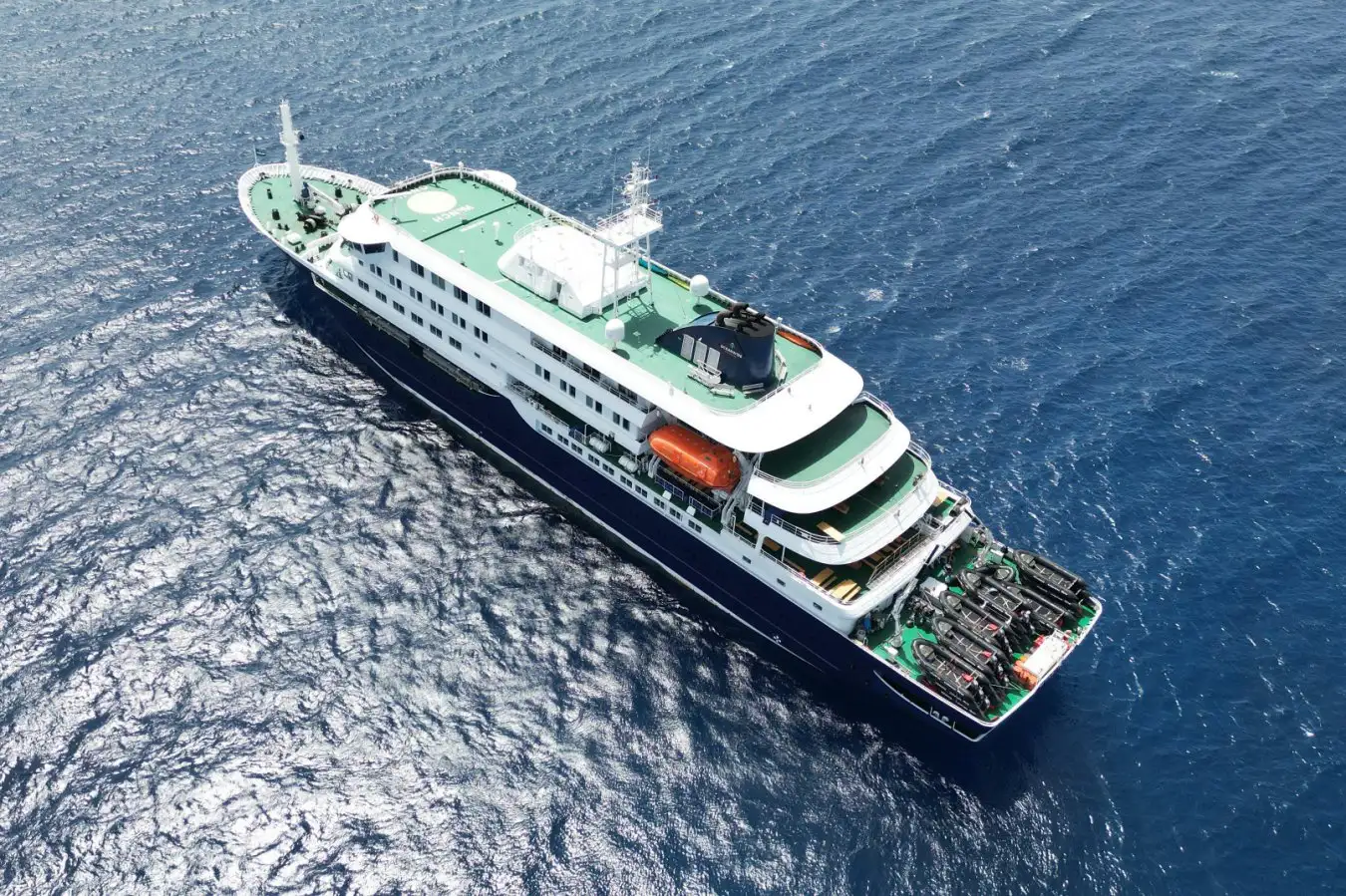
The cruise ship MV Hondius is anchored off the coast of Cape Verde
AFP/Getty Images
A ship anchored off Cape Verde in the Atlantic Ocean has been struck by an outbreak of hantavirus, which can cause severe disease and up to 50 per cent mortality in humans.
Seven people have been infected on board the Dutch-flagged cruise ship, the MV Hondius, three of whom have already died.
What is hantavirus?
Hantaviruses are a group of viruses carried by rodents that can cause severe disease in humans. People usually get infected through contact with infected rodents or their urine, droppings or saliva.
In different parts of the world, there are different hantaviruses associated with different clinical syndromes. In the Americas, hantaviruses can cause a severe respiratory illness known as hantavirus cardiopulmonary syndrome (HCPS), which kills up to 50 per cent of people diagnosed. In Europe and Asia, hantaviruses cause haemorrhagic fever with renal syndrome (HFRS), which mainly affects the kidneys and blood vessels.
Worldwide, it is estimated that around 10,000 to over 100,000 infections occur annually, with the highest rates of infection in Asia and Europe.
So far, the actual strain of hantavirus affecting people on the ship is unknown. “There are multiple different species, with at least 24 that cause disease in humans, and until we know which is involved in these circumstances on board the ship, we can’t really say anything about what is going on that is baffling or surprising,” says Adam Taylor at Lancaster University in the UK.
Where has the ship been?
The World Health Organization (WHO) said in a statement it was notified on 2 May regarding a cluster of severe acute respiratory illness, including two deaths and one critically ill passenger, aboard the MV Hondius.
According to the WHO, the vessel departed Ushuaia, Argentina, on 1 April 2026, and followed an itinerary across the South Atlantic, with stops at Antarctica, South Georgia, Nightingale Island, Tristan da Cunha, Saint Helena and Ascension Island.
The docking in Argentina will be a particular focus of investigations into the cruise ship outbreak, as one form of hantavirus, known as Andes virus, “is known to cause limited human-to-human transmission among close and prolonged contacts” in South America, the WHO said.
A total of 147 individuals, including 88 passengers and 59 crew members representing 23 nationalities, were on board, said the WHO statement. “The extent of passenger contact with local wildlife during the voyage, or prior to boarding in Ushuaia remains undetermined”, it said.
What are the symptoms of hantavirus?
The initial symptoms often include fever, muscle aches, headache and gastrointestinal symptoms. Some patients then progress to respiratory illness. Diagnosis is usually made through specialist blood tests.
How is hantavirus spread?
The usual route of infection is exposure to infected rodents, particularly inhalation of virus from contaminated rodent urine, droppings or saliva.
“This is why investigations of suspected cases often focus on whether people may have had exposure to rodent-contaminated environments, food stores, cabins, storage areas or other enclosed spaces. Hantavirus is not generally considered easily transmissible between people,” said Roger Hewson at the London School of Hygiene & Tropical Medicine in a statement.
Infection may also occur, although less commonly, through rodent bites. Activities that involve contact with rodents such as cleaning enclosed or poorly ventilated spaces, farming, forestry work and sleeping in rodent-infested dwellings increase exposure risk.
According to the WHO, human-to-human transmission has been documented only for Andes virus in the Americas and remains uncommon. When it occurs, transmission between people has been associated with close and prolonged contact, particularly among household members or intimate partners, and appears most likely during the early phase of illness, when the virus is more transmissible.
How worrying is this outbreak?
Taylor says people should not be alarmed. “Hantavirus transmission typically requires contact with animal bodily products to transmit, rather than human to human,” he says. “Precautions are being taken on board to minimise risk, but these are just precautions.”
Hewson says it is important not to overinterpret the cruise ship setting. “The fact that cases have been identified in people associated with the same vessel does not by itself tell us whether exposure occurred on the ship, before boarding, during shore excursions, or through some other shared environmental exposure,” he said. “That is precisely why public health investigations, laboratory confirmation and where possible, virus sequencing are important.”
Topics:
Source link : https://www.newscientist.com/article/2525328-hantavirus-where-has-the-deadly-cruise-ship-outbreak-come-from/?utm_campaign=RSS%7CNSNS&utm_source=NSNS&utm_medium=RSS&utm_content=home
Author :
Publish date : 2026-05-05 13:20:00
Copyright for syndicated content belongs to the linked Source.