

[ad_1]

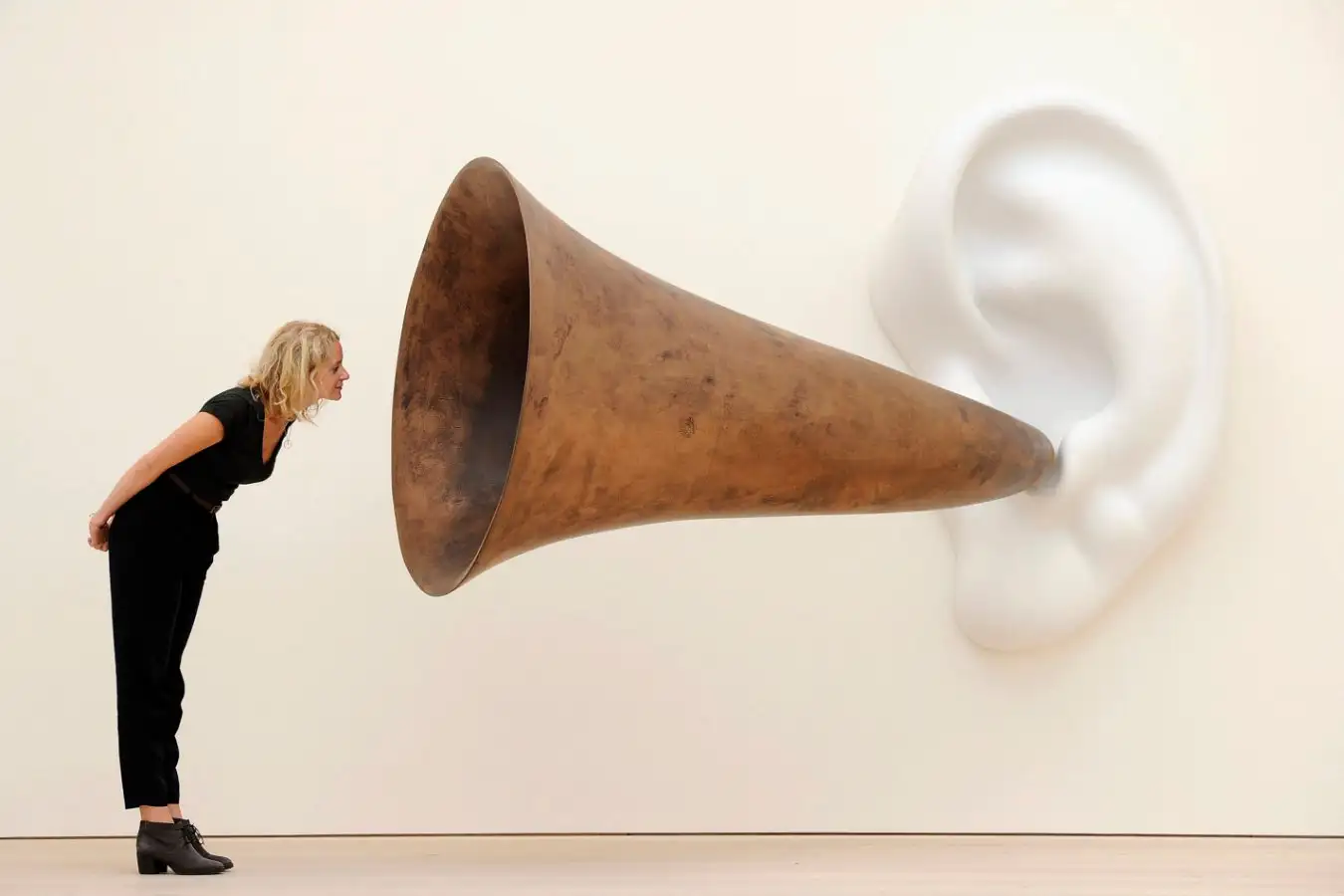
CARL COURT/AFP via Getty Images
I’m sitting in a soundproof booth at an audiologist’s office, wearing headphones and straining to hear some faint electronic noises. When I think I’ve heard one, I press a button. It’s really hard. Was that real or did I imagine it? Oh god, I’m going to fail…
I’m here because my partner thinks I’m losing my hearing. Apparently I’m always saying “Huh?” when she’s talking to me. I wouldn’t be surprised if I am. Deafness runs in my family and I have probably been to too many loud concerts and spent too much time listening to music via headphones.
If I am losing my hearing, I might well lose a lot more besides, including my mental health, my heart health and even my life. Once regarded as a mere inconvenience of getting older, hearing loss is now being recognised as a major public health issue, according to otologist Justin Golub at Columbia University in New York. It is strongly linked to issues from dementia to cardiovascular disease. Fortunately, there are ways to restore the hearing of those who are losing it. There are also promising new-generation drug therapies in the pipeline for a condition that, up till now, has had none. So, if you don’t want to lose one of your most important faculties, listen up.
Can you say that again?
Hearing loss happens for many reasons, mainly the wear and tear of old age. Whatever the cause, the outcome is the same: a problem hearing very quiet sounds. When the quietest sound detectable is roughly 20 to 25 decibels – about as loud as a ticking watch – a diagnosis of hearing loss is in order.
The condition comes in three basic flavours. The plain variety is when sound waves can’t reach the inner ear because of a blockage. Earwax build-up and infections are the usual causes of this “conductive” hearing loss and can be cleared up relatively easily. More troublesome, and by far the most common, is sensorineural hearing loss (SNHL), which is caused by damage to the inner ear, either the snail-shaped cochlea or the nerve pathways from it to the brain. This is usually due to advancing age, genes, underlying diseases, noise damage or pharmaceuticals that are toxic to the inner ear, notably a class of antibiotics called aminoglycosides.
The third and most complex type is auditory neuropathy spectrum disorder (ANSD), in which, for some reason, the way the brain processes sound goes awry. Both SNHL and ANSD are irreversible, but can be alleviated somewhat with technology or therapy.
Today, over 1.5 billion people – almost a fifth of the global population – are living with some form of hearing loss, according to the World Health Organization, making hearing loss one of the most common chronic conditions on the planet. Indeed, around half of people over 65 have some difficulty hearing, according to the WHO’s first-ever World Report on Hearing, published in 2021. The prevalence doubles with every decade of life and, by age 70, about two-thirds of people can’t hear as well as they used to.
And the problem is only going to get worse. The WHO predicts that, by the end of this decade, 1.9 billion people will be hard of hearing, and by 2050, this will rise to 2.5 billion people: a quarter of the world’s population. At least 700 million of them will be sufficiently affected to need a hearing aid, cochlear implant or some other form of intervention, such as learning sign language or lip-reading. The ramifications for worldwide well-being could be seismic.
Take the most obvious effect of losing your hearing: social isolation and loneliness. According to Julie Beadle at Simon Fraser University in Vancouver, Canada, even mild hearing loss can cause people to become socially disengaged. Multiple studies have shown this effect and a recent review found that “uncorrected hearing loss often leads to a significant withdrawal from social activities”. It also makes it hard to work or study, lowers self-esteem and can be very tiring. The results are alarming. All told, social isolation and loneliness increase the risk of death from any cause by about a third.
And if the isolation doesn’t get you, maybe cardiovascular disease will. Evidence of an association has been building for some time, and earlier this year a team led by Iris Otero-Luis at the University of Castilla-La Mancha in Cuenca, Spain, reviewed all the research. The researchers concluded that many known risk factors for cardiovascular disease – obesity, type 2 diabetes, high blood pressure, imbalances in blood lipids and metabolic syndrome – are also risk factors for hearing loss.

Two friends at a school for children with impaired hearing experiment with an old-fashioned ear trumpet, circa 1955
Vecchio/Three Lions/Getty Images
According to a study led by Woei Shyang Loh at the National University Health System in Singapore, people with hearing loss have a 38 per cent higher risk of cardiovascular disease. The more severe the hearing loss, the higher the risk. One study in China, for example, found that participants with the worst hearing were 76 per cent more likely to have a stroke.
This isn’t to say that hearing loss causes cardiovascular disease. The most likely explanation, says Otero-Luis, is that the two are consequences of the same underlying problem. Cardiovascular disease is often caused by damage to small blood vessels, and this may also disrupt the workings of the inner ear. Oxidative stress and inflammation may also be involved, she says, but as yet the mechanism remains unclear.
The idea that hearing loss and cardiovascular disease are two sides of the same coin may also explain why asymmetric hearing loss greatly increases stroke risk, as it can reflect localised damage to blood vessels in one side of the brain and inner ear. Paradoxically, this may be good news, according to Shaojie Li at Peking University in Beijing. Asymmetric hearing loss could be an early warning sign of cardiovascular trouble brewing, so allow for early intervention. Other troubling scourges linked with hearing loss include falling over – a leading cause of injury and injury-related death worldwide – as well as mental health troubles like depression.
There is also a link between hearing loss and dementia. In 2024, the Lancet commission on dementia published a landmark report on the condition’s prevention, intervention and care. It identified 14 known risk factors, one of which is hearing loss. In the past decade, five major studies have found a significant association between hearing loss in old age and subsequent dementia. The increased risk ranges from 28 per cent to a whopping 139 per cent. The most recent of these analyses found that each 10 decibel of hearing loss increases dementia risk by 16 per cent. The Lancet commission concluded that 7 out of 100 cases of dementia are caused by hearing loss and could be prevented.
But there are those who say the Lancet commission is over-egging it. Last year, a team led by Séverine Sabia at the research organisation INSERM and Paris City University in France published an analysis of existing data to see whether hearing loss around the relatively young age of 50 is an even bigger risk factor for dementia – as you might expect, given that these people will spend much longer being hard of hearing. But that isn’t what the researchers found. “There is an association, but it’s not as strong as previously thought,” says team member Marcos Daniel Machado-Fragua, now at the Spanish National Centre for Cardiovascular Research in Madrid. This study put the increased risk at more like 10 per cent.
According to Sabia’s INSERM colleague Archana Singh-Manoux, the reason why the Lancet commission found such large numbers is probably because the study populations were people in their 70s, who may have hearing loss as a result of the early stages of dementia. “Pre-clinical dementia causes changes in the central nervous system, it affects hearing, so those results are open to what we call reverse causation, which is the disease itself affecting what you think is a risk factor,” she says.
Nonetheless, a 10 per cent increased risk is not to be ignored. The reason for the link is debated. According to the Lancet commission, there are four main contenders. It could be because hearing loss leads to social isolation, loneliness and depression, which are dementia risk factors in their own right. It could alternatively be that the brains of people with hearing impairments are chronically overloaded by the burden of processing sounds. Such high “cognitive load” would cause the brain to shrink and eventually lead to dementia. A third possibility is brain shrinkage caused by reduced sensory stimulation. Or perhaps hearing loss is just another symptom of dementia that can appear before cognitive deficits. Given the troublesome forecast of a global hearing-loss time bomb, rumbles of new-generation remedies are welcome.
Reversing hearing loss
One future solution in the works is drugs that prevent or reverse hearing loss. At the moment, there are none, but plenty of people are working to change that. “New therapies have gotten a bit of a buzz recently,” says Golub.
That is partly because the US Food and Drug Administration recently approved a treatment for a previously intractable form of congenital deafness called DFNB9. The treatment, Otarmeni, developed by Regeneron Pharmaceuticals in New York state, is a gene therapy that fixes a mutation responsible for profound hearing loss from birth. It won’t directly help many people – just a few thousand worldwide have DFNB9 – but Otarmeni is proof of principle that gene therapies can be delivered to the correct part of the inner ear and restore hearing, says Golub. “It’s exciting because we finally have an example of a biological treatment for hearing loss.”

New therapies to stem or reverse hearing loss are in the pipeline – and, one day, could negate the need for hearing aids
Getty Images
That is a boon to researchers and companies working on fixing the genetic basis of later-life hearing loss. One group, based at the University of New South Wales in Sydney, Australia, is currently developing a gene therapy to enhance the performance of cochlear implants. The genes are delivered during the installation of the implant and stimulate the production of two growth factors known to promote the survival of neurons, neurotrophin-3 and BDNF.
The therapy has successfully completed a phase II clinical trial and is moving into phase III. The results have yet to be published, but they are looking good, says chief investigator Gary Housley. “The regeneration occurs very rapidly,” he says. “The results bode well for the use of this technology to achieve better hearing.” The delivery system could eventually be used for standalone gene therapy without a cochlear implant, he says.
Another promising approach is using stem cells to regenerate the spiral ganglion, a clump of neurons that connects the cochlea to the auditory nerve. Degeneration of these neurons is a leading cause of SNHL, and while they don’t regenerate of their own accord, they can be coaxed into doing so by implanting stem cells called otic neural progenitors. Earlier this year, a company called Rinri Pharmaceuticals based in Sheffield, UK, got clearance to run a clinical trial of such a therapy – again, delivered simultaneously with a cochlear implant – and a US rival, Lineage Cell Therapeutics in Carlsbad, California, has something similar in early-stage testing.
The third approach is chemical compounds that protect or regenerate the parts of the inner ear that break down in age-related hearing loss. Such drugs have been in development for some time and have a habit of failing: since 2023, three promising ones have been binned after failing to perform well enough in clinical trials. But hope springs eternal. One of the failures, from Audion Therapeutics, was a close-run thing, suggesting that the drug might get over the line if tweaked a little. And there are many others in development, two of which – Ebselen from Sound Pharmaceuticals in Seattle, Washington, and Paliroden from Cilcare in Montpellier, France – are in phase II clinical trials. “It’s impossible to forecast when we’ll actually have a drug but, yeah, I think there’s potential,” says Golub.
Protecting your ears
While we await hearing-saving drugs, there are already things you can swallow. Foods rich in antioxidants, vitamin B9 (folate), omega-3 fatty acids and magnesium have been found to be protective of the inner ear, and last year a team at Rush University in Chicago reported that people who eat healthily, particularly the DASH (dietary approaches to stop hypertension) diet, have a reduced risk of hearing loss and slower cognitive decline once it starts.
And there may be an off-the-shelf solution to many of these problems: hearing aids. Ten years ago, researchers at Johns Hopkins Bloomberg School of Public Health in Baltimore, Maryland, began the world’s first clinical trial to see whether these devices can slow down or prevent cognitive decline and dementia in older adults with hearing loss. The results, published in 2023, indicated that they do, in some circumstances. The overall effect wasn’t statistically significant, but among a subgroup of subjects – who were more susceptible to dementia because they were older, less educated, less wealthy and more likely to smoke, plus had more underlying health conditions – hearing aids substantially slowed cognitive decline.
There are dissenting voices, however. Sabia’s team at Paris City University also analysed whether hearing aid use protected against dementia, finding that it didn’t. “Wearing a hearing aid isn’t going to mitigate the risk of dementia,” says Singh-Manoux. But that isn’t a reason not to wear one, she says. “Hearing aids are important for people to remain connected to life, to remain connected to friends, to remain connected in conversations, to manage their day-to-day life.” Ditto cochlear implants, which can vastly improve the quality of life of people with severe or profound hearing loss, says Golub.
But the most important thing is to get your hearing tested, he says, especially if you suspect you are losing it. “My main advice would be, don’t ignore it. Go and see an audiologist, find out exactly what your level of hearing loss is and then you can make a decision about what to do about it.” Hearing test apps for smartphones are also available and increasingly good, he says.
My test revealed that I have very mild hearing loss at two middle frequencies in my left ear. It’s clearly age-related, unfortunately, but also nothing to worry about – yet. I’ll be keeping a close ear on it.
Topics:
[ad_2]
Source link : https://www.newscientist.com/article/2527617-hearing-loss-is-bad-for-the-whole-body-but-new-treatments-are-coming/?utm_campaign=RSS%7CNSNS&utm_source=NSNS&utm_medium=RSS&utm_content=home
Author :
Publish date : 2026-06-02 16:00:00
Copyright for syndicated content belongs to the linked Source.