
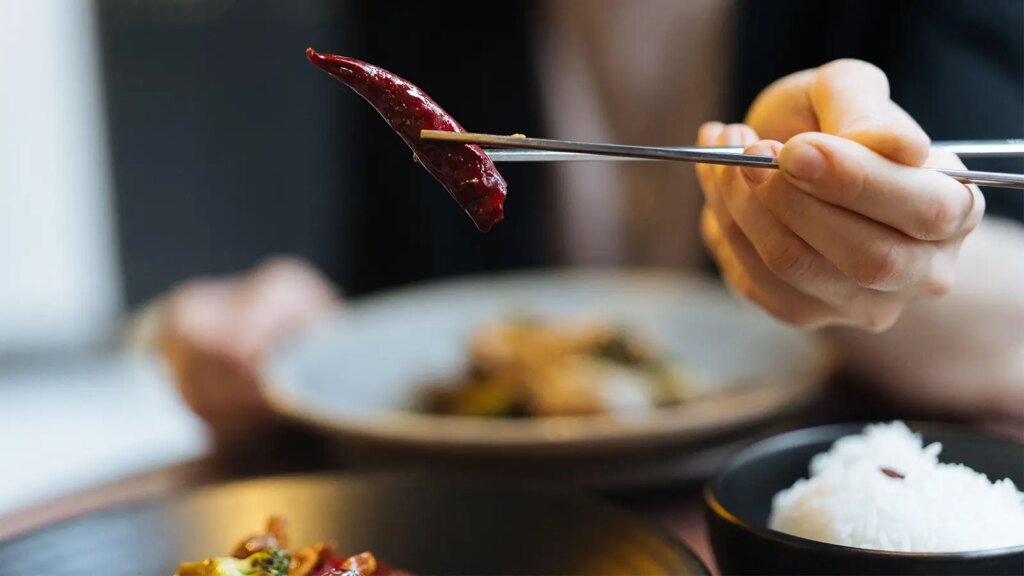
For 2 years, a 52-year-old woman repeated the same pattern: She ate spicy food, and her vagina burned like “chili water.”
At first, clinicians attributed it to chronic vaginitis. Then surgeons discovered the real culprit — a rectovaginal fistula (RVF) blocked by hardened fecal stones.
Those coproliths acted like plugs, preventing typical symptoms like fecal leakage or gas from passing through, but allowing liquid capsaicin from spicy meals to seep into the tract and irritate the vaginal tissue.
The presentation was so unusual that a search of medical literature found no prior reported cases, noted Yaling Li, MD, of Southwest Medical University in Luzhou, China, and colleagues in the American Journal of Case Reports.
RVFs are typically characterized by gas or feces passing through the vagina either continually or intermittently, but this patient presented with what the authors described as “a highly atypical symptom profile.” She had no vaginal discharge, which contributed to the delay in diagnosis.
“This case suggests that diet-triggered vaginal burning without gas or stool leakage can indicate an occult RVF masked by coproliths,” Li and colleagues wrote. “Clinicians should maintain a high index of suspicion in patients with prior pelvic surgery and pursue targeted evaluation using pelvic MRI and transperineal ultrasound when symptoms correlate with food irritants.”
The woman, who had a history of multiple pelvic surgeries and entered menopause 3 years before presentation, said the burning occurred after eating spicy food but never with a bland diet. Standard gynecologic workup, including vaginal colposcopy and gynecologic ultrasound, found nothing. The sensation worsened after a bout of diarrhea, and oral azithromycin brought no relief. Symptoms improved following a return to bland foods.
Two colorectal specialists performing a detailed physical examination identified a subcutaneous 2×2-cm lump with a hard texture and clear boundaries in the perineal body. An ultrasound revealed subcutaneous tissue in the perineum that suggested calcification.
Pelvic MRI identified a low intersphincteric fistula, and surgical exploration revealed a 2-cm cavity between the rectum and vagina packed with multiple firm coproliths. After their removal and placement of a loose seton, the patient’s symptoms resolved completely within 2 weeks. She was discharged 1 week after surgery, and at a 1-year telephone follow-up, the patient reported no recurrence of symptoms, with normal bowel and urinary function.
The case was notable for not requiring a colostomy, which suggests a conservative staged approach may be sufficient for selected low-level, well-drained fistulas, the authors said.
“We hypothesize that this reproducible, food-triggered burning sensation reflects trans-fistulous capsaicin exposure within a partially obstructed tract, as our patient consistently experienced burning vaginal sensations following ingestion of chili-containing food,” they wrote. They described the mechanism as a form of “chemosensory signaling” across compromised tissue, wherein dietary compounds with neuroactive properties exacerbate local sensory input along abnormal tissue connections.
The authors said the case highlights two practical implications: clinicians should pursue targeted pelvic imaging in patients with unexplained food-triggered vaginal irritation, and management should begin with obstruction removal and seton drainage before definitive repair.
Please enable JavaScript to view the comments powered by Disqus.
Source link : https://www.medpagetoday.com/casestudies/obgyn/120313
Author :
Publish date : 2026-03-16 14:55:00
Copyright for syndicated content belongs to the linked Source.