[ad_1]
- Last year, the CDC’s vaccine panel recommended that children younger than age 4 years not receive the combined MMR and varicella vaccine, and instead receive only separate vaccines.
- A cross-sectional study showed that children in minority groups, those eligible for the federal Vaccines for Children program, and those vaccinated at a safety-net clinic were more likely to receive the combination vaccine.
- Limited access to this combination vaccine could disproportionately affect disadvantaged children by reducing vaccine options and increasing barriers to vaccine completion, researchers said.
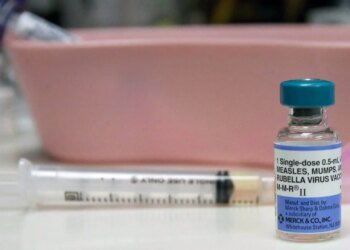
Children eligible for the Vaccines for Children (VFC) program and minority racial and ethnic groups were more likely to receive the recently shunned varicella-containing measles vaccine as their first dose of either immunization, according to a cross-sectional study in King County, Washington.
Among over 200,000 children, 14.7% received the measles, mumps, rubella, and varicella (MMRV) vaccine as their first dose, while 63.8% started with the MMR vaccine co-administered with a separate varicella vaccine, 17.8% received MMR alone, and 3.7% received the varicella-only vaccine.
Of note, significantly more children who received the MMRV vaccine were eligible for the VFC program; were ages 16 to 47 months, indicating a catch-up dose; were Hispanic, American Indian or Alaska Native, Black, Native Hawaiian or Pacific Islander, or multiracial; resided in the south region of King County; or were vaccinated at safety-net clinics (P<0.001), reported Eric Chow, MD, MPH, of Public Health-Seattle & King County, and colleagues.
“Combination vaccines, including MMRV, are associated with improved coverage by reducing the number of injections, clinic visits, and costs for families,” the researchers wrote in JAMA Network Open. “In safety-net settings, where visit time, vaccine inventory, and follow-up may be constrained, limited access to MMRV could disproportionately affect VFC-eligible children by reducing vaccine options and increasing barriers to timely series completion.”
The federal VFC program ensures that any eligible children can access the Advisory Committee on Immunization Practices’ (ACIP’s) recommended vaccines regardless of a family’s ability to pay and has been credited with reducing racial and ethnic disparities and vaccine uptake.
Given the observed increased risk of febrile seizures after the MMRV vaccine, the CDC’s ACIP in 2009 recommended co-administered MMR and varicella vaccines as the preferred first-dose option in children younger than age 4 years, with the MMRV vaccine as an option after clinical consultation. The American Academy of Pediatrics recommends routine measles vaccination with either the MMRV or MMR vaccines.
ACIP’s flexible approach ended last September, when HHS Secretary Robert F. Kennedy Jr.’s handpicked ACIP panel recommended that children younger than age 4 years not receive MMRV and instead receive only separate MMR and varicella vaccines.
Combination vaccines’ benefits “matter most to families with the least slack: hourly work, no paid sick leave, and a follow-up visit that may not happen,” noted Elizabeth Cope, PhD, MPH, and Aaron Carroll, MD, both of AcademyHealth in Washington, D.C., in an accompanying editorial.
The result of ACIP’s turn against the MMRV vaccine “is a contraction of choice, concentrated among families whose choices were already more constrained by insurance status, clinic access, and follow-up logistics,” they wrote.
The MMRV vaccine is neither universally preferable nor what most people want, Cope and Carroll added. “But questions about who uses an intervention, who benefits from having a choice, and who is affected by reduced access are not peripheral to vaccine policy,” they pointed out. “They are central to evidence-based vaccine policy.”
This cross-sectional study used vaccination data from King County, Washington, for children who received one or more doses of measles- or varicella-containing vaccines at ages 12 to 47 months from January 2015 through December 2025.
They included 213,445 children in total. Most (87.5%) were ages 12 to 15 months, 50.9% were boys, 38.1% were white, 19.9% were Asian, 13.2% were Hispanic, and 8.8% were Black. Nearly a quarter of kids (24.2%) were eligible for the VFC program, and 14.5% received their vaccines in a safety-net clinic.
Nearly all of the children (95%) received both measles- and varicella-containing vaccines before age 4 years. Among the children who received the MMR vaccine as their first dose, 78% went on to receive the varicella vaccine before age 4. That rate was significantly higher than the 69% of kids who received the varicella vaccine alone as their first dose and later got a measles vaccine before age 4 (P<0.001).
Receiving the MMRV vaccine first did not significantly change across birth years, while use of the co-administered MMR and varicella vaccines significantly increased from 61% among those born in 2014 to 67% among those born in 2021 (P<0.001).
Study limitations included potentially incomplete vaccination data. In addition, results may not be generalizable to states without universal vaccine purchase programs.
[ad_2]
Source link : https://www.medpagetoday.com/pediatrics/vaccines/122139
Author :
Publish date : 2026-07-10 15:50:00
Copyright for syndicated content belongs to the linked Source.