
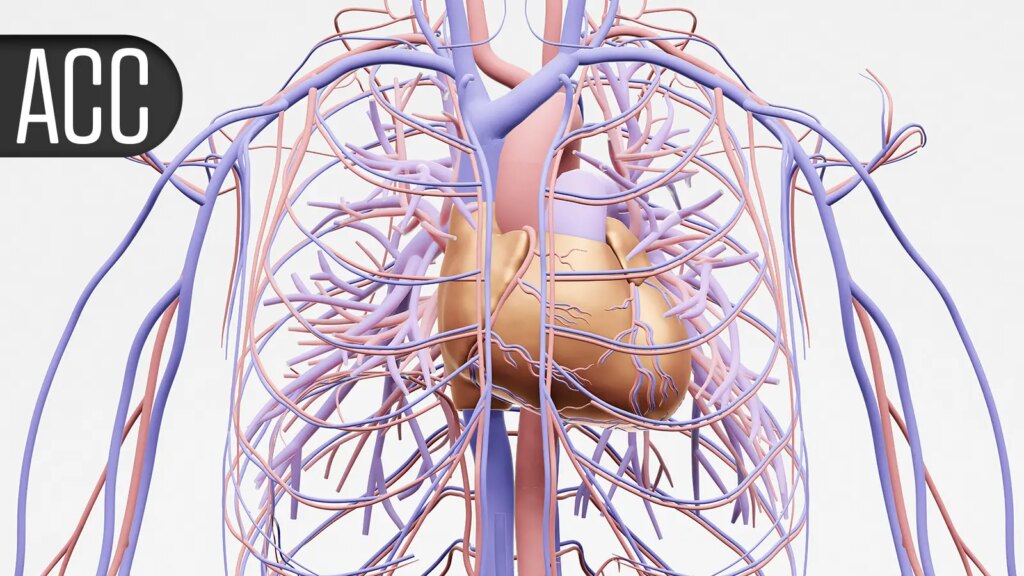
NEW ORLEANS — A major advance for the treatment of intermediate-risk pulmonary embolism (PE) arrived with HI-PEITHO’s landmark report on ultrasound-facilitated, catheter-directed thrombolysis (CDT).
In this hard-to-treat group of acute PE patients, the composite endpoint of PE-related death, cardiorespiratory decompensation or collapse, or symptomatic recurrence of PE within 7 days significantly favored individuals who got CDT as opposed to anticoagulation alone (4.0% vs 10.3%, RR 0.39, 95% CI 0.20-0.77).
The benefit of the CDT administered in the study, with alteplase delivered specifically by the EKOS+ endovascular device, was apparently driven by a reduction in warning signs of cardiorespiratory decompensation or collapse in the intervention group, reported Stavros Konstantinides, MD, of University Medical Center Mainz in Germany, at the American College of Cardiology (ACC) annual meeting.
HI-PEITHO was published simultaneously in the New England Journal of Medicine.
Importantly, safety came out practically even between EKOS+ CDT and control groups in HI-PEITHOS whether in terms of major bleeding at 7 days (4.1% vs 2.2%, P=0.32), major bleeding at 30 days (4.1% vs 3.0%, P=0.64), or intracranial hemorrhage at 30 days (0 in both). One ischemic stroke did occur in the intervention group (vs 0 with controls) but this did not reach statistical significance.
“I think it’s a really big day for the field of RCTs [randomized clinical trials] and PE,” commented Jay Giri, MD, MPH, of University of Pennsylvania in Philadelphia. “For 15 years, we’ve had a hypothesis that by delivering the lytic locally, with much lower doses, we could sustain efficacy, but decrease complications, risks of bleeding.”
“[HI-PEITHO is] a very exciting trial, I’d say the most important trial in hospitalized patients with PE in the last 12 years since the original PEITHO trial,” Giri, who was not involved in the study, told MedPage Today.
Patients selected for HI-PEITHO were an intermediate-to-high risk cohort who appeared stable but had some evidence of right ventricular dysfunction and were at risk of cardiorespiratory decompensation — a group long considered a difficult gray area for treatment. In the original 2014 PEITHO trial, for example, systemic, full-dose tenecteplase had mixed results in the intermediate-risk setting: it successfully prevented hemodynamic decompensation, albeit at the cost of excess major bleeds.
Meanwhile, EKOS+ and various catheter-based PE interventions have already made it to the U.S. market.
“Prior to [HI-PEITHO], there was insufficient data to support CDT for this group and clinicians were left to their best judgement on how to intervene. Clinicians would be more inclined to use advanced measures in [high-risk patients], since these patients are already showing signs of cardiopulmonary insufficiency or collapse,” explained Mark Creager, MD, of Dartmouth-Hitchcock Medical Center in Lebanon, New Hampshire.
Essentially, by going the CDT route in HI-PEITHO, Konstantinides and colleagues were able to replicate the PEITHO benefit while producing a lower risk of major bleeding.
Nevertheless,what constituted clinical benefit in this trial may still be a source of controversy.
Giri highlighted the trial’s reliance on the National Early Warning Score (NEWS), wherein various points are scored for abnormal respiration rate, oxygen saturation, use of supplemental oxygen, body temperature, systolic blood pressure (BP), heart rate, and level of consciousness. This is a criterion for cardiorespiratory decompensation or collapse, not familiar to many in clinical practice, that ultimately turned HI-PEITHO positive.
Then there is the argument that cardiovascular decompensation is itself not necessarily a patient-oriented outcome. “There was no significant difference in death, recurrent PE, or even 6-minute walk at 30 days, which indicates functional status,” cautioned Lauren Westafer, DO, MPH, of UMass Chan Medical School-Baystate in Springfield, Massachusetts, who was not involved with the study.
Giri pointed out two other caveats, namely that the included patients were at inherently low bleeding risk, and this was a population enriched for risk. “It’s not just every patient coming in with right ventricular dysfunction,” he said. “If we’re going to extend the therapy downstream to slightly healthier patients, this trial is not necessarily telling us to do that, so I think we have to think about that more carefully.”
Still, “this is what we call the real kick-off of the golden era of pulmonary embolism RCTs,” he said. He cited ongoing CDT trials in intermediate-risk PE such PRAGUE-26 and PE-TRACT, as well as his group’s mechanical thrombectomy trial PEERLESS II.
Study Details
HI-PEITHO was a postmarket, open-label trial that screened patients in the U.S. and Europe from 2021-2025. Investigators sought individuals with intermediate-risk PE who had at least two indicators of cardiorespiratory distress (e.g., systolic BP ≤110 mm Hg; heart rate ≥100 beats per minute, or a respiratory rate >20 breaths per minute). Patients with persistent hemodynamic instability were excluded.
Notably, this arguably puts HI-PEITHO patients somewhere between C3 and D2 going by the new acute PE clinical categories.
The trial’s intention-to-treat analysis included a total of 544 patients (mean age 58.2, 42.6% women) who had been randomized to anticoagulation with or without ultrasound-facilitated, catheter-directed fibrinolysis with alteplase.
As part of the primary outcome, cardiorespiratory decompensation or collapse was defined as someone reaching cardiac arrest/need for CPR, signs of shock, ECMO, intubation or non-invasive mechanical ventilation initiation, or NEWS ≥9.
Unfractionated heparin was the most commonly used anticoagulant (71.6% of EKOS+ group and 55.7% of controls), followed by low-molecular-weight heparin (50.6% and 53.9%, respectively). “It remains to be seen if the results would be consistent with a more effective and safer anticoagulant,” Westafer told MedPage Today in an email.
Study authors reported that the intervention group received an average total alteplase dose of 8.9 mg for the 20 patients who had catheter placement on one side only, and 16.9 mg for the vast majority who had catheter placement into both the right and left pulmonary arteries.
Of note, the mean total infusion duration was 7.2 hours — a substantial pull on resources. “Health systems and clinicians must weigh the increased resource utilization (procedural cost and increased ICU admissions), with the potential benefit that may be of marginal clinical significance,” according to Westafer.
Please enable JavaScript to view the comments powered by Disqus.
Source link : https://www.medpagetoday.com/meetingcoverage/acc/120542
Author :
Publish date : 2026-03-28 20:04:00
Copyright for syndicated content belongs to the linked Source.