
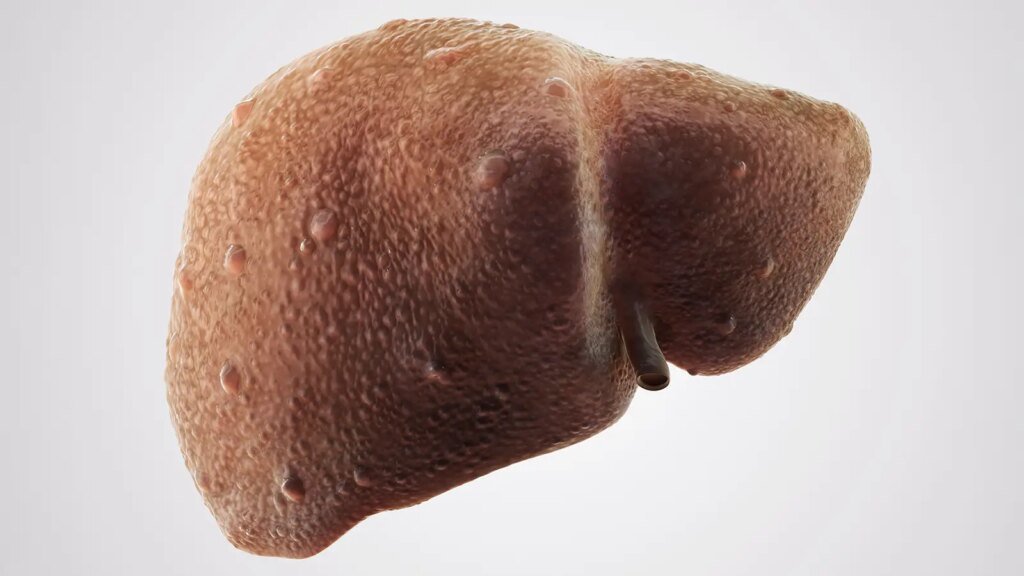
- A cross-sectional study found women with multiple cardiometabolic risk factors may face disproportionately higher odds of clinically significant liver fibrosis than men with similar profiles.
- The association was strongest for central adiposity, with high waist circumference linked to more than 13-fold higher odds of significant fibrosis in women compared to roughly 4-fold higher odds in men.
- While women had a lower overall fibrosis prevalence than men, they tend to progress more quickly to advanced disease, the authors noted.
Women with multiple cardiometabolic risk factors may face a disproportionately higher risk of clinically significant liver fibrosis compared to men with similar profiles, according to a cross-sectional study.
Among 5,981 adults, women with at least two cardiometabolic risk factors had more than three times the odds of significant liver fibrosis (adjusted OR [aOR] 10.22, 95% CI 4.76-21.95) compared with men (aOR 2.87, 95% CI 1.91-4.31, P interaction=0.002), reported Somaya Albhaisi, MBBCh, MPH, of the University of Southern California in Los Angeles, and colleagues in JAMA Network Open.
Among individual risk factors, greater odds of liver fibrosis in women versus men were observed for central adiposity, or high waist circumference — defined as more than 102 cm in men or 88 cm in women — and glucose intolerance:
- Central adiposity: aOR 13.45 (95% CI 5.70-31.78) vs aOR 4.44 (95% CI 3.00-6.57) (P interaction=0.01)
- Glucose intolerance: aOR 2.94 (95% CI 1.64-5.28) vs aOR 1.51 (95% CI 1.08-2.13) (P interaction=0.045)
“The clinical implication is important; women and physicians who care for them need to be aware of the observed association between increasing numbers of cardiometabolic risk factors and higher odds of significant liver fibrosis,” the authors wrote. “These findings highlight a potential need for future research to evaluate whether sex-specific risk stratification models could improve early detection.”
Counterintuitively, the overall fibrosis rates in the study were lower for women than men (6.9% vs 10.7%).
“Despite women having a lower overall fibrosis prevalence than men, women progress more quickly to advanced disease,” co-author Jennifer Dodge, MPH, also of the University of Southern California, told MedPage Today in an email. “Therefore, once these cardiometabolic factors are present in women, their risk relative to other women is greater than observed in men.”
However, women had a higher prevalence of high waist circumference than men (69.0% vs 48.6%), despite similar obesity rates of around 42% in both sexes, the authors noted.
“Clinicians should be measuring waist circumference more routinely in women, even in those who may not be clinically obese,” Dodge noted. Body mass index (BMI) is “limited in its ability to assess body composition. Waist circumference may better differentiate women at-risk for metabolic-related liver disease than BMI,” she said.
The waist circumference findings were reinforced by body roundness index (BRI), an alternative measure of central adiposity. High BRI was linked to significantly higher odds of fibrosis in women (aOR 12.4, 95% CI 4.5-34.1) compared with men (aOR 3.7, 95% CI 2.1-6.4, P interaction=0.006). Interestingly, high BRI was more common in men than women (73% vs 55%).
Hormonal, genetic, and environmental factors likely interact to worsen liver injury and fibrosis in women, investigators noted.
“While these findings require confirmation in large prospective studies, this study highlights potential sex-specific differences that may inform future research on fibrosis risk assessment,” the authors wrote.
Researchers analyzed National Health and Nutrition Examination Survey data from 2017 through 2020. Adults aged 20 years and older with valid transient elastography measurements were eligible for the study. Individuals were excluded if they had hepatitis B or C or incomplete data on cardiometabolic risk factors or alcohol use.
They included 2,992 women (mean age of 49) and 2,989 men (mean age of 47). About 65% of both men and women were non-Hispanic white, while 48.5% of men and 36.2% of women were smokers.
Researchers acknowledged several limitations. The study’s design does not allow for causation to be established. Additionally, they measured fibrosis through ultrasound-based elastography rather than biopsy, meaning some cases could have been misclassified, and menopausal status was not accounted for, nor were risk factors including diet, toxin exposure, and medication use.
“Without the menopause component, our findings reflect the average effect of these metabolic factors over the lifetime of women,” Dodge said. “We know estrogens are beneficial to liver health, and so it may be that in perimenopause and postmenopause, the risks related to these cardiometabolic factors are heightened.”
Please enable JavaScript to view the comments powered by Disqus.
Source link : https://www.medpagetoday.com/gastroenterology/generalhepatology/120282
Author :
Publish date : 2026-03-12 20:19:00
Copyright for syndicated content belongs to the linked Source.