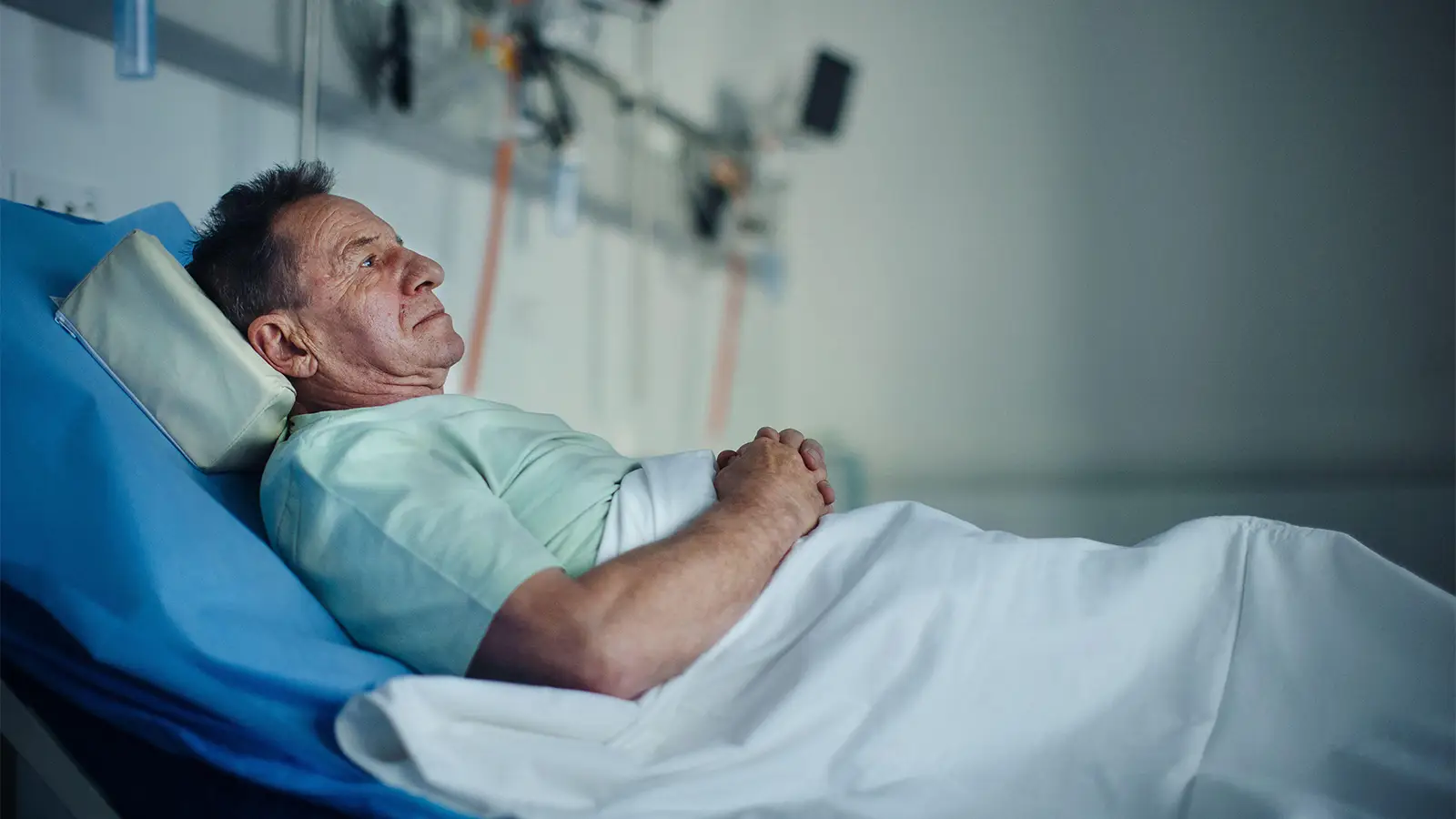
- Patients with cancer have significantly higher rates of fatal and nonfatal suicide attempts compared with the general population.
- A longitudinal cohort study suggested that veterans with cancer are at a persistently elevated risk for suicide, with certain subgroups emerging that were previously overlooked.
- Increased hazards for suicidal self-directed violence occurred among those who were Asian (vs white), unmarried, those with central nervous system or head and neck cancers (vs lung cancer), and those with advanced cancer.
Veterans with cancer are at a persistently elevated risk for suicide, with certain subgroups emerging that were previously overlooked, according to a retrospective longitudinal cohort study.
In the cohort of over 290,000 veterans diagnosed with cancer, there were 2,400 suicidal self-directed violence (SSDV) events, with an overall rate of 203 per 100,000 person-years, reported Donald R. Sullivan, MD, of Oregon Health & Science University in Portland, and co-authors.
Altogether, there were 22 fatal and 181 nonfatal suicide attempts per 100,000 person-years, they noted in JAMA Oncology.
“It’s no secret that patients with cancer suffer from higher suicide rates,” Sullivan told MedPage Today. What this study challenges is the idea of who is most at risk for suicide.
Increased SSDV hazards (6 months post-diagnosis) occurred among those who were Asian versus white (adjusted HR 2.55, 95% CI 1.12-5.76), unmarried (aHR 1.83, 95% CI 1.47-2.27), those with central nervous system (aHR 2.07, 95% CI 1.13-3.80) or head and neck cancers (aHR 1.67, 95% CI 1.13-2.48) versus lung cancer, and those with advanced cancer (aHR 1.30, 95% CI 1.00-1.68).
Risk generally decreased over time after diagnosis, but remained elevated 5 years post-diagnosis for younger veterans (age 45 vs 46-64; aHR 1.58, 95% CI 1.29-1.94), unmarried veterans (aHR 1.48, 95% CI 1.35-1.62), veterans with central nervous system versus lung cancer (aHR 1.63, 95% CI 1.22-1.27), and veterans with advanced cancer (aHR 1.30, 95% CI 1.14-1.50).
“These findings highlight the need for enhanced screening and tailored prevention beginning at diagnosis and continuing throughout survivorship and the importance of capturing all suicidal behaviors as a core component of comprehensive cancer care,” Sullivan and team concluded.
Notably, by including nonfatal suicide attempts, patient subgroups who previously weren’t seen as high risk were identified, including younger patients, women, people of Asian descent, and those with “good-prognosis cancer,” Sullivan said.
“Ninety-five percent of suicide attempts are nonfatal … so, if you only study the fatal attempts, it’s really only the tip of the iceberg,” he noted, adding that nonfatal attempts are “the single greatest predictor” for fatal suicides.
Being diagnosed with cancer at any life stage is challenging, Sullivan said, but for younger people who may have family obligations, young children, and full-time jobs, often with fewer financial resources, increased stress may contribute to suicide risk.
“There aren’t a lot of great survivorship programs for patients,” Sullivan noted, suggesting that cancer societies take the lead in establishing such programs. Palliative care also appears to be linked to reduced fatal and nonfatal suicide attempts, he said.
For this study conducted from January 2014 through December 2023, the authors relied on data from oncology and suicide registries and the Veterans Health Administration. They included 292,271 veterans, all of whom had a diagnosis of invasive solid or hematologic cancer.
Mean age was 69, 98% were men, 75% were white, 21% were Black or African American, 5% were Hispanic or Latino, and 1% each were American Indian or Alaska Native, Asian, or Native Hawaiian or other Pacific Islander.
The most common method of suicide attempt was by poisoning (26%), using anxiolytics, muscle relaxers, and opioids, followed by firearms (23%). Poisoning was most prevalent among younger men and both older and younger women.
The estimated likelihood of SSDV events was highest for veterans with central nervous system, pancreas, head and neck, liver and biliary system, and thyroid cancers.
Veterans with severe frailty (544 events per 100,000 person-years), advanced cancer (261 events), chronic mental illness (419 events), and high pain scores (236 events) had high SSDV rates compared with the overall cohort.
Younger age (≤45 years; 643 events per 100,000 person-years), female sex (369 events), American Indian or Alaska Native race (286 events), and central nervous system (394 events) and thyroid (359 events) cancers were tied to high rates of nonfatal attempts.
Only 2% of all participants were women, which was a study limitation, Sullivan said. In addition, the authors assessed fatal and nonfatal suicide attempts, but excluded other suicidal behaviors, which may underestimate risk.
Future research should investigate which kinds of interventions cancer centers can invest in to reduce rates of suicidal behavior, Sullivan added.
Source link : https://www.medpagetoday.com/psychiatry/generalpsychiatry/121469
Author :
Publish date : 2026-05-28 15:11:00
Copyright for syndicated content belongs to the linked Source.