

[ad_1]

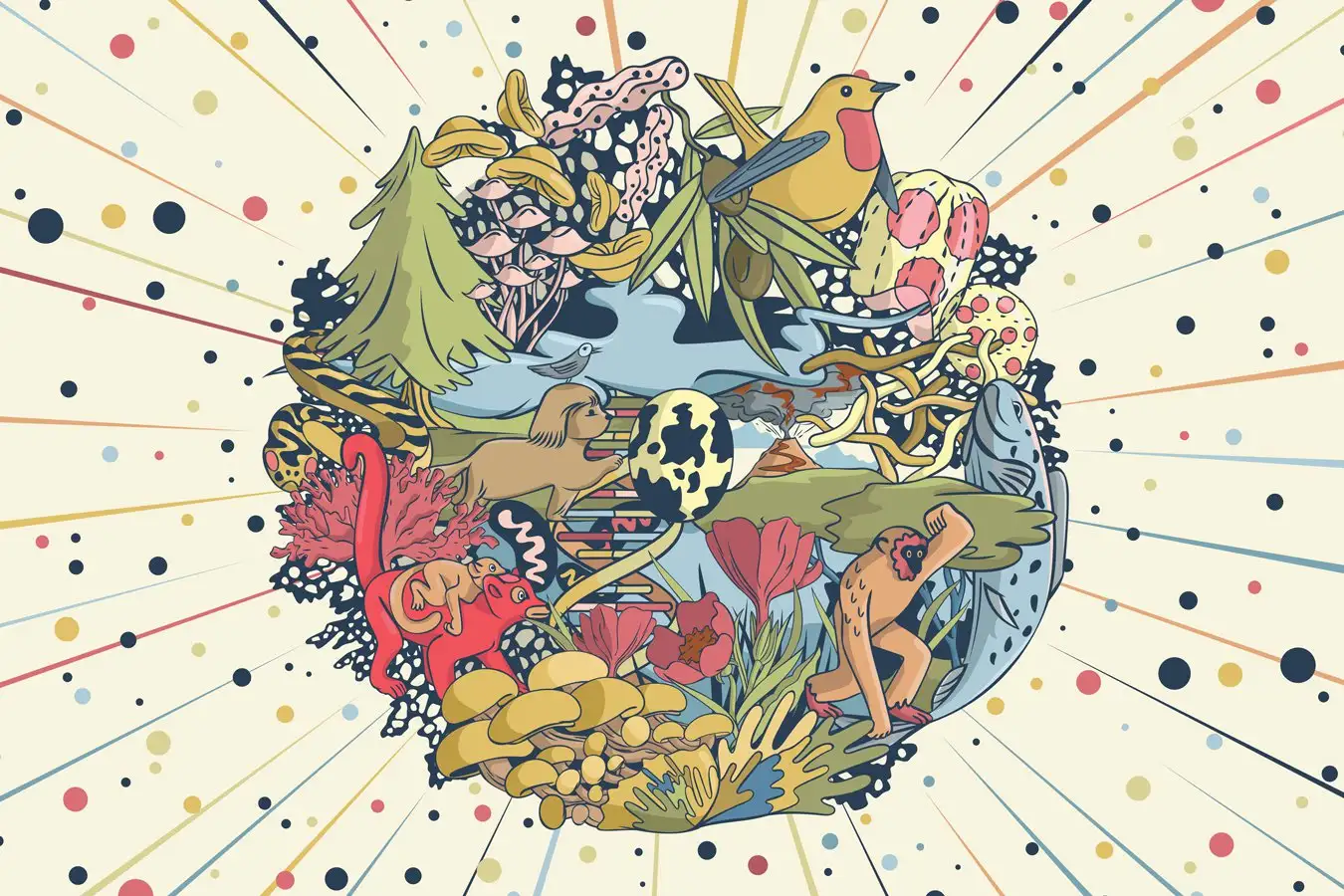
Wherever you are reading this, look around you. Every living thing you can see – other people, pets, birds flying past, trees, flowers, mushrooms, fish – is here because of unions between different species. Classic cases are lichens (typically formed of algae and fungi) or corals (made of algae and animal components), but these examples underplay just how far and deep symbiosis goes.
In my new book Togetherness, I make the case that symbiosis – which means “living together” – has been neglected in our explanation of biology and ecology. It’s not just that I think it’s a shame that its significance has been unappreciated; it’s that recognising symbiosis is vital to help us understand who we are and how we came to be.
Complex life – all those things you see around you – exists only because of a deep form of cellular symbiosis, and all plants rely on symbiosis to grow and to produce all the food we eat. But this isn’t widely recognised. Since before Charles Darwin published his theory of evolution, and even more so afterwards, we have emphasised the role of competition in the evolution of life, fuelled by the idea of nature being “red in tooth and claw”.
What I didn’t expect to find when researching my book is that the growing understanding of this togetherness, and the way it forces us to look at the world anew, is helping to demystify one of the greatest and oldest questions in science: how did life begin? The picture that is coming into view is set to reshape our definition of what life is – and inform the search for alien life.
The mission to decode how the earliest cells evolved has a long history. Darwin was reluctant to speculate publicly on life’s origins, but in 1871 he wrote to his friend Joseph Hooker: “But if (& oh what a big if) we could conceive in some warm little pond with all sorts of ammonia & phosphoric salts, light, heat, electricity [etc.] present, that a protein compound was chemically formed, ready to undergo still more complex changes.”
The “warm little pond” idea has been attractive and persuasive, but that location is now thought unlikely to have been the crucible of life. Instead, much of the current excitement focuses on deep-sea hydrothermal vents. The tiny pores in the rocks act like ready-made cells, and in the tension between the hot alkaline water emitted from the vents and the colder, acidic seawater, you have an electrochemical gradient that could power biochemical reactions. Which is another way of saying that it could power life.
“The internal pores of the vents have cell-like structures with electrically charged catalytic surfaces, while the continuous flow gives continuous reactivity,” says biochemist Nick Lane at University College London, one of the leading origin-of-life researchers.
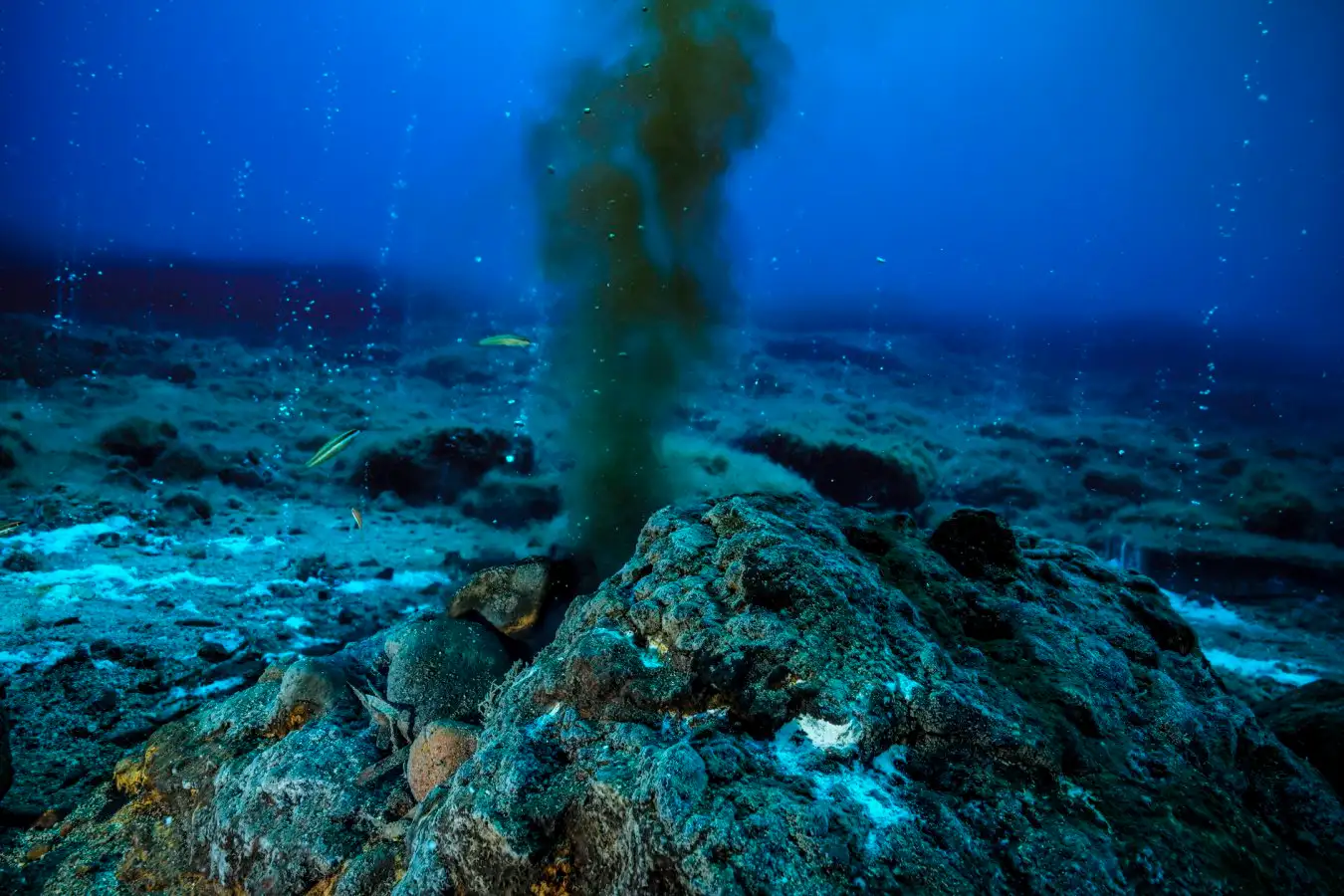
Deep-sea hydrothermal vents are thought to be where life on Earth originated
Alexis Rosenfeld/Getty Images
What I love about this idea is that it takes the insight of some of the great scientists of the past and turns it into a testable hypothesis. In 1866, Ernst Haeckel, the “German Darwin”, suggested that life arose directly from non-life, from inorganic materials. In 1944, physicist Erwin Schrödinger wrote that life evolved to be tightly coupled to its environment, and, in the 1960s, microbiologist Carl Woese speculated that life evolved in a loose-knit community, with “protocells” freely swapping molecules.
Then, in 1985, physicist Freeman Dyson took Schrödinger’s idea and fused it with the breakthrough work of the microbiologist Lynn Margulis. Margulis had marshalled evidence to definitively show that the complex cells of plants, animals and fungi originated in an ancient act of symbiosis between two simpler cells. (Symbiosis is used in biology to refer to two different species that live intimately together for a significant period of time.)
Life’s two origins?
Inspired by this, Dyson suggested that life had two origins. First came early versions of cells called protocells, in which metabolic processes – the biochemical reactions that provide energy – got going. Later, he thought, came the development of a way to store genetic information that could act as a replicator: a strand of RNA. These two proto-life forms, he said, merged through a process akin to symbiosis.
Now, these ideas are being put to the test. To see how this is being done, I visited Lane’s lab to observe how he and his colleagues are mimicking the possible conditions at the origin of life and starting to make their own protocells. “We’re looking for an environment,” says Lane, “where geochemistry gives rise seamlessly to biochemistry” – where non-life shades into life.
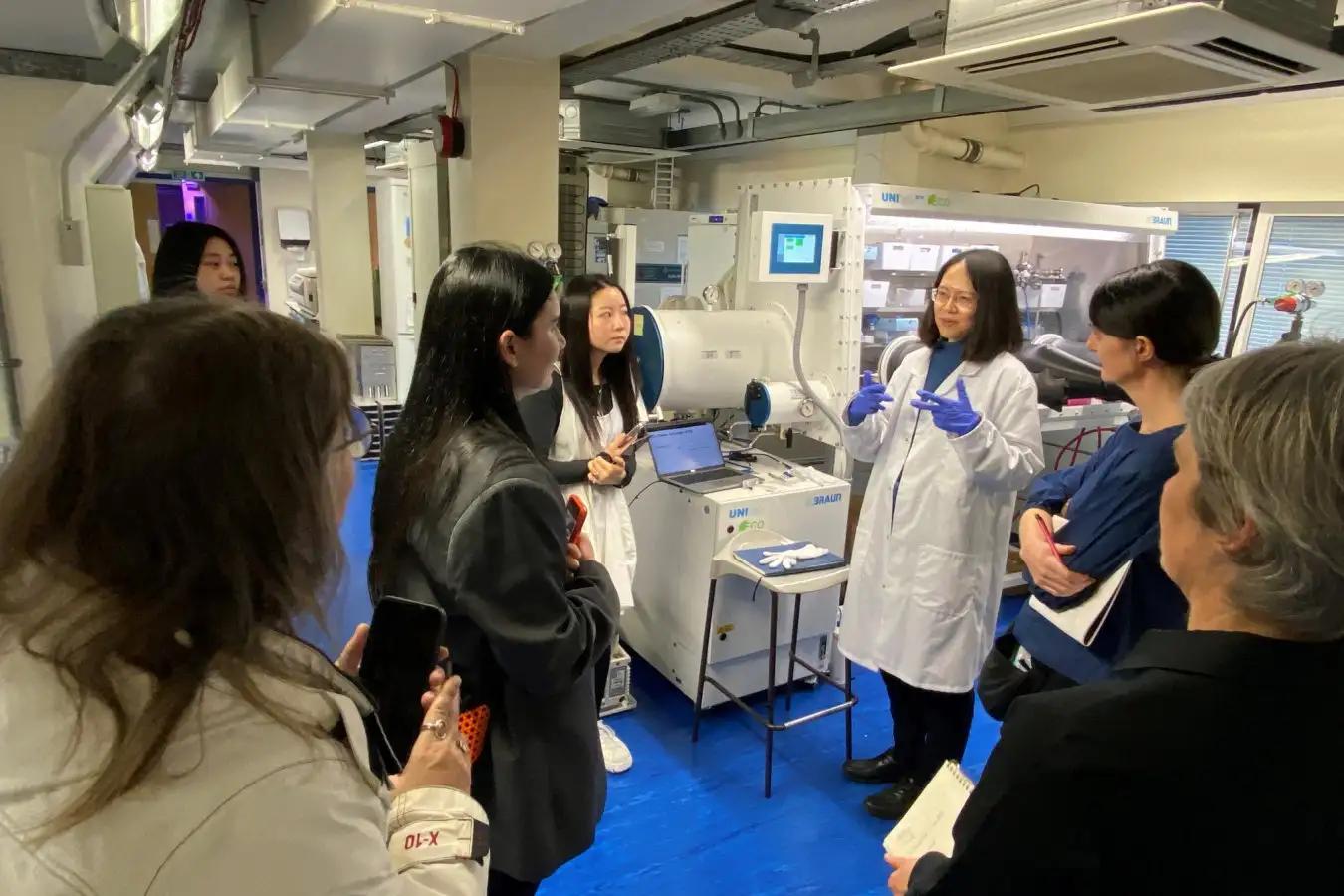
Feixue Liu explains to students how the lab’s oxygen-free “anaerobic” chamber is used for origin-of-life studies
Nick Lane
In the lab, Feixue Liu is working to reproduce one of the first stages in metabolism: the reaction of carbon dioxide and hydrogen to make simple organic compounds, such as formate and acetate. She shows me the Y-shaped piece of apparatus she uses to simulate a hydrothermal vent.
“Down one side of the Y we put ocean fluid, down the other is vent fluid,” she tells me. “By doing this, we try to mimic the ancient hydrothermal environment.” It all takes place in a controlled-atmosphere chamber without oxygen present, a bubble of the ancient Earth from 4 billion years ago. A chip detects any organic molecules produced by the flow.
The propensity of molecules to self-assemble has, for me, been one of the most startling recent discoveries in this field – in particular, the fact that metabolic processes themselves arise spontaneously. They got going prior to the origin of life.
Biochemists talk of molecules moving towards a thermodynamic minimum. That’s their way of saying “the resting state of molecules”. It means molecules, even complex ones, can form simply because that’s what chemicals and molecules “want” to do; like putting a ball at the top of a hill and it rolling to the bottom because that’s the natural place it “wants” to be, molecules “want” to travel along preferred biochemical and thermodynamical pathways. This is why the nucleotide ingredients for RNA and DNA can form spontaneously, even in asteroids. It is why quite complex metabolic pathways can arise without needing the programming of genes. These metabolic reactions are the first glimmerings of life.
Spontaneous DNA formation
The most compelling evidence is the finding that a metabolic pathway used in all life forms arose before the genes that code for it. “We think of metabolism as being genetically encoded,” says Lane, “but work over the last decade shows it is actually spontaneous chemistry, a network of thermodynamically favoured reactions.” The acetyl-coenzyme A pathway is the oldest and simplest way that cells unlock energy, and is used in all known life forms. Bill Martin at the University of Düsseldorf, Germany, showed that the pathway seems to be older than the enzymes that catalyse it and also older than the genes that encode its enzymes: the pathway came first, then the genes followed in its wake.
We know too that, in the right conditions – such as in the shelter of a mineral cell in a hydrothermal vent – the energy molecule adenosine triphosphate (ATP) can form spontaneously. In all cells, from bacteria to blue whales, ATP is the universal energy currency. What this suggests is that life is patterned along reactions that were already occurring naturally.
“It’s not what gets made, but how that potentially explains life’s origins,” says Lane’s colleague Stuart Harrison.
Dyson thought that the metabolic processes going on in the protocell set the stage for an “invasion” by RNA. What Harrison, Lane and their colleagues suggest instead has a pleasing utility. They have found that random nucleotides that form in the communal soup of the protocell can act as templates to make peptides, the chains of amino acids that form proteins.
“You now have information which, yes, it’s random at first, but that information is getting loosely translated into function,” says Harrison. In other words, in a protocell – where we know there is a form of metabolism going on, and an energy source – you can get the basis of a genetic code operating automatically. And that means natural selection kicks in.
“If you have function and you inherit that bit of information [via a gene], you might be more likely to survive and natural selection starts to actually happen,” says Harrison.
Origin-of-life paradox
This pathway to life helps get around a classic problem in origin-of-life studies, known as the paradox of heredity. The paradox is that to have genetic heredity, you need what geneticists call translation: a way to turn information from genetic material into a protein. Cells do that through a complex production line in which a molecular machine called a ribosome creates proteins from amino acids. To get this system, however, you need evolution, and you can’t have evolution without heredity.
But what if there’s some sort of translation that can happen before all of that machinery, which just happens naturally, without the enzymes, asks Raquel Nunes Palmeira, also at University College London. “You can get evolution without having the whole shebang of the machinery.”
Nunes Palmeira, Lane and their colleagues have modelled how this could work and found that random sequences of RNA built from nucleotide units can indeed “solidify” into distinct genes coding for proteins with a particular function: driving growth of the protocell. For natural selection to operate, you need heredity, variation and differential success, and what the model finds is that lengths of RNA that code for the growth of the protocell – such as the conversion of carbon dioxide into organic compounds – come first.
“Relating back to Dyson’s idea, here the RNA and the protocell are not separate individuals,” says Nunes Palmeira. The RNA isn’t an invading parasite, but rather is an intrinsic part of the metabolic processes going on in the protocell.
This is more like what Woese imagined had happened at the origin of life. He, too, suggested that translation would occur naturally, that proteins would get made by random fragments of RNA, because there are chemical affinities between nucleotides and amino acids.
It is great to have this framework, but this doesn’t mean we are on the verge of replicating the origin of life in the lab. And even if, one day, we create a working, reproducing protocell, that doesn’t mean we have shown how life evolved, warns Harrison. “There will always be a question mark,” he says. “Have we solved the origin of life, or have we solved an origin?” There are many alternative hypotheses about how life arose.
Extra-terrestrial life
But there is a way to check if a framework for creating protocells is correct. “You can look on other planets,” says Nunes Palmeira, to see if chemistry leads to metabolism in a similar way. We can look in other places, too.
In March, scientists analysing samples taken from the asteroid Ryugu announced they had detected all five of the nucleobases that make up DNA and RNA. That is: adenine, cytosine, guanine, thymine and uracil, the units of the genetic code. The news was widely reported as evidence supporting the idea that life may have been seeded on Earth from elsewhere and delivered by asteroid. But that isn’t the most exciting conclusion to draw from the finding.
The detection of these ingredients supports the idea explored in this article: that nucleobases – and even perhaps the much larger molecules of RNA and DNA – form easily, all over the place. All the ingredients needed for life had also been found on the asteroid Bennu. “It looks to me more like these chemicals are just a thermodynamic minimum, perhaps at the universal scale,” says Harrison.
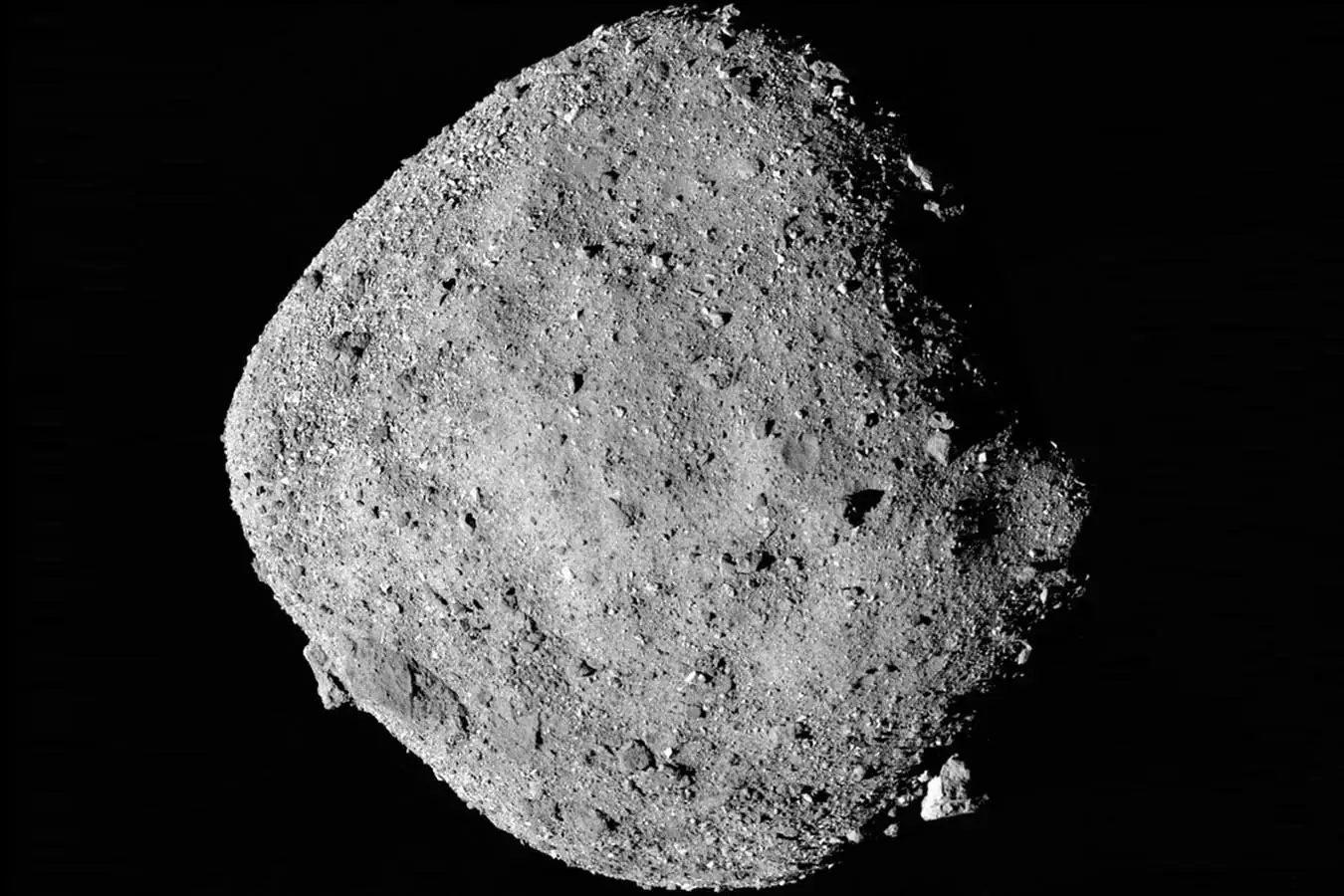
Samples taken from the asteroid Bennu show that it contains all the molecular ingredients for life
NASA/Goddard/University of Arizona
As we have seen, even metabolic processes appear to be examples of innate chemical “desires”. In fact, life itself can be defined as a biochemical process that works to a thermodynamic minimum. We don’t need to imagine life being sparked by a supernatural finger or delivered to Earth on a meteor. Life is just a process of chemistry.
“Amazingly, if you start from hydrogen and carbon dioxide, the formation of cellular biomass is favoured thermodynamically,” says Lane. Not only might life be very common across the cosmos, but the chemical affinities mean life might have similar genetic building blocks. “All life in the universe could be eerily similar to us,” says Harrison. Saturn’s moon Enceladus, which has hydrothermal vents similar to those on Earth, would be a good place to look.
The picture emerging is not quite the symbiotic coming together of two entities, as envisioned by Dyson. “However, I can see the argument that there is some sort of molecular cooperativity between the chemical reactions, RNA polymers and early peptides,” says Harrison. “It depends on how loose a definition of symbiosis we are happy to have.”
If we define symbiosis as two species living together, then we are never going to have strict symbiosis at the origin of life, back before there even were any species. I’m happy to loosen the definition here. But perhaps we should look back before Dyson, to Woese, who said that our universal ancestor was “communal, a loosely knit, diverse conglomeration of primitive cells that evolved as a unit”. The primordial soup was a communal broth. The vibe at the ancient hydrothermal vent, one that is still vital in life and ecosystems today, was one of togetherness.
Topics:
[ad_2]
Source link : https://www.newscientist.com/article/2526959-how-a-radical-new-view-of-life-could-reveal-its-origin-and-aliens/?utm_campaign=RSS%7CNSNS&utm_source=NSNS&utm_medium=RSS&utm_content=home
Author :
Publish date : 2026-05-26 16:00:00
Copyright for syndicated content belongs to the linked Source.