
\r\nHer work has appeared in the LA Times, Scientific American, Discover Magazine, New York Times, Washington Post, NEJM, & more. Her recent documentary about a globalizing, foodborne parasite is airing on PBS stations. Her MedPage Today column, \u201cOf Parasites and Plagues,\u201d explores lesser known infectious diseases.<\/p>“,”affiliation”:””,”credential”:”MD”,”url_identifier”:”cp5758″,”avatar_url”:”https:\/\/assets.medpagetoday.net\/media\/images\/author\/Panosian_330px.png”,”avatar_alt_text”:”Claire Panosian Dunavan”,”twitter”:””,”links”:null,”has_author_page”:1,”byline”:”Contributing Writer, MedPage Today”,”full_name”:”Claire Panosian Dunavan”,”title”:”Contributing Writer, MedPage Today, “,”url”:”https:\/\/www.medpagetoday.com\/people\/cp5758\/claire-panosian dunavan”,”bluesky”:””}]”/>
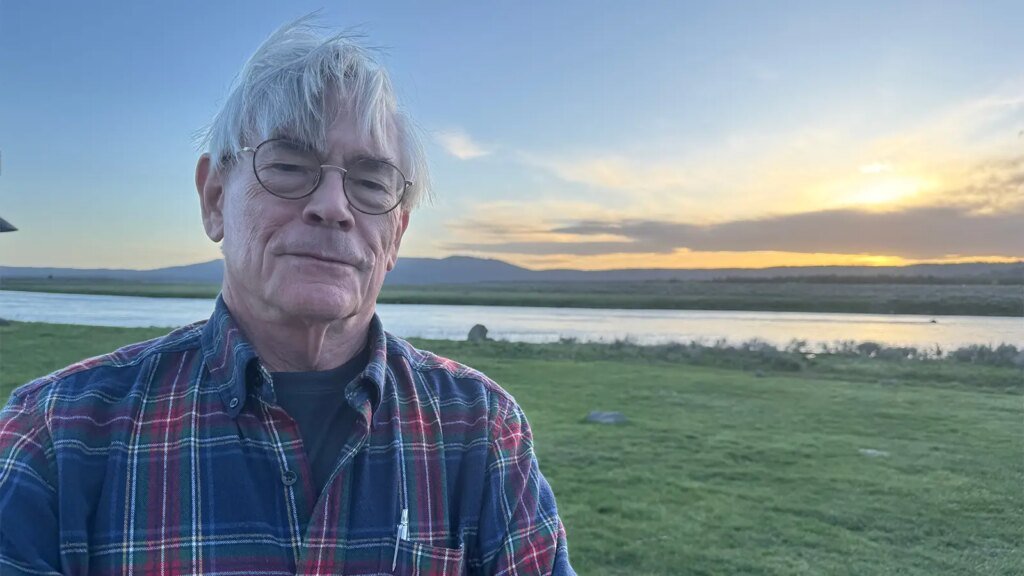
For many doctors like me, Donald G. McNeil Jr.’s byline will always inspire respect. A New York Times (NYT) reporter since the 1970s, he first earned his medical stripes in the 1990s as a foreign correspondent covering HIV/AIDS in South Africa. After returning home in 2002, he lobbied for an unprecedented beat.
“You’ve already got two MDs covering things Americans die of,” he told science editor Cornelia Dean. “Why don’t I cover the diseases poor people die of?”
Five years later, interest bloomed after McNeil and his colleague Celia Dugger co-authored a series on diseases hovering on the brink of eradication but never quite disappearing. Among other honors it won the Grand Prize in Journalism from the Robert & Ethel Kennedy Human Rights Center. Hunting for story ideas, McNeil started attending meetings of the American Society of Tropical Medicine and Hygiene (where he and I met) and wrote hundreds of articles about vaccine-preventable diseases and tropical infections. Then COVID-19 appeared, and his early recognition and forceful warnings that it threatened not just China but the entire world drew even more attention.
A year later came a bolt from the blue: his forced departure from the NYT because, in 2017, he had repeated a racial slur uttered by a high school student while leading an NYT-sponsored trip to rural Peru. McNeil’s controversial ouster was followed a month later by a lengthy, public rebuttal. Since then, he has written op-eds for The Washington Post focused on policies of HHS Secretary Robert F. Kennedy Jr. In addition, despite his divorce from the NYT, his was the most prominent byline among reporters who shared the paper’s 2021 Pulitzer Public Service Medal for pandemic coverage. In 2024, his book, “The Wisdom of Plagues: Lessons from 25 Years of Covering Pandemics,” was published by Simon and Schuster.
The following interview with McNeil was conducted in May 2026.
Panosian: What’s your reaction to the administration severing ties with the World Health Organization (WHO), shuttering the U.S. Agency for International Development (USAID), and cutting back the President’s Emergency Plan for AIDS Relief (PEPFAR)?
McNeil: I suspect the world knows these cutbacks are President Trump’s personal whims, not carefully considered American policy. Quitting the WHO was foolish. Epidemics don’t start in Iowa cornfields; they start in faraway jungles and wet markets. To stop them, you need to move fast. But some countries lie (China hid its SARS outbreak in 2002 and Saudi Arabia hid MERS in 2012) and many just lack the ability to fight new pathogens. We want to be part of pressuring countries to tell the truth (which the WHO can do under the International Health Regulations). And we need the WHO’s diplomatic cover to get our medical teams, some of whom are in military uniforms, into countries that might not want our troops on their soil. Also, the WHO is the hub for global disease alerts. When passengers who might have hantavirus disembark from a Dutch ship and then fly to the U.S., we want to be told — and quickly.
The conventional wisdom that the WHO stumbled badly during COVID is false. I was on the phone with them from the beginning, and they tried hard to raise the alarm and tell countries how to minimize the spread. They repeatedly pointed out Asia’s success. Not just China’s. By late May, when we hit 100,000 COVID deaths, Japan had only 857 and South Korea just 269. We ignored their advice. I also don’t agree that the WHO completely succumbed to Chinese pressure. They get pressure from all their big donors. But just for the sake of protecting ourselves, we want to be at that table, exerting pressure. Not sulking outside.
Slashing USAID and PEPFAR was vindictive, and a tragedy. Studies have concluded that hundreds of thousands have already died and millions may soon, many of them children. Patients in clinical trials were abandoned. Foreign aid is a tiny fraction of our budget, and the life-saving things we buy — porridge meal, cooking oil, powdered milk, vaccines, malaria medications, mosquito nets, and so on — are generally very cheap. And good PR for us. South Africa, which suffered very big cutbacks, is a crucial site in many clinical trials, including of drugs and vaccines we need. This is “America First” shooting itself in the foot.
Panosian: How do you feel about the “transactional” mindset in American foreign aid?
McNeil: When you’re giving foreign aid, I don’t think it’s unreasonable to demand some basic quid-pro-quos: that it not be stolen, that they not cozy up to your enemies. I remember Obama’s State Department being upset when Uganda accepted millions from PEPFAR and then used its new oil money to buy Russian fighter jets. But you have to set clear rules and then give warnings before imposing punishments.
To just jerk the money away and say “Gee, I see your people are dying. What a pity — would you like to sign a mining contract?” is immoral. We’re America, not the Mafia. Also, it has to be proportional: You can’t give a country like Zambia a few million and then say, “Now kick out all the Chinese companies who’ve invested billions.”
Panosian: During your time in Africa, what were the most affecting situations you witnessed and what were your proudest achievements?
McNeil: I still brood over my 1998 visit to a Johannesburg “baby sanctuary” where all the happy toddlers, including the one clinging to my leg, were doomed to die by age 5 because they were born with HIV and couldn’t afford the antiretroviral drugs that cost $15,000 a year. My proudest achievement is the reporting I did in India 2 years later that played a small role in getting its generics industry into the game. They drove the price to below $100 and made PEPFAR and the Global Fund possible.
As a journalist, I saw a beat that was rarely covered: people dying because Big Pharma’s prerogatives and the patent system were rigged against them. Plus, some of their diseases ultimately threatened America, so I could make all readers — not just the bleeding-heart liberals — pay attention.
Panosian: In the last year, you’ve harshly criticized Secretary Kennedy’s domestic vaccine policies. What are some likely global repercussions?
McNeil: As you note, most of his bad moves have been domestic. But his international ones — like supporting cutting $600 million from global vaccine efforts — are just crazy. Unless we ban jet travel, foreign outbreaks will reach our shores. Many of those vaccines are made in India for pennies per dose, so they’re cost-effective. And preservatives like thimerosal are essential in poor countries with no cold chains. Even if the mercury was minutely dangerous — which it isn’t — the risk would be worth it because the benefit of avoiding diphtheria, tetanus, pertussis, and other lethal diseases is so great.
Panosian: Other than publicizing rising morbidity and mortality, are there other strategies that might combat the misinformation Secretary Kennedy is fueling?
McNeil: Just keep telling the truth. He’s rapidly losing credibility. Americans trust their doctors. If my doctor posted shirtless videos of himself pumping iron with Kid Rock or taking his grandchildren swimming in a sewage-tainted creek, I’d find a new doctor. His surgeon general candidate sank. CNN reported that the White House nominated an outstanding potential new CDC director, Erica Schwartz, MD, MPH, JD, because she’s “not crazy.” Kennedy’s anti-vaccine rhetoric is backfiring; Trump’s favorite pollster found that 86% of all voters and even 80% of Make American Healthy Again (MAHA) voters support vaccines.
Panosian: In your 2016 book, “Zika: The Emerging Epidemic,” you revealed tremendous compassion for mothers and children hurt by the virus and unmistakable anger over ill-advised policy decisions. How has your temperament helped or hindered your career? And to what do you credit your empathy for the global poor?
McNeil: My bluntness, to which I’m sometimes deaf, gets me in trouble. I hope I aimed it mostly at the powerful, like government officials, pharma executives, or newspaper publishers — although I did lose my cool too often with my poor editors; I hate being rewritten.
About empathy: How could I not feel it when I met so many people dying needlessly, especially kids? At the Times, I was also a union organizer. Maybe it was 12 years of Catholic education followed by Berkeley. I’m an atheist and a capitalist, but my early influences included liberation theology and ivory tower socialism. Also, I noticed that my dad, who was a very tough lawyer, got mail from the many charities he donated to.
Panosian: Can you share some final thoughts for readers who may be discouraged by our politics?
McNeil: I fear we just need a new administration. And a new generation of billionaires. Unless there’s a coup in 2028, I imagine we’ll get the first. We’ll probably get the second too, because even billionaires have fads. John D. Rockefeller was funding public health before Bill Gates, Ted Turner, or even Warren Buffett were born. Till then, we should file lawsuits to stop illegal executive orders, vote, defend the free press (including by buying subscriptions), and hang on, hoping for better days.
Please enable JavaScript to view the comments powered by Disqus.
Source link : https://www.medpagetoday.com/opinion/parasites-and-plagues/121283
Author :
Publish date : 2026-05-16 16:00:00
Copyright for syndicated content belongs to the linked Source.