[ad_1]
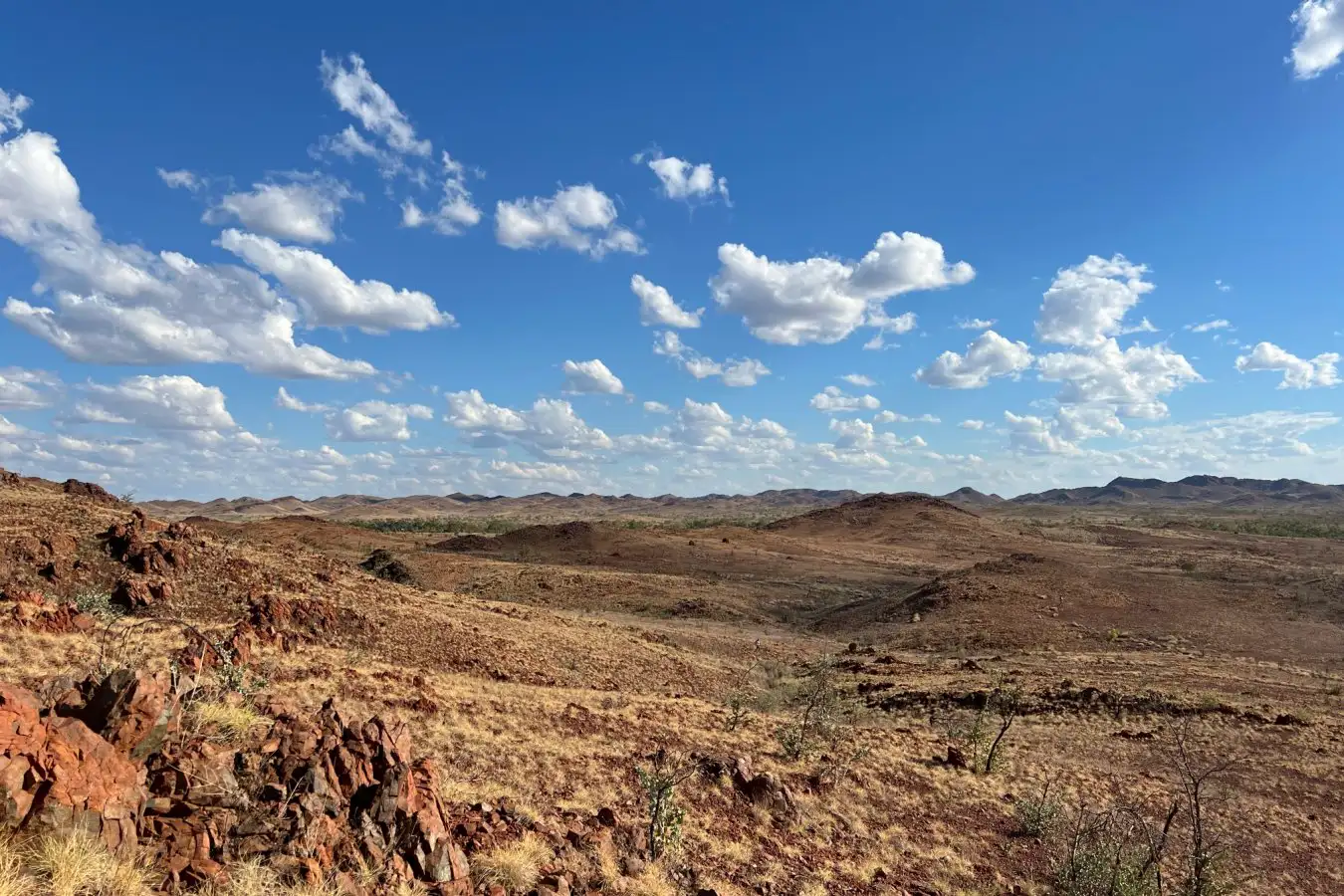
The landscape in the North Pole Dome crater in Western Australia
Curtin University
A huge crater in Western Australia was created by an asteroid strike 3 billion years ago, according to a mineral-dating technique. This would make it the oldest impact crater on Earth – but other researchers have questioned its proposed age.
The North Pole Dome crater, also known as the Miralga impact structure, was first described by Chris Kirkland at Curtin University in Perth, Australia, and his colleagues in 2025. They estimated that it could be up to 100 kilometres wide.
Kirkland and his team found a layer of rock containing cone-shaped features called shatter cones, which form only after a high-impact event, such as an asteroid strike. Their original study didn’t directly date this rock, but based on correlations with dated rocks in the layers above and below, they proposed that the impact was 3.47 billion years old.
This would make it more than 1.2 billion years older than the Yarrabubba crater in the south of the state, which is regarded as the oldest reliably dated asteroid-strike crater on Earth.
It would also make it the only known impact from the Archaean aeon, a time when the entire planet was a giant but inhospitable water world.
However, another team, including Aaron Cavosie, also at Curtin University, strongly contested the 3.47-billion-year date. Based on their own analysis of rocks in the area, the team members argue that the impact took place no earlier than 2.77 billion years ago.
Now, Kirkland and his colleagues say they have successfully dated recrystallised minerals at the crater site, which contain shatter cones. “We have now actually looked inside the rocks and tried to find minerals that directly responded to impact in the rock itself, rather than making correlations,” says Kirkland.
Using the rate of the decay of uranium into lead, the team dated zircons within the shatter cones, which recrystallised as a result of the force of the asteroid strike.
They also dated the mineral apatite, which would have formed in the hydrothermal system created by the heat of the impact.
Both the apatite and the zircons returned dates of around 3.02 billion years old, says Kirkland. “So now we’ve got evidence for very hot water percolating through the rocks 3 billion years ago and also evidence for this really unusual heating and recrystallisation process,” he says.
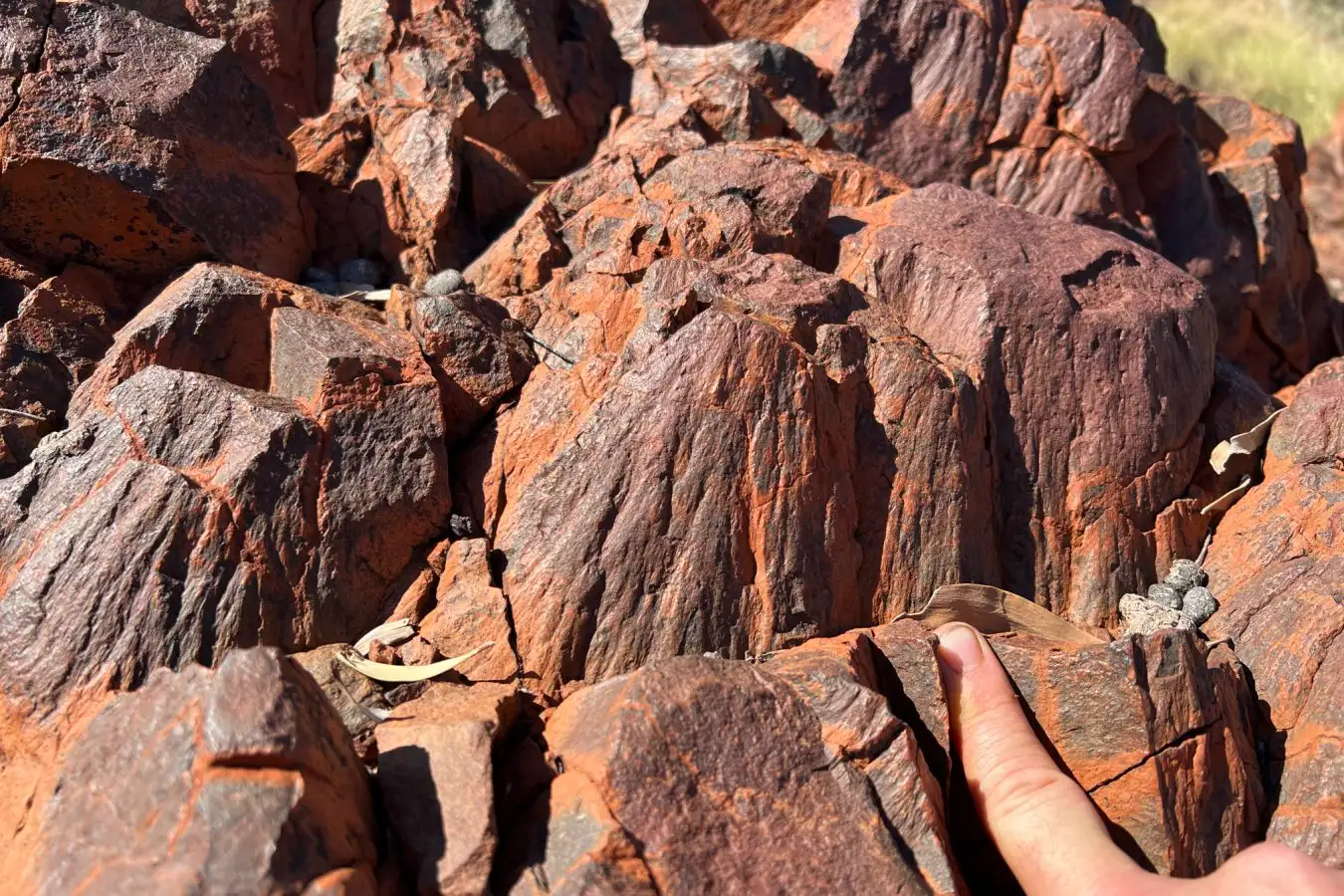
Rocks in the North Pole Dome crater
Curtin University
Kirkland says no other known process, such as mountain building or regional metamorphism, easily explains the mineral changes inside the shocked rocks, because there is no evidence that the area was heated or deformed by those processes at about 3.02 billion years ago.
“The only process really that we can link to these mineralogical changes is an impact,” he says. “So that means the best evidence now is a 3-billion-year-old impact, and that by far is the oldest impact crater on the planet.”
Cavosie welcomes the fact that the age of the crater has been revised significantly, but he thinks Kirkland’s team is still overestimating the crater’s age.
“While I’m relieved these authors have backed off their 2025 ‘3.5-billion-year impact’ hypothesis, I don’t think they’ve presented a compelling case for a [3.02-billion-year] impact either,” says Cavosie. “The slow march of science towards the truth thus continues.”
Cavosie says there are clearly shatter cones in younger rocks that are only 2.77 billion years old, which means the impact must have happened after this date.
Alec Brenner at Yale University, who was also part of the group that critiqued the original study, agrees with Cavosie that the rocks must be younger than 2.77 billion years.
“While the new study dismisses this observation because these rocks ‘have not been dated’, they are straightforwardly correlated to nearby rocks that have been dated,” says Brenner.
Kirkland says the key difference is that his team has now directly dated minerals inside the shocked rocks. “The younger age argument still depends on long-distance correlation of undated rocks, largely from satellite-based mapping rather than direct geochemistry or geochronology,” he says. “We now have two mineral clocks from the impact rocks themselves giving the same age. That is why direct dating matters.”
Topics:
[ad_2]
Source link : https://www.newscientist.com/article/2531525-huge-crater-in-australia-may-be-the-oldest-impact-structure-on-earth/?utm_campaign=RSS%7CNSNS&utm_source=NSNS&utm_medium=RSS&utm_content=home
Author :
Publish date : 2026-06-23 23:00:00
Copyright for syndicated content belongs to the linked Source.