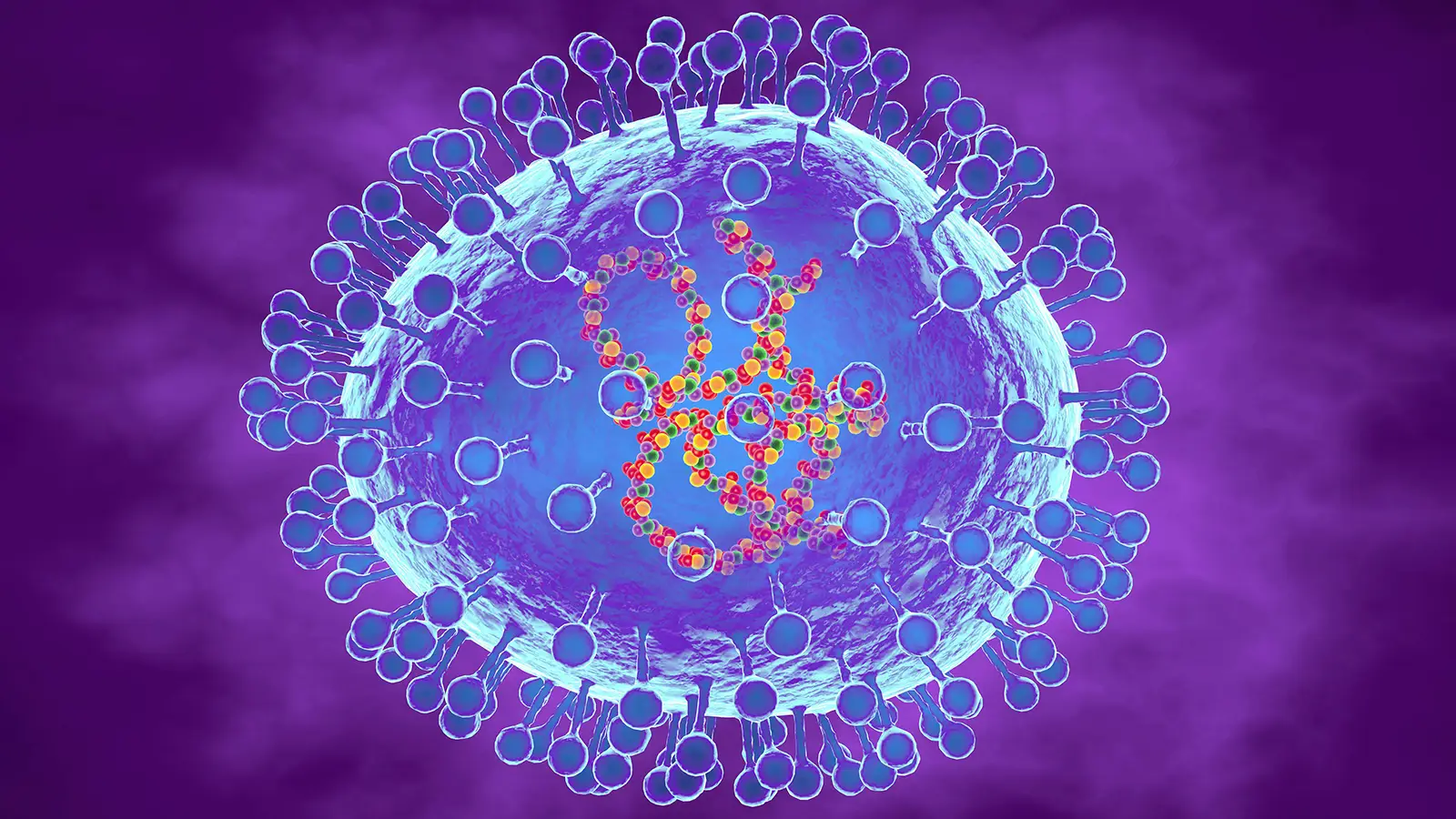
“Little-known virus spreading rapidly on West Coast, experts warn…” was the opening line of an Instagram post quoting Fox News that I read last week. Fair enough, I thought. But then came the scaremongering. “Cold, flu and COVID may get the most attention, but a lesser-known, highly contagious virus is taking the West Coast by storm. Wastewater SCAN data show that human metapneumovirus, or HMPV, is rampant in Northern California — specifically San Francisco, Marin, Vallejo, Napa, Novato, Santa Rosa, Sacramento, and Davis…”
That’s when I vowed to share my husband’s HMPV saga. But first, a disclosure, followed by a spoiler alert.
Number One: Last year, my husband Patrick passed away. However, if he were still alive today, he wouldn’t blink an eye at me writing this column. His life was an open book, and he believed in the power of stories to teach.
Number Two: In most people, HMPV simply causes a common (albeit often rotten) cold with a lot of inflammation. It is not usually deadly, and it did not kill my husband.
A Man, a Plan, a Canal, Panama
Eight years ago, if you had seen my tall, boyish spouse bounding up a gangway to board a Panama Canal cruise, you would never have guessed his lungs had long been in dire straits.
For starters, they were chronically damaged due to the lasting effects of Patrick’s childhood asthma and bronchiectasis, followed by his smoking way too many cigarettes until he quit at age 45. Nonetheless, my partner — a much-lauded filmmaker — simply went on living and doing the work he loved with no one the wiser. He was also lucky not to need supplemental oxygen, except when certain respiratory infections later caused him to crash. Even so, we both knew the score. “Just remember,” a specialist told me during a hospital stay in 2010, “in the end, hypoxia will not be his problem, but the mere work of breathing.”
Back to our 2018 cruise, which was great until it wasn’t due to an outbreak of fever, congestion, and cough that sickened many passengers, including Patrick. In short, a far different man disembarked in Miami. Not only did he look depleted and gray, he was frequently puffing his inhaler and straining to breathe. As a result, it was I, not he, who wrangled our suitcases before we flew back to Los Angeles.
After returning home and worsening despite prednisone, Patrick went to the emergency department. There, a nasal swab detected HMPV and a chest CT showed subtle lower-lobe infiltrates. Once admitted, he got aggressive respiratory care, empiric antibiotics, and far higher doses of IV methylprednisolone (Solu-medrol).
Four days later, he was once again walking laps in his favorite houndstooth-check bathrobe, just as he had during other hospital stays. Nonetheless, HMPV dealt him a serious blow, and months passed before he (almost) returned to his previous baseline.
I, on the other hand, never fell ill. And Patrick’s experience was the exception, not the rule. While run-down lungs predisposed him to an especially severe course, the vast majority of us who contract HMPV would not need to see a doctor, much less be specifically diagnosed or closely monitored.
Nothing Beats Experience
Today, modern PCR tests can speedily detect HMPV and many other respiratory pathogens. Accordingly, we’re now learning just how much serious illness HMPV inflicts along with its better-known relative, respiratory syncytial virus (RSV).
A few noteworthy points:
- Although first isolated in 2001, HMPV has probably been around for at least 50-to-100 years.
- Recent studies suggest that HMPV accounts for 2%-to-8% of adult pneumonias requiring hospitalization.
- In one retrospective study conducted at the University of Michigan, HMPV also contributed to acute respiratory distress syndrome and ICU admissions in people with or without underlying chronic obstructive pulmonary disease (COPD), asthma, and cardiovascular disease.
- Despite the fact that initial HMPV infections typically occur in childhood, and that 90% of us have antibodies against it, our immunity is transient and incomplete, sometimes leading to multiple re-infections over a lifetime.
- Unlike RSV, HMPV currently has no approved vaccines or pathogen-specific antibody treatment.
So that’s the bad news. Nonetheless, readers should not conclude that patients with complicated illness due to HMPV and other cold- and cough-producing kin don’t benefit from careful, expert management. In Patrick’s case, UCLA’s Michael Roth, MD, a long-time pulmonary and critical care specialist, made a huge difference. After decades of treating highly vulnerable patients like Patrick, Roth has finely honed instincts about HMPV and other upper and lower respiratory tract pathogens.
“There are 20 respiratory viruses on the PCR list these days because they can all cause the same inflammatory process,” he recently told me. “RSV and HMPV used to be a rare occurrence in adults, right? Now they’re just two more to add to the list.”
Paradoxically, it’s the nature and outcome of that severe inflammation that separates healthy people who recover on their own from those who decompensate, Roth believes. “It’s all about your reserve,” he said.
At the same time, he emphasized that humans exhibit great diversity when challenged by HMPV. “We know so little about the immune system and how it’s regulated. It’s such an intricate system that it doesn’t take much for it to be slightly off. And the ‘off’ manifestations range from immunoglobulin deficiency to autoimmunity and everything in between.”
That rang a bell. Roth was the first doctor to measure Patrick’s immunoglobulins. Sure enough, along with childhood asthma and infections followed by COPD and a recurring disorder called allergic bronchopulmonary aspergillosis, my husband’s level of IgM, which helps fight viral infections, was consistently low. But not so rock-bottom low that he didn’t eventually beat respiratory infections time and again, thanks to skilled doctors and their treatments.
The Art of Medicine
I am truly grateful that my husband lived with chronic lung disease as long and well as he did. As was he.
But I will also close on an unexpected note for a column that began with a specific virus that has recently surged in California and beyond. Namely, whether your patients’ coughs, colds, or other respiratory ailments are due to HMPV or something else, modern healthcare professionals need to understand how, almost unknowingly, certain patients with severely impaired lungs can sometimes give a dangerous false impression.
During our recent phone chat, I realized no one knows this better than Roth.
“Patrick displayed a disconnect between how he presented and his true disability. So if Patrick comes into the office, he’s articulate; he doesn’t seem in any distress. He works around his limitations and adjusts. For some people, it’s a gift. It allows them to get on with life and not be bothered by people thinking they are chronically ill. But, at the same time, it’s a disadvantage because other people don’t recognize their significant limitations.”
To all the doctors who recognized my husband’s exquisite balancing act and helped him live into his 80s, I extend heartfelt thanks.
Source link : https://www.medpagetoday.com/opinion/parasites-and-plagues/120382
Author :
Publish date : 2026-03-19 16:22:00
Copyright for syndicated content belongs to the linked Source.