Health insurers should be required to have medical malpractice insurance because they insist on prior authorization for certain drugs and procedures, Rep. Neal Dunn, MD (R-Fla.), said Wednesday at a House hearing on healthcare affordability.
“Requiring prior authorization, whether on the part of an insurance company or whatever, is the practice of medicine, and I would invite them into the medical liability arena,” said Dunn, a urologic surgeon and member of the House Energy and Commerce Health Subcommittee, which held the hearing. “You and I have to pay [medical malpractice] insurance — so should they.”
Dunn was responding to a comment by one of the hearing’s witnesses, David Aizuss, MD, chair of the American Medical Association board of trustees. Aizuss discussed his ophthalmology practice’s administrative burden, including the hiring of two full-time staff members just to deal with prior authorization requests.
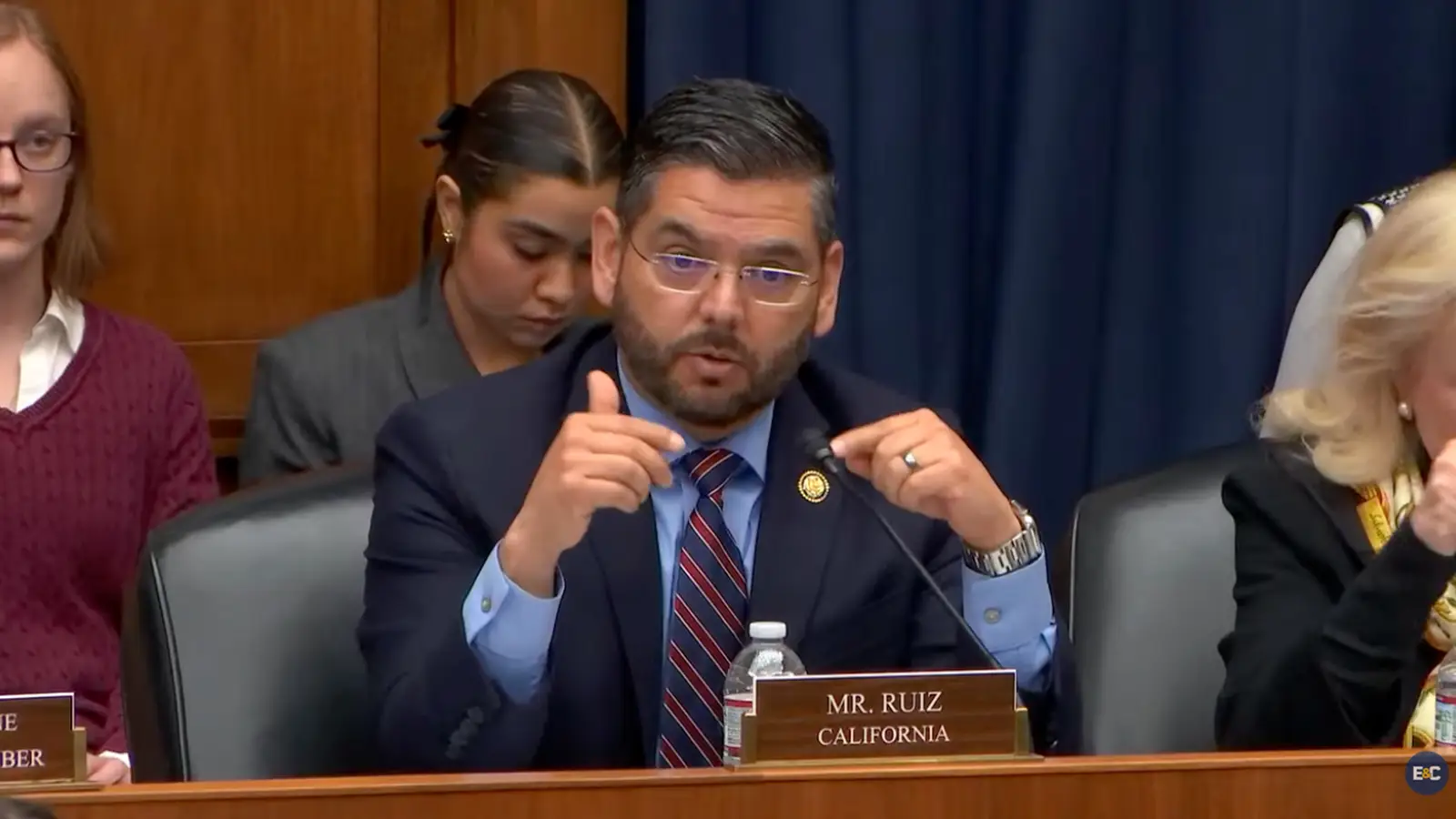
Another doctor on the subcommittee, Rep. Raul Ruiz, MD (D-Calif.), an emergency physician, criticized House Republicans, saying they contributed to the affordability problem. “This is very rich,” he said, adding that the Republican majority “called the hearing on the high cost of healthcare, while flat-out denying the elephant in the room. This is a problem exacerbated by their making.”
“Our healthcare system is in a crisis right now,” he continued. “It’s in a crisis because of the One Big Beautiful Bill, also known as the Big Ugly Bill,” which cut nearly $1 trillion from the Medicaid program. “It’s a crisis because they adamantly refused to extend the Affordable Care Act tax credits. All of these things raise costs for the patient.”
Physician and physician group witnesses at the hearing offered a variety of suggestions for improving affordability. Congress should recognize “that affordability is inseparable from access and promote policies that ensure consistent, reliable, and locally accessible physician care,” said Aizuss. “First, Congress should prioritize Medicare physician payment reform. Stabilizing Medicare physician practice payment is one of the most direct ways that Congress can protect patient access and counter further consolidation in the healthcare market.”
“In addition, Congress should reform Medicare’s outdated budget neutrality requirements to stop the annual cuts,” he continued. “Next, Congress should establish a real inflation update tied to the Medicare economic index to reflect rising staffing, technology, and compliance costs. Moreover, Congress must reform MIPS [Medicare’s Merit-Based Incentive Payment System] to ensure that small, rural, and independent practices are protected from the steep 9% penalties, and ensure physicians receive timely performance data.”
Shawn Martin, executive vice president and CEO of the American Academy of Family Physicians, said the best way to lower healthcare costs for the population is by improving population health through the strengthening of primary care. He offered a list of six solutions:
- Double the nation’s financial investment in the primary care physician workforce
- Reform the physician payment system “to more appropriately value the actual patient care done by physicians and not just the facilities in which they work”
- Establish regulatory frameworks that support independent physician-led models — specifically, direct primary care
- Reduce administrative complexity for medical practices
- Remove financial barriers to primary care
- Promote “proven, evidence-based interventions, including vaccines”
Anthony DiGiorgio, DO, a neurosurgeon at the University of California San Francisco, focused his remarks on physician-led healthcare entities, including a law that bars doctors from owning hospitals. “Section 6001 of the Affordable Care Act essentially prohibited new physician-owned hospitals,” he said in his opening testimony. “This has removed one of the few physician-led entities that could have checked consolidation. However, there’s ample evidence the physician-owned hospitals provide high quality care. They’re consistently ranked among the highest-quality hospitals, while improving access in underserved communities. That alone is enough to justify repealing section 6001.”
DiGiorgio’s comments got some pushback later in the hearing from another witness — Richard Pollack, president and CEO of the American Hospital Association. “The issue with physician-owned hospitals … is they’re not full-service hospitals,” he said. “A lot of them don’t have emergency rooms. They don’t take Medicaid. They don’t care for the indigent. They’re not open 24/7. They take the easier, well-insured cases and call 911 when something goes bad, and ask us [non-physician-owned hospitals] to come to the rescue.”
Hospital consolidation was another hot topic at the hearing. “It is highly problematic for hospital systems to, first of all, consolidate and then participate in these anti-competitive contracting approaches,” said Elizabeth Mitchell, president and CEO of the Purchaser Business Group on Health, which represents large employers who are interested in healthcare issues. She cited a recent situation in which Sutter Health was requiring employers to contract with all its hospitals for maternity care, even when the employer didn’t have any employees near some of the Sutter facilities.
“We believe that [consolidation] will likely contribute to additional cost increases,” Mitchell said. “And all of the data, all the evidence, shows that consolidation drives up prices between 3% and 60% with absolutely no benefit to quality or access. So it’s important to address consolidation as an affordability issue.”
Pollack, of the American Hospital Association, pushed back on those arguments. “When we come together as systems, we are often providing a lifeline to rural hospitals that are in great jeopardy,” he said.
Source link : https://www.medpagetoday.com/practicemanagement/reimbursement/120374
Author :
Publish date : 2026-03-18 21:10:00
Copyright for syndicated content belongs to the linked Source.