
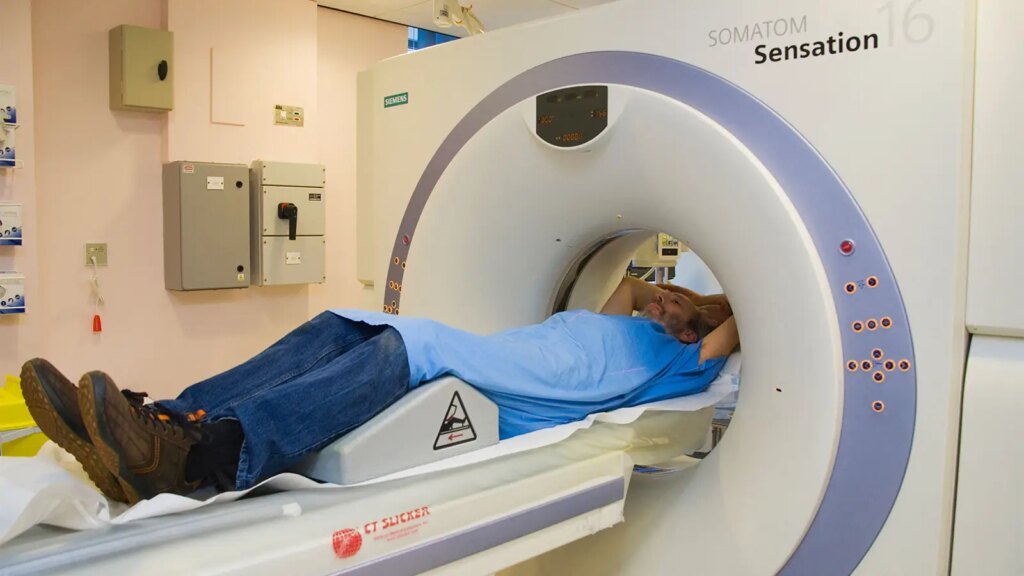
- Significant incidental findings detected on low-dose CT lung cancer screening were associated with an increased risk of an extrapulmonary cancer diagnosis over the following year.
- Risk differences were significantly higher for urinary cancers, as well as lymphoma and leukemia.
- Certain significant incidental findings should be assessed as potential indicators of undiagnosed cancers, researchers said.
Significant incidental findings detected on low-dose CT lung cancer screening were associated with an increased risk of an extrapulmonary cancer diagnosis over the following year, a retrospective cohort study suggested.
Among over 26,000 participants in the low-dose CT arm of the National Lung Screening trial (NLST), 67 of 1,807 patients with these findings had a diagnosis of an extrapulmonary cancer in the year after screening, reported Ilana F. Gareen, PhD, of Brown University in Providence, Rhode Island, and colleagues.
After adjustments, the marginal risk difference was 13.89 (95% confidence limit [CL] 7.03-20.75) per 1,000 participants, they noted in JAMA Network Open.
The marginal risk differences were significantly higher for urinary cancers (17.03 per 1,000 participants, 95% CL 8.55-25.50) and other Surveillance, Epidemiology, and End Results (SEER) Program cancer categories, including lymphoma and leukemia (13.83 per 1,000 participants, 95% CL 3.46-24.21).
“These findings suggest that certain SIFs [significant incidental findings] should be evaluated as potential indicators of undiagnosed cancers,” Gareen and team wrote.
“Early detection of these cancers may facilitate early treatment and potentially reduce associated morbidity and mortality,” they explained. “Identification of cancer SIFs associated with extrapulmonary cancers in NLST participants could be used to plan appropriate diagnostic evaluations for patients undergoing lung cancer screening.”
They acknowledged that while detection of these findings may lead to an early diagnosis of extrapulmonary cancer, it is uncertain whether this is associated with a reduction in cancer-specific mortality. Moreover, detection of significant incidental findings may be beneficial to patients, but “it may lead to unnecessary additional diagnostic interventions, increasing associated costs and risks.”
In an accompanying commentary, Patrick Senior, BSc, and Andrew W. Creamer, PhD, both of Gloucestershire Hospitals NHS Foundation Trust in England, noted that “the large size of the NLST cohort and stratification by organ systems make this study a valuable contribution to the screening literature.”
They pointed out that just 3% of those with incidental findings subsequently had an extrapulmonary cancer diagnosed, translating into a high false-positive rate of 97%.
Despite this high false-positive rate, “it is hard to imagine a scenario in which an incidental finding with even a possibility of representing cancer would be disregarded,” they wrote.
However, considering the number of people eligible for lung cancer screening programs, acting on these findings will place additional burdens on health systems investigating them, Senior and Creamer said.
Thus, the findings “underscore the importance of both a robust health economics analysis of how screening programs manage such incidental findings and patient-centered research to understand the impact that such unexpected results may have on the individual,” they concluded. “Further research is needed to ensure that screening programs are confident when faced with information they did not ask for.”
The NLST was a multi-institutional trial of 53,452 participants designed to determine whether screening with low-dose CT was associated with a reduction in lung cancer mortality compared with chest radiography.
Eligible participants were 55 to 74 years old, had a cigarette smoking history of at least 30 pack-years, and were either currently smoking or quit smoking within the previous 15 years. They were randomly assigned to undergo three rounds of screening with low-dose CT or chest radiography at 1-year intervals, then followed up for 5 to 7 years from trial recruitment.
The 26,445 participants in this analysis had a mean age of 61.4 years, 59% were men, 91.2% were white, and 4.5% were Black.
Participants with significant incidental findings considered to be related to cancer were older compared with those with no such findings (mean age 62.1 vs 61.4 years) and more likely to have a history of a smoking-related disease (68.6% vs 65.7%).
The researchers adjusted for covariates that included demographics, smoking history, smoking-related medical history, history of cancer, number of screening rounds, and timing of cancer diagnosis.
Please enable JavaScript to view the comments powered by Disqus.
Source link : https://www.medpagetoday.com/radiology/diagnosticradiology/120576
Author :
Publish date : 2026-03-31 17:49:00
Copyright for syndicated content belongs to the linked Source.