
Welcome to Culture Clinic, MedPage Today‘s collaboration with Northwell Health to offer a healthcare professional’s take on the latest viral medical topics.
Actress and talk show host Kelly Ripa recently revealed she had a dermatological procedure on her butt in an attempt to glean anti-aging benefits.
On a recent episode of “Let’s Talk Off Camera,” Ripa’s guest, actor Lukas Gage, said he was speaking with her fresh after a microneedling appointment.
“I did that on my [butt] cheeks,” Kelly admitted. When asked if it did anything, she quipped that her butt looked “just as old as before … but desperate times call for desperate measures.”
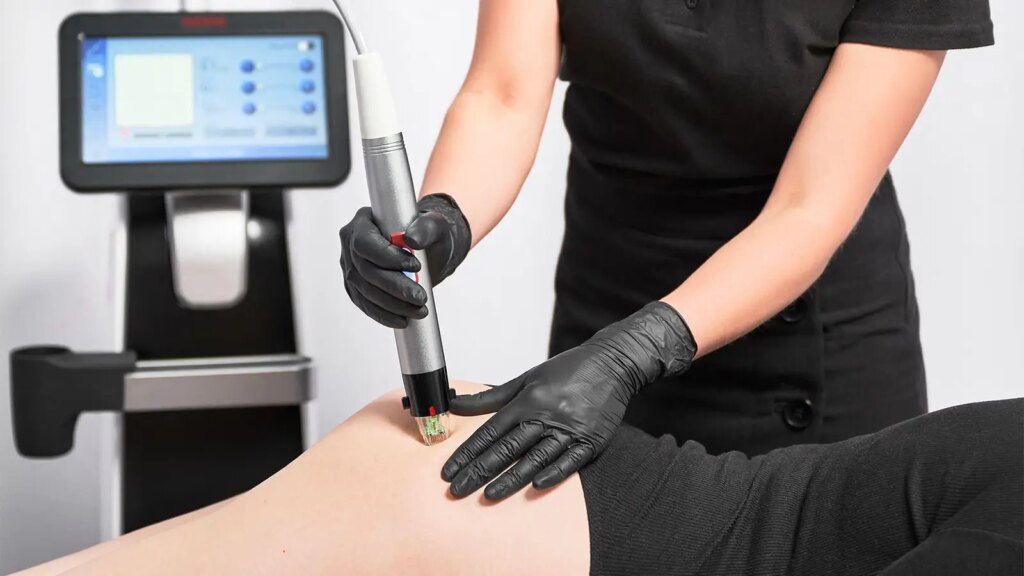
Microneedling is a skincare procedure in which a device containing tiny sterile needles is manipulated to strategically puncture the skin, explained Raman Madan, MD, a dermatologist with Northwell Health in Glen Cove, New York. It’s commonly used to soften the appearance of acne scars, fine lines, and wrinkles, most often on the face.
But does microneedling have benefits for the butt too? In most cases, probably not, Madan told MedPage Today in an interview in which a press person was also present.
“I think whoever ended up treating her probably offered microneedling because it’s a safe option with very little downside,” Madan said. “But again, just having being safe and having little downside doesn’t mean amazing results.”
The butt would have lackluster results because the needles only puncture up to 2.5 mm deep, mostly going into the epidermis and perhaps a bit of the dermis, and the skin on the rear is thicker than it is on the face.
The tiny punctures caused by microneedling, which Madan characterized as doing controlled damage to the skin, spark inflammation and the release of platelet-derived growth factors. Essentially, it signals to the body “to bring more nutrients to the skin,” he said.
Those growth factors increase the production of collagen and elastin, which both contribute to skin elasticity and decrease with age, Madan said. It starts with collagen type III, which Madan described as scaffolding that allows the body to build up type I collagen, the more dominant type which is densely packed and sticks around longer. Other controlled traumas to the skin, like laser treatments, can stimulate collagen production by sparking the same inflammatory process.
Microneedling has become more popular in the past 15 years or so, but it’s been around for much longer. Several companies now sell at-home microneedling devices, but Madan said most of these are no match for the results you’ll get from a professional. That’s in part because the needles tend to be much shorter and not puncture the skin as deep.
A more aggressive form of microneedling, radiofrequency microneedling, comes with more risks. Radiofrequency energy is transmitted through the microneedling device, which creates heat. The needles also sometimes go a millimeter or so deeper than regular microneedling. This more intense version has resulted in serious complications, such as burns, scarring, fat loss, disfigurement, and nerve damage, according to the FDA.
Madan emphasized that patient selection for microneedling is key. It can help with acne scars, pigmentation, and some stretch marks, but would not necessarily be effective on a big, deep face scar from surgery or on all areas of the body.
He advised clinicians to tell their patients to “have realistic expectations” as “there is no magic fix” — especially on areas of the body where microneedling is not typically done.
Please enable JavaScript to view the comments powered by Disqus.
Source link : https://www.medpagetoday.com/popmedicine/cultureclinic/120684
Author :
Publish date : 2026-04-07 20:30:00
Copyright for syndicated content belongs to the linked Source.