
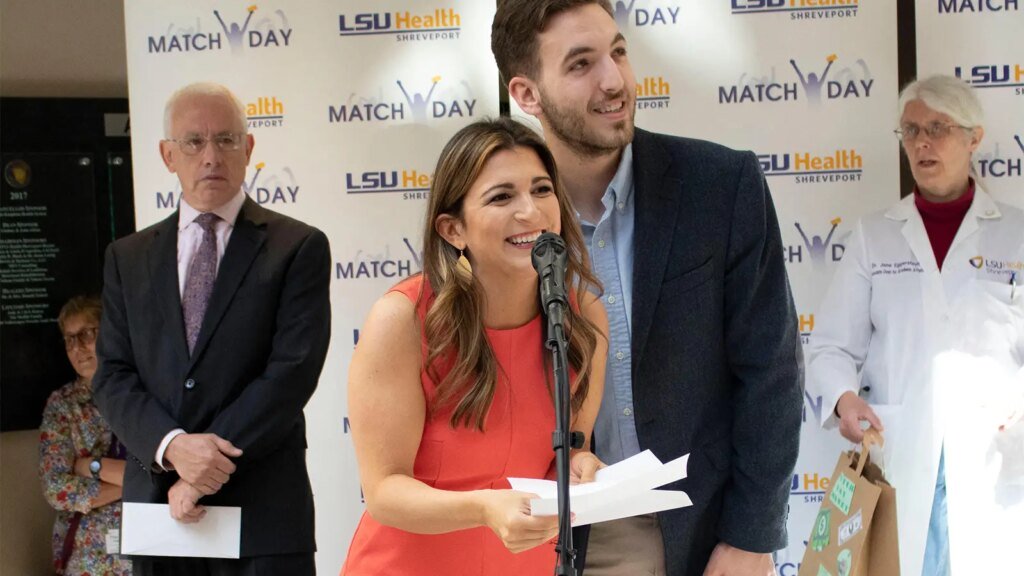
This year’s Match Day proved rough for two groups: family medicine and noncitizen international medical graduates (IMGs), according to data from the National Resident Matching Program (NRMP).
The match rate for noncitizen IMGs fell to 56.4%, its lowest in 5 years, and was particularly difficult for those who required visa sponsorship — with a postgraduate year 1 (PGY-1) match rate of 54.4%, compared with 67.9% for those who didn’t require sponsorship.
“Recent federal immigration policy changes have increased attention to visa sponsorship considerations in residency recruitment for foreign-born candidates,” the NRMP noted in a press release.
“I think it shows you that program directors are a little bit risk avoidant for those visa issues,” Bryan Carmody, MD, who reports extensively on the match and medical education via his blog Sheriff of Sodium, told MedPage Today. “Residency works on a fixed timeline, and programs need their applicants to be physically present and oriented and credentialed so that they can get to work on July 1.”
“Any threat that an applicant that you match might not be able to do that, it presents a big problem for the program,” he added.
Carmody noted that the number of noncitizen IMGs who applied for the match is actually up. While that may sound counterintuitive, Carmody noted it’s likely due to the fact that Trump administration changes to visa policy, such as its $100,000 H-1B visa fee, are relatively recent.
“For someone to apply to the match, they had to get on that trajectory years ago,” he said. “They didn’t just decide to join the 2026 Match last fall, they decided some years before that. Their career path and intention had been set in motion before those policy changes.”
Carmody says this year’s family medicine outcomes are also concerning, as 16% of all family medicine positions initially went unfilled, with a total of 899 of 5,491 positions remaining open.
“That was more than last year, and last year was more than the year before that,” Carmody said. “It’s a steady trend that’s different from what we’ve seen with other specialties, where there will be a shock of unfilled positions, and then there will be a correction.”
He cited emergency medicine as an example, which had 18% of positions unfilled in 2023, but continued to rebound over the next 2 years.
“In family medicine, you’ve had a pretty rapid expansion of positions that has not been matched by an increase in interest,” Carmody said.
NRMP said it will convene a “Blue Ribbon Panel” of family medicine leaders this year to “closely examine medical student interest, evolving residency recruitment dynamics, and broader factors influencing the specialty’s growth and sustainability,” the organization stated in its press release.
NRMP confirmed to MedPage Today that this is indeed the first time it has convened such a panel.
Karen Mitchell, MD, a vice president at the American Academy of Family Physicians, confirmed that her organization is “planning to participate in the Blue Ribbon Panel and we’re interested to see where it leads.”
To the contrary, other primary care programs showed strength, including internal medicine, pediatrics, and the 4-year med-peds program, NRMP reported. Overall, 95.2% of 11,632 internal medicine positions were filled, as were 94.4% of 3,185 pediatrics positions. Med-peds filled 100% of its 404 positions.
As for other trends, Carmody noted that there were “a lot of predictions that interest in ob/gyn was going to decline because of Dobbs, and that hasn’t really happened. It remains a healthy pipeline.”
And psychiatry had a strong showing, with 97.4% of its 2,516 positions filled and a steady upward trend in recent years for U.S. DO seniors in particular, NRMP reported.
Overall in the 2026 Match, there were a total of 48,050 certified applicants who submitted a rank order list, competing for a total of 44,344 positions. A total of 41,482 PGY-1 and PGY-2 positions were filled.
Nearly 21,000 U.S. MD seniors had a match rate of 93.5%, which has held constant since 2024, according to NRMP.
The 8,503 U.S. DO seniors had their highest PGY-1 match rate on record at 93.2%.
Among the 4,210 U.S. citizen IMG applicants, 70% matched; they fared far better than the 11,944 noncitizen IMGs who saw their lowest match rate in 5 years at 56.4%.
A total of 2,581 positions were offered through the Supplemental Offer and Acceptance Program this year, and final results for this year’s Match will be available in May.
Please enable JavaScript to view the comments powered by Disqus.
Source link : https://www.medpagetoday.com/hospitalbasedmedicine/graduatemedicaleducation/120424
Author :
Publish date : 2026-03-20 21:15:00
Copyright for syndicated content belongs to the linked Source.