[ad_1]
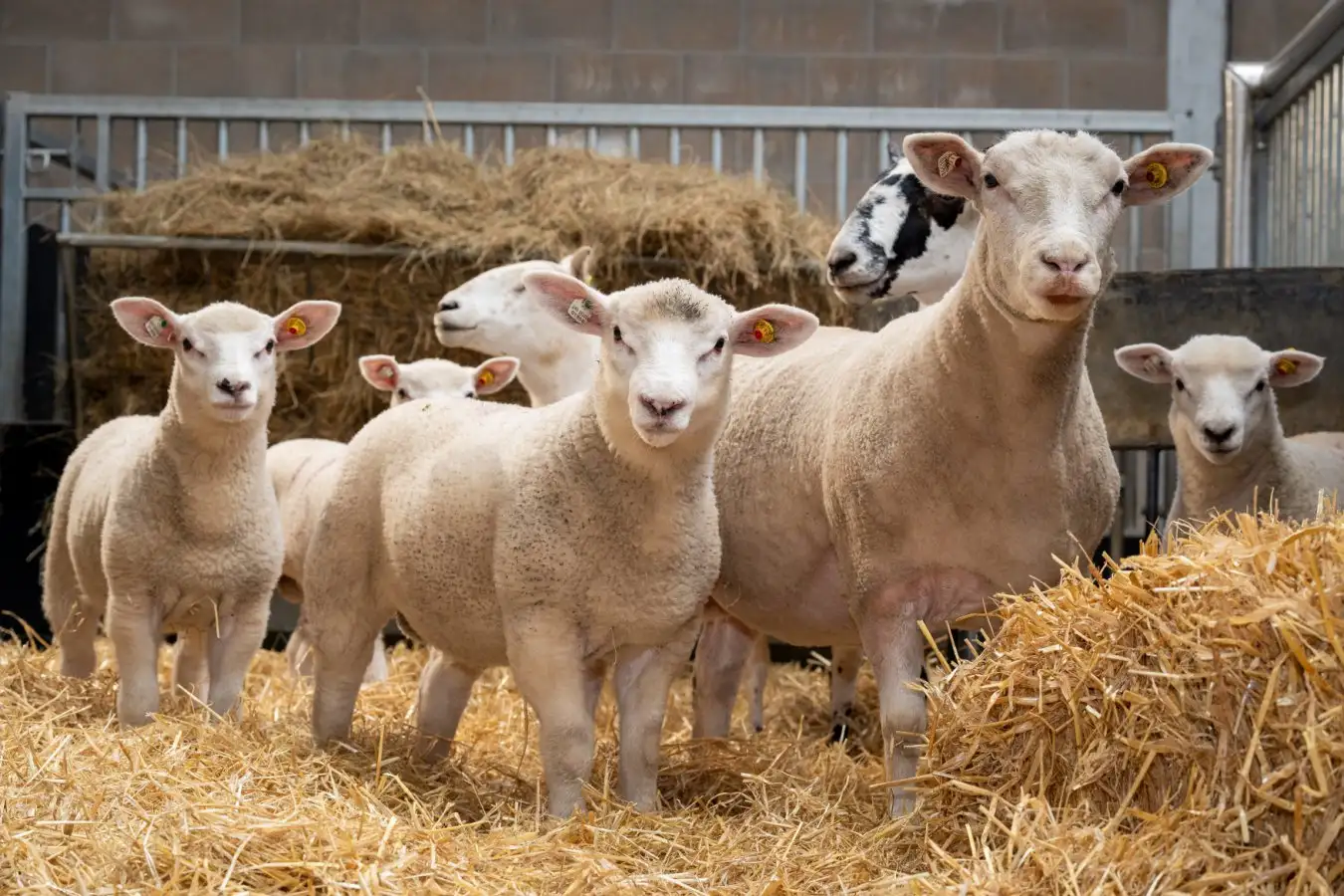
Five sheep have been born via experimental IVF, one of which has produced two offspring of its own
LAURENCE WINRAM
Healthy lambs have been born via an experimental form of in vitro fertilisation (IVF) that coaxes highly immature eggs to become mature ones in the lab. This is the first time the approach has been demonstrated in a large animal, raising hopes that it could boost the number of eggs available for the fertility treatment and improve IVF success rates. While further research is required, it may be of particular benefit when the ovaries have been damaged by cancer treatment.
“It’s really a major breakthrough,” says Stine Kristensen at Copenhagen University Hospital in Denmark, who wasn’t involved in the research.
More than 30 years ago, the same approach led to live births in mice. “Much more than mice, reproduction in sheep is quite similar to in the human body,” says Manjushree Boob at the Shubham Hi-Tech Hospital and Test Tube Baby Centre in Maharashtra, India, who also wasn’t involved.
Standard IVF involves daily injections for one to two weeks to stimulate immature eggs within follicles in the ovaries to develop into around 10 mature eggs. Of these, about six to eight are typically successfully fertilised in a lab dish. The resulting embryos are then implanted into the uterus, but this leads to a live birth in only around 20 per cent of cases.
That low success rate is why scientists are now looking at the potential of those immature eggs. Women are born with hundreds of thousands to more than 1 million of them, but the number declines throughout their life. During each menstrual cycle, one of these follicles forms a mature egg that is released during ovulation.
In the latest study, Helen Picton at the University of Leeds, UK, and her colleagues collected dozens of these follicles from sheep. They were bathed in a cocktail of reproductive hormones – such as follicle-stimulating hormone, which stimulates their growth and maturation – and growth factors, which coaxed about 60 per cent of them to form into mature eggs.
They successfully fertilised around 30 per cent of these eggs to produce embryos, which were implanted into the uteruses of 18 sheep. This led to the birth of a female lamb in early 2024 and another four births this year. That female also had two lambs this year, Picton said while presenting the findings at the European Society of Human Reproduction and Embryology conference in London on 7 July.
The results suggest the technique could boost the number of eggs available for fertilisation, which may improve conception rates, says Kristensen. But to maximise the chance of conception, this would probably be done in addition to standard IVF, so wouldn’t make it more convenient and could even add to the expense, she says.
Picton adds that the approach is unlikely to be used routinely, because retrieving the follicles involves taking a sample of the ovary lining, which is more invasive than collecting mature eggs during standard IVF.
But women whose ovaries have been damaged by cancer treatment could benefit, says Picton. Doctors often work to preserve their fertility by removing and freezing fragments of ovarian tissue beforehand, then transplant it back into the body when they are hoping to conceive, but there is always a risk the transplant contains cancer cells. Collecting immature eggs wouldn’t carry the same risk because cancer generally affects only the surrounding tissue, says Picton.
However, studies first need to explore whether human eggs grown via this approach can be fertilised. These studies are expected to take place in the next few years, says Kristensen. If they go smoothly, small trials can attempt to achieve healthy live births, but it could be five to 10 years before researchers gain ethical approval for this, she says. This is because such research must ensure the benefits outweigh any risks to the prospective parents or their children, says Kristensen.
Topics:
[ad_2]
Source link : https://www.newscientist.com/article/2533441-lambs-born-via-ivf-using-highly-immature-eggs-in-major-breakthrough/?utm_campaign=RSS%7CNSNS&utm_source=NSNS&utm_medium=RSS&utm_content=home
Author :
Publish date : 2026-07-08 11:28:00
Copyright for syndicated content belongs to the linked Source.