[ad_1]
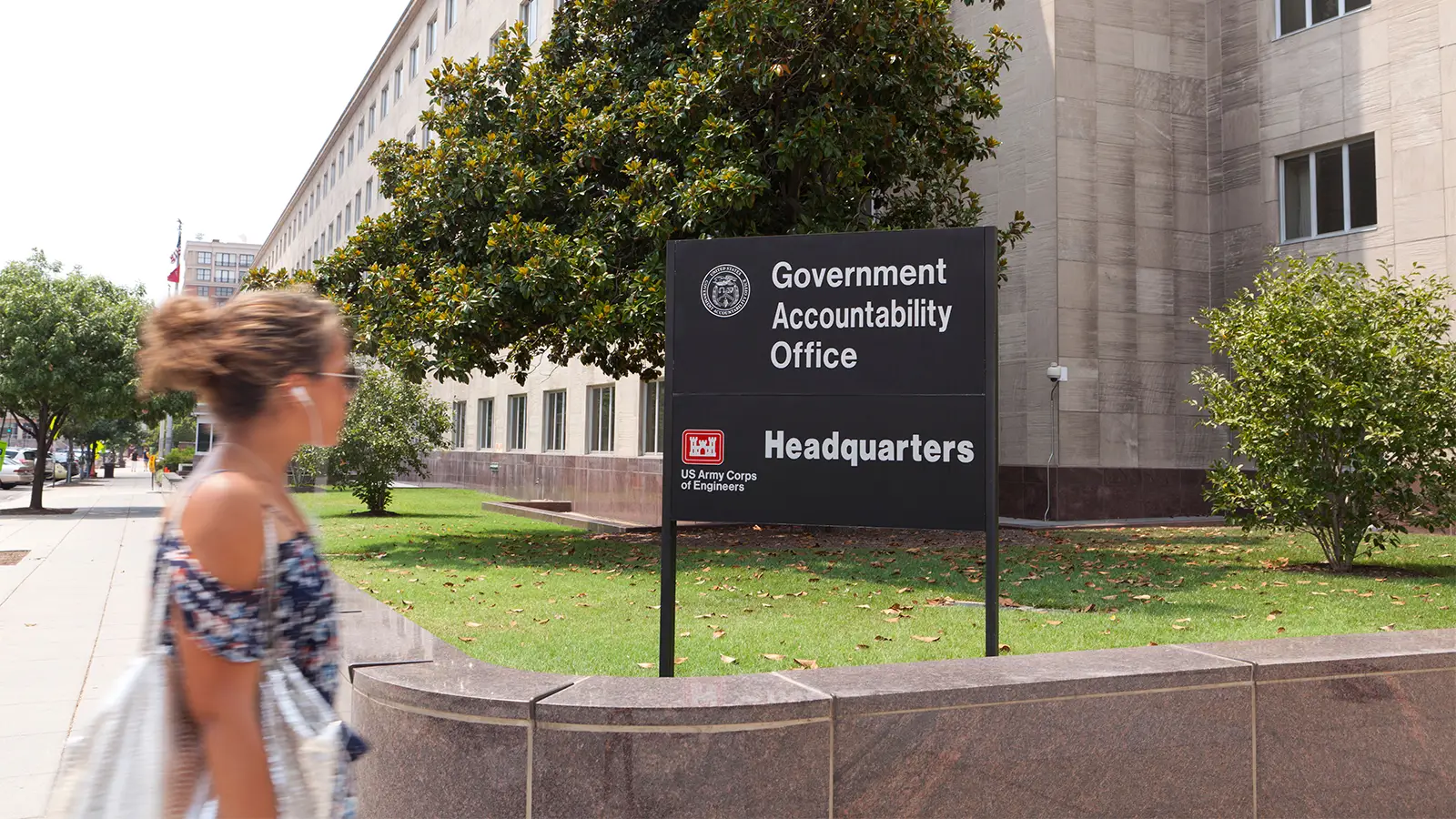
The costs of meeting a federal mandate to make research papers freely and immediately available to the public are exorbitant, and most agencies don’t have adequate plans in place to cover it, a report from the U.S. Government Accountability Office (GAO) found.
The U.S. government is a huge funder of scientific research globally. In 2022, the Office of Science and Technology Policy (OSTP) issued a federal mandate to make research freely accessible to the public as soon as it’s published. For this report, the GAO examined agencies’ efforts to implement that mandate.
Seven of nine federal agencies that the GAO reviewed issued updated plans or policies on how to meet the public access mandate, and five of those agencies’ plans fully met the OSTP’s guidance. The Department of Transportation and the Nuclear Regulatory Commission were still working on their plans.
Making research publicly accessible comes with costs, and the GAO noted that publishers are changing their business models to adapt to a loss of subscription revenue, including by requiring authors to pay open-access fees.
“Assuming historical patterns continue, the new policies and publishers’ responses may result in significant agency cost growth,” the GAO wrote.
The report estimated that the combined publishing charges may run the government up to $1 billion a year by 2030 — triple the $295 million paid by selected agencies in 2024. These figures come from estimated future article processing charges (APCs) — the fees paid by authors or institutions to make their published work freely available — and agency-level publication counts. APCs are typically thousands of dollars, and federal agencies allow grants to cover these fees.
The NIH has proposed strategies to cap open-access publishing fees, like eliminating publication costs and limiting allowable costs per publication, among other cost-cutting measures. As of press time, the NIH did not respond to MedPage Today‘s inquiry on whether these strategies have evolved in the past year or if the GAO report findings will shift agency plans.
Ultimately, the GAO made 11 recommendations to nine agencies on how to adapt to costs imposed by the public access mandate. Four agencies concurred with the recommendations and five had no comments.
The GAO noted that public access promotes transparency because it can lead to faster corrections and retractions. At the same time, pay-to-publish models introduce financial incentives for publishers to publish more, and thus get more fees, which could negatively impact research integrity.
Corinna Turbes, senior manager of government relations at SPARC, a nonprofit that works to advance open systems for research and education, called the report a “mixed bag.” She said it had some good information, like how one major publisher retracted over 11,000 articles, but she pushed back against how GAO framed the problem.
“It states that there’s no way for researchers to have their work peer reviewed without paying a publication charge and that public access policies require these high fees,” she told MedPage Today. “That simply isn’t true.”
Many journals already allow researchers to deposit their manuscripts into federal repositories without charges, she said, adding that “APCs are a choice that commercial publishers make in order to preserve massive profit margins — sometimes as high as 30% to 40%.”
Turbes emphasized that pay-to-publish isn’t the only model for public-access science and that alternate publishing models already exist. Scholarly societies and nonprofit journals often don’t charge a publishing fee, though they may collect a few hundred dollars to support the peer-review process.
“Publisher charges are what are causing the cost, not the public access mandate,” Turbes said. “I think a question for us to consider is, what does it cost us to not have access to the science we already pay for?”
She advocated for framing scientific research as a public good warranting federal investment — one that can help clinicians stay up to date with the latest research informing patient care.
[ad_2]
Source link : https://www.medpagetoday.com/washington-watch/washington-watch/121550
Author :
Publish date : 2026-06-02 18:18:00
Copyright for syndicated content belongs to the linked Source.