
[ad_1]
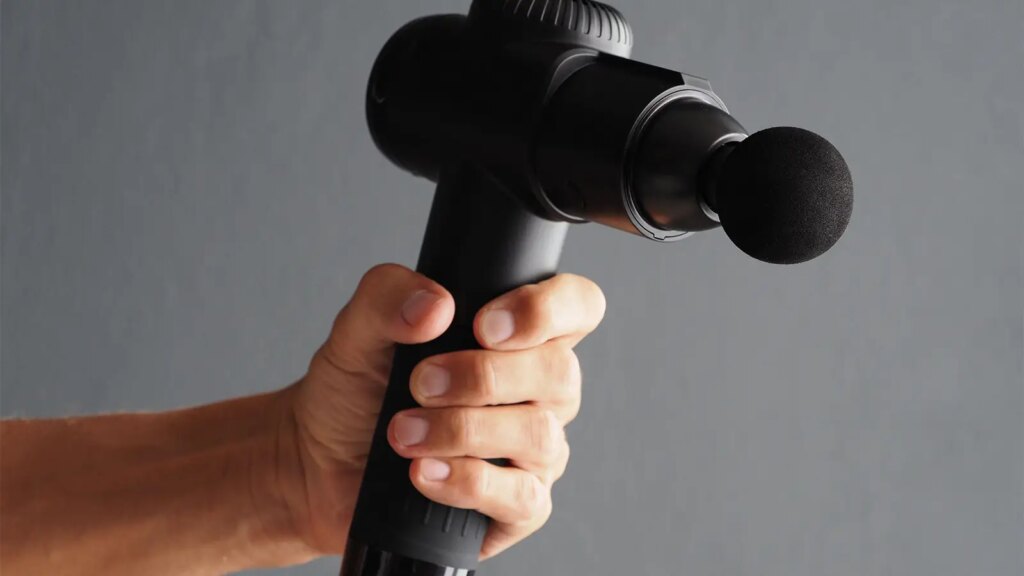
The rise in popularity of percussive massage guns could carry some hidden dangers for consumers, as a case study of a young student with tired eyes revealed.
A patient in his 20s reported experiencing flashing lights and floaters in his right eye for 6 days. He was previously healthy and reported no personal or family history of ocular disorders, no head injury or trauma, and no history of psychiatric illness or drug use, wrote Niamh O’Connell, MBChB, and Ashraf Khan, MBChB, both of the Princess Alexandra Eye Pavilion in Edinburgh, Scotland, in BMJ Case Reports.
The young man had myopia and wore glasses with a prescription of -2.00 in the right eye and -2.25 in the left. He had normal visual acuity in both eyes (the U.S. equivalent of 20/20) and normal intraocular pressure bilaterally (13 mm Hg).
Examining the eye while putting pressure on the sclera showed multiple retinal tears with widespread commotio retinae, or retinal whitening, and superior temporal retinal dialysis (detachment of the retina) in his right eye. In the left eye, the team discovered additional commotio retinae and six small horseshoe tears (three superior and three temporal).
Given the unexpected findings, the clinicians repeated their questions to the patient. “When specifically asked about anything untoward involving the eyes, the patient reluctantly disclosed that he had been using a percussive massage gun … around and directly on both eyes,” noted O’Connell and Khan.
The “hesitant historian” disclosed that he had been performing this ritual over a period of 3 months for several minutes each time, to relieve a “feeling of tiredness,” the authors wrote.
O’Connell and Khan suggested that the “unusual superior temporal location of the retinal dialysis” was a result of directly applying the massage gun to the front of the eye, unlike more prevalent mechanisms of blunt trauma, such as from a fist to the eye, which impact the inferotemporal orbital rim.
The authors noted the incidence of sight-threatening rhegmatogenous retinal detachment resulting from dialysis is 8% to 15%. For that condition, the group wrote, “Our patient fits the typical demographic profile, predominantly male, most commonly presenting in patients in their twenties, with a male:female ratio of 2:1.”
O’Connell and Khan pointed to two other cases of “profound vision impairment” tied to massage gun use as well as one massage gun-related case of “successfully treated isolated traumatic cataract without retinal injury or lasting visual compromise.”
In their own case, the patient’s retinal tears in both eyes were treated with a retinal laser to seal off tears and damaged blood vessels as they heal. His right superior temporal retinal dialysis was treated with barrier laser therapy.
While there are a few reports documenting the side effects of percussion therapy, including one instance of rhabdomyolysis, the safety profile of percussive massage guns is not well understood, wrote the authors.
In the case of this student, “the massage gun was commercially purchased and used without professional guidance. The patient reported no awareness of any warnings in the operating instructions against ocular use,” noted O’Connell and Khan.
Please enable JavaScript to view the comments powered by Disqus.
[ad_2]
Source link : https://www.medpagetoday.com/casestudies/ophthalmology/121865
Author :
Publish date : 2026-06-22 16:16:00
Copyright for syndicated content belongs to the linked Source.