
[ad_1]
Nine accrediting and medical organizations pledged to integrate nutrition into their curricula and assessments of future physicians, HHS officials announced on Monday.
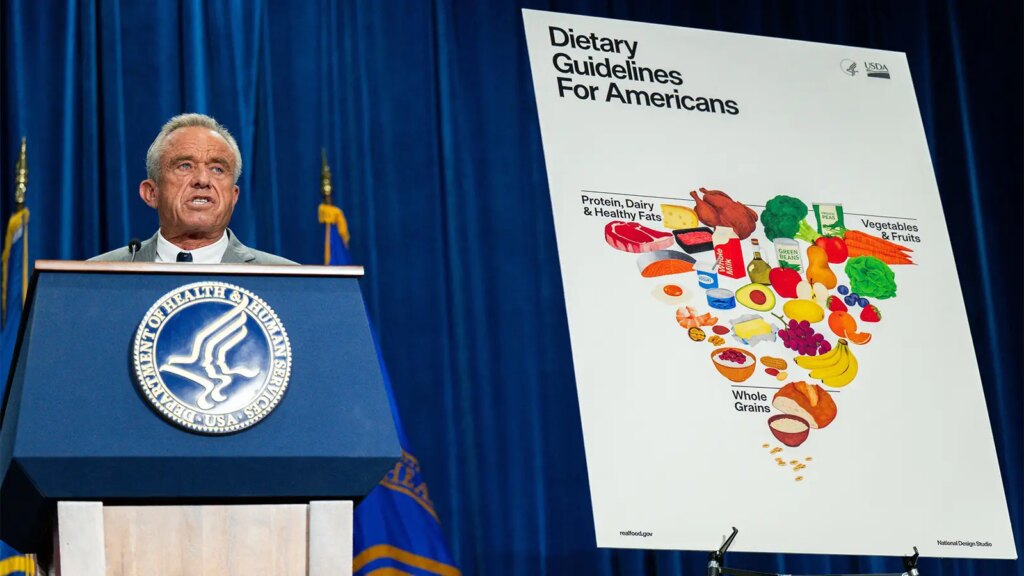
“Over the last 10 months, these organizations have done the hard work of reform. They reviewed standards, revised requirements, built consensus, and committed themselves to measurable change,” said HHS Secretary Robert F. Kennedy Jr. at a press conference. “That means nutrition will no longer sit at the margins of medical education. It will shape what students learn, what physicians master, what licensing boards assess, and ultimately how patients receive care.”
Changes will include convening education summits, launching podcasts, and supporting research on “food as medicine” initiatives, HHS told MedPage Today in an email.
Notably, the National Board of Medical Examiners plans to include nutrition science in all three steps of the U.S. Medical Licensing Examination (USMLE), and require that 15% of content focus on nutrition.
The National Board of Osteopathic Medical Examiners has similarly pledged to expand nutrition content in licensing exam blueprints and clinical skills assessments, and establish a dedicated nutrition-focused assessment by 2027, an HHS official noted.
Other participants in these reforms include the following groups:
- Accreditation Council for Continuing Medical Education
- Accreditation Council for Graduate Medical Education
- American Association of Colleges of Osteopathic Medicine
- American Board of Medical Specialties
- Commission on Osteopathic College Accreditation
- Liaison Committee on Medical Education
During the press conference, Kennedy said that the Association of American Medical Colleges also joined the pledge.
He also announced that an additional 19 medical schools have joined a pledge to require at least 40 hours of nutrition education, or implement a 40-hour competency equivalent, for students starting in fall 2026. They join 54 other schools that made the pledge earlier this year.
Kennedy noted that these reforms matter because 90% of healthcare dollars are spent on treating chronic diseases, and more than 70% of Americans are now overweight or obese.
Yet, until now, three-quarters of medical schools had no required clinical nutrition courses, HHS pointed out in their press release, citing a 2024 study.
There was “no coercion” involved in bringing these stakeholders to their pledges, Kennedy stressed. “We acted as a catalyst here. We did something that everybody already wanted to do.”
In addition to commitments from medical groups, Kennedy announced a $2.1 million NIH challenge to “identify, reward, and scale the most effective approaches for integrating nutrition into medical and nursing school education.” The winners will make their curricula publicly available for other institutions to adopt.
Finally, Kennedy noted that many of the institutions that have agreed to work with him on this initiative disagree with him on many other issues.
“I’m confident that, years from now, we’ll look back at this moment as a turning point in how we educate doctors … and also maybe a precedent for getting along with people and finding common ground on issues on which we otherwise disagree,” he said.
“All of us want healthy kids, and this is a first critical step to making sure that the next generation of children are going to be much healthier than previous ones,” he added.
Please enable JavaScript to view the comments powered by Disqus.
[ad_2]
Source link : https://www.medpagetoday.com/publichealthpolicy/medicaleducation/121668
Author :
Publish date : 2026-06-09 16:32:00
Copyright for syndicated content belongs to the linked Source.