- New disease-modifying anti-rheumatic drugs (DMARDs) for rheumatoid arthritis are usually expensive and insurers, including Medicare, will often limit access.
- This study examined Medicare Advantage and standalone Part D plans to determine how broadly they cover DMARDs of different classes and within classes.
- These plans often have significant gaps; most omit at least one class of DMARD from their formularies and one well-established drug, abatacept (Orencia), is only rarely included.
Medicare coverage of targeted disease-modifying anti-rheumatic drugs (DMARDs) for rheumatoid arthritis (RA) — both under Medicare Advantage and in separate Part D plans — is likely to leave many patients wanting, researchers found.
Analysis of policies offered over the last 5 years showed that just 10.4% of standalone Part D plans, and 37.6% of Medicare Advantage plans, included at least one drug from all major DMARD classes in their formularies, according to Youngmin Kwon, PhD, of Vanderbilt University in Nashville, Tennessee, and colleagues.
The DMARD type most often left out was T-cell costimulation modulators, of which there is only one, abatacept (Orencia), Kwon’s group reported in Arthritis & Rheumatology. Among plans available for this year, it’s covered in only 21.2% of Medicare Advantage plans and by a shocking 0.3% of standalone Part D policies.
This “heterogeneity” in Medicare Advantage versus independent Part D plans “may impact patient access to and affordability of RA treatment,” the researchers wrote. “Our findings underscore the importance of monitoring the adequacy of Part D formularies more closely, especially considering recent policy changes, such as the IRA [Inflation Reduction Act, the 2022 federal law authorizing drug price negotiations for Medicare], that have significantly impacted the Part D program.”
All targeted DMARDs for RA are expensive, and as with all pricey drugs, insurers often look for ways to limit patients’ access to them, such as by insisting that patients must first fail a series of cheaper products, and/or get prior authorization from plan administrators. Medicare is no exception. This despite numerous studies showing that many patients do better when they start targeted DMARDs early, often lowering their overall healthcare costs over time.
Further, Kwon and colleagues explained, “Medicare coverage of novel DMARDs is further complicated by the fact that coverage for a specific drug may vary by route of administration and whether a beneficiary is enrolled in traditional Medicare versus Medicare Advantage.” “Route of administration” is a particularly relevant issue for RA patients, because many biologics are given by infusion in the clinic — with coverage then coming through Medicare Part B — whereas a self-injected drug would be covered under Part D. Meanwhile, Medicare Advantage plans handle both Part B and Part D claims.
Just how coverage may differ among these different approaches hasn’t been well studied, so Kwon’s group pulled Part D formulary data for 2022-2026 to examine the following classes of RA DMARDs:
- Tumor necrosis factor (TNF) inhibitors (four drugs)
- Interleukin (IL)-6 inhibitors (two drugs)
- Janus kinase (JAK) inhibitors (three drugs)
- T-cell costimulation modulators (one drug)
JAK inhibitors are taken orally, while among the others, some require clinic-based infusion while self-injection is possible for others. Two common DMARDs for RA, rituximab (Rituxan) and infliximab (Remicade), were excluded because they are Part B infusion drugs and were dropped from the government’s Formulary Reference File starting in 2020.
Over the 5-year study period, over 26,000 plan-years were included, covering a total of 218 million Medicare beneficiaries. Just under 60% of covered individuals were in standalone Part D plans with the rest in Medicare Advantage.
All plans under both programs had coverage for the TNF inhibitor adalimumab (Humira) and almost as many included etanercept (Enbrel). Only one other type of drug had similar near-universal coverage, the JAK inhibitor upadacitinib (Rinvoq). Only 65% of independent Part D plans and 73% of Medicare Advantage plans included tofacitinib (Xeljanz), the pioneering JAK inhibitor.
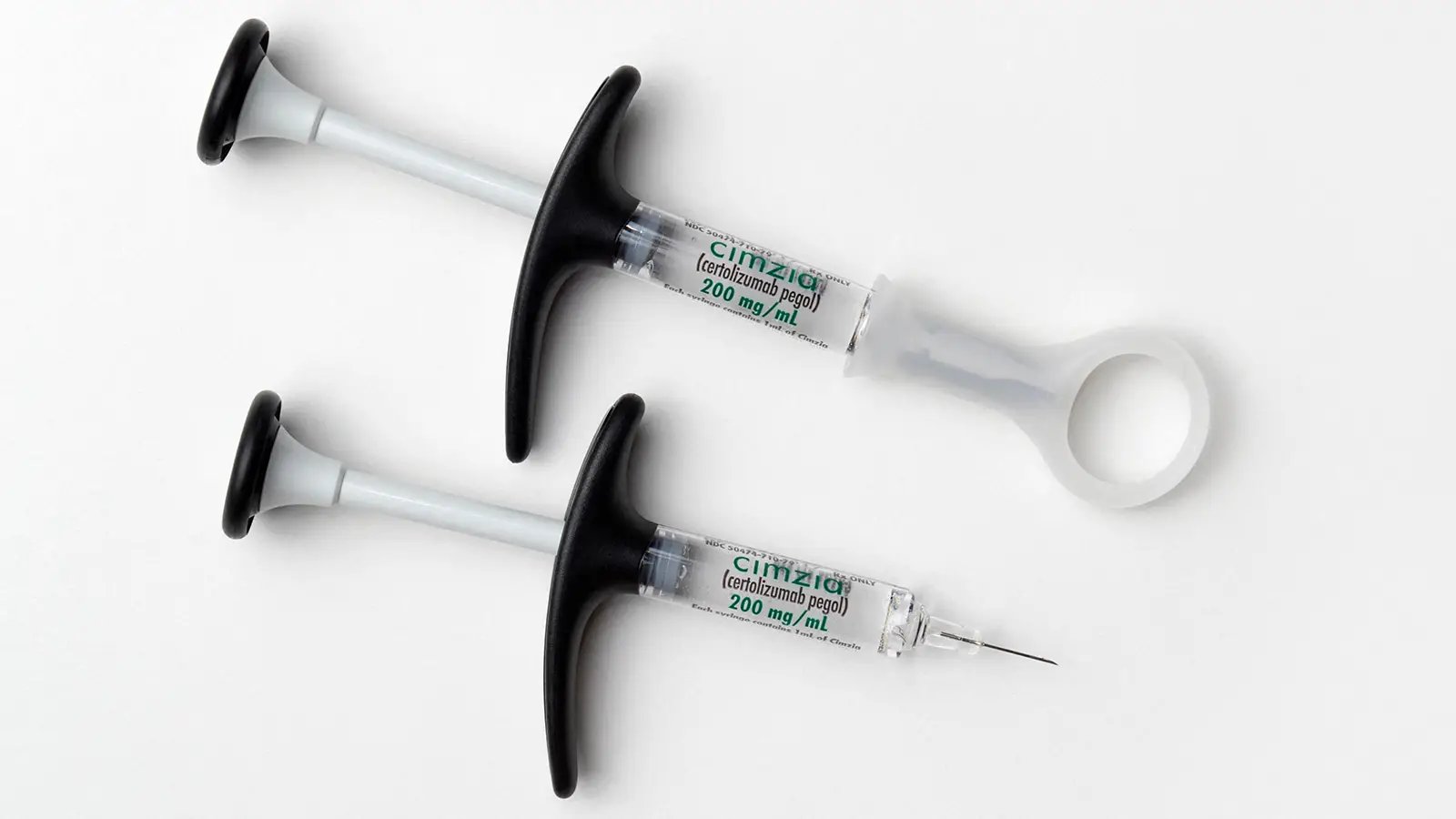
For IL-6 inhibitors, tocilizumab was included in 48% and 58% of Part D and Medicare Advantage plans, respectively. No other drug was covered by half of plans in either program. The TNF inhibitors golimumab (Simponi) and certolizumab pegol (Cimzia) were surprisingly disfavored, with a negligible 0.1% of standalone Part D plans covering either one, and with coverage under only about one-quarter of Medicare Advantage plans. Similarly, baricitinib (Olumiant) was a distant third among the three JAK inhibitors, with almost no coverage by Part D plans, and just 9% of Medicare Advantage plans included it.
A notable trend was the increasing exclusion of abatacept from Medicare formularies, the researchers found, with the result that the percentage of Part D plans covering all four major classes dropped from 11.7% in 2022 to 0.3% in 2026; for Medicare Advantage, rates fell from 42.3% to 21.2%. On the other hand, coverage of IL-6 inhibitors grew in popularity over the 5 years.
Kwon and colleagues also determined that more than 90% of plans in both programs had coverage of at least two TNF inhibitors, and well over half covered at least two JAK inhibitors.
The authors observed that when plans drop coverage for a self-administered drug, patients may have no covered alternative other than an infusion product, with its associated inconvenience and potential for higher out-of-pocket costs. Importantly, the $2,000 cap on out-of-pocket costs implemented with the IRA for drugs under Part D does not apply to products covered under Part B.
As for why standalone Part D plans appear less generous than Medicare Advantage, Kwon and colleagues speculated that since their sponsors only pay for drugs eligible under Part D, they have an incentive to push patients toward infusion drugs covered under Part B and thus not their responsibility. By the same token, Medicare Advantage planmakers may see self-administered agents as avoiding the administrative costs associated with clinic-based infusions.
Limitations to the study included lack of data on drug costs or patient outcomes. Results may not be generalizable to other disease categories with multiple therapeutic options; Kwon and colleagues suggested that future studies look there too.
Source link : https://www.medpagetoday.com/rheumatology/arthritis/120381
Author :
Publish date : 2026-03-19 15:07:00
Copyright for syndicated content belongs to the linked Source.