
WASHINGTON — Medicare enrollees will soon be able to export their medical records to their doctor or hospital under a program launched Thursday by CMS.
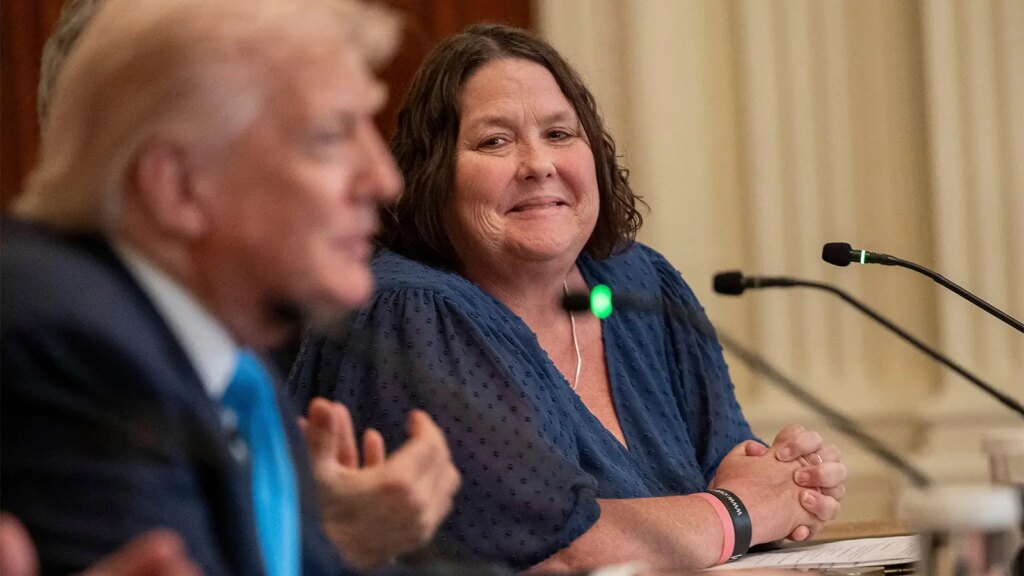
“Right now, our health information still feels stuck in the past,” Amy Gleason, acting administrator of the Department of Government Efficiency and a senior advisor at HHS, said in a press conference with reporters. “It’s really frustrating when you walk into your doctor’s office and they hand you a clipboard for you to recount every part of your medical history, sometimes when you’ve given that dozens of times before, maybe even at the same office, and especially after we’ve had 20 years of interoperability work. It’s really frustrating to have that still happening.”
“So last July, we announced what we call the Health Tech Ecosystem at the White House, and we have 60 companies that signed up to pledge to come and work alongside of us and to deliver solutions in 6 months to a year,” she continued. “So this is our first real milestone in this work, and so we have practices here, like Cleveland Clinic, Tennessee Oncology, and AtlantiCare, that are now live.”
The system allows patients to use an app on their phone that creates a QR code which allows them to share their medical records straight to the provider, “and it goes straight into their electronic health record,” she said. In order to share the record, the patient first uses an existing identification app — such as login.gov, id.me, or CLEAR — to authenticate themselves.
Asked by MedPage Today how this system compares with a universal patient identifier that would give all doctors access to a single patient electronic health record, Gleason said, “That’s actually the whole idea, is that when Hospital X doesn’t have your records, now you will have them and be able to share them directly with the hospital … We’re not rolling out any kind of national identifier — that’s not part of this process — but we did put modern identity into the program so patients can use something like login.gov, or id.me, or CLEAR on the Medicare website to be able to log in.” Patients use apps on a new Medicare App Library to create the QR code and transmit their records.
Gleason also was asked about how secure such a system would be and what protections there would be against hacking. “The apps that we will highlight in our Medicare App Library go through a certification process” and must agree to abide by the CARIN Code of Conduct, which is “basically a framework that people have agreed to as an industry to put privacy policy and data use terms in an easy-to-understand, usable [format], not like in a long, scrollable document that nobody reads, but in the workflow, and to default things to be private, so that patients, by nature, are protected.”
Another question was raised regarding whether patients’ information could be used for artificial intelligence (AI) training. All participating companies have agreed to put their AI in a separate, private space and that they will not steal patient records or use them for AI training, Gleason said. In addition, “part of the CARIN code of conduct, is they can’t sell the data. That’s all part of that framework that we put in place for privacy and security.”
Shortly after the press conference, participating companies gathered in the Great Hall at HHS headquarters to hear speeches from agency officials and see demonstrations of some of the app library software. “Your work across industry and government to give patients personalized healthcare is central to our promise to make America healthy again,” said HHS Secretary Robert F. Kennedy Jr. In addition to transferring health records, patients also will be able to use AI and, based on their own health data from their medical record and wearables, “make better food choices and better healthcare choices,” he said.
CMS Administrator Mehmet Oz, MD, MBA, pointed out that “technology [doesn’t] work as well in healthcare as in other sectors … You’re giving patients access to something they have always owned because they paid for it — their data — and allowing that data to be exchanged in a more cohesive fashion.”
FDA Commissioner Marty Makary, MD, MPH, said that his agency recently announced draft guidance that “makes it clear when the FDA needs to approve software and when we need to just get out of the way — that certainly enables developers to move quickly or to invest. Investors like predictability, patients like predictability, and scientists like predictability.”
In addition, the FDA is also looking at cybersecurity for new software, he said. “When we think about new technology, we get excited, but at the FDA, the first thought we have is safeguarding the public. And so that’s why we’re developing very, very strong criteria to ensure optimizing cybersecurity.”
Please enable JavaScript to view the comments powered by Disqus.
Source link : https://www.medpagetoday.com/practicemanagement/informationtechnology/120746
Author :
Publish date : 2026-04-10 21:12:00
Copyright for syndicated content belongs to the linked Source.