


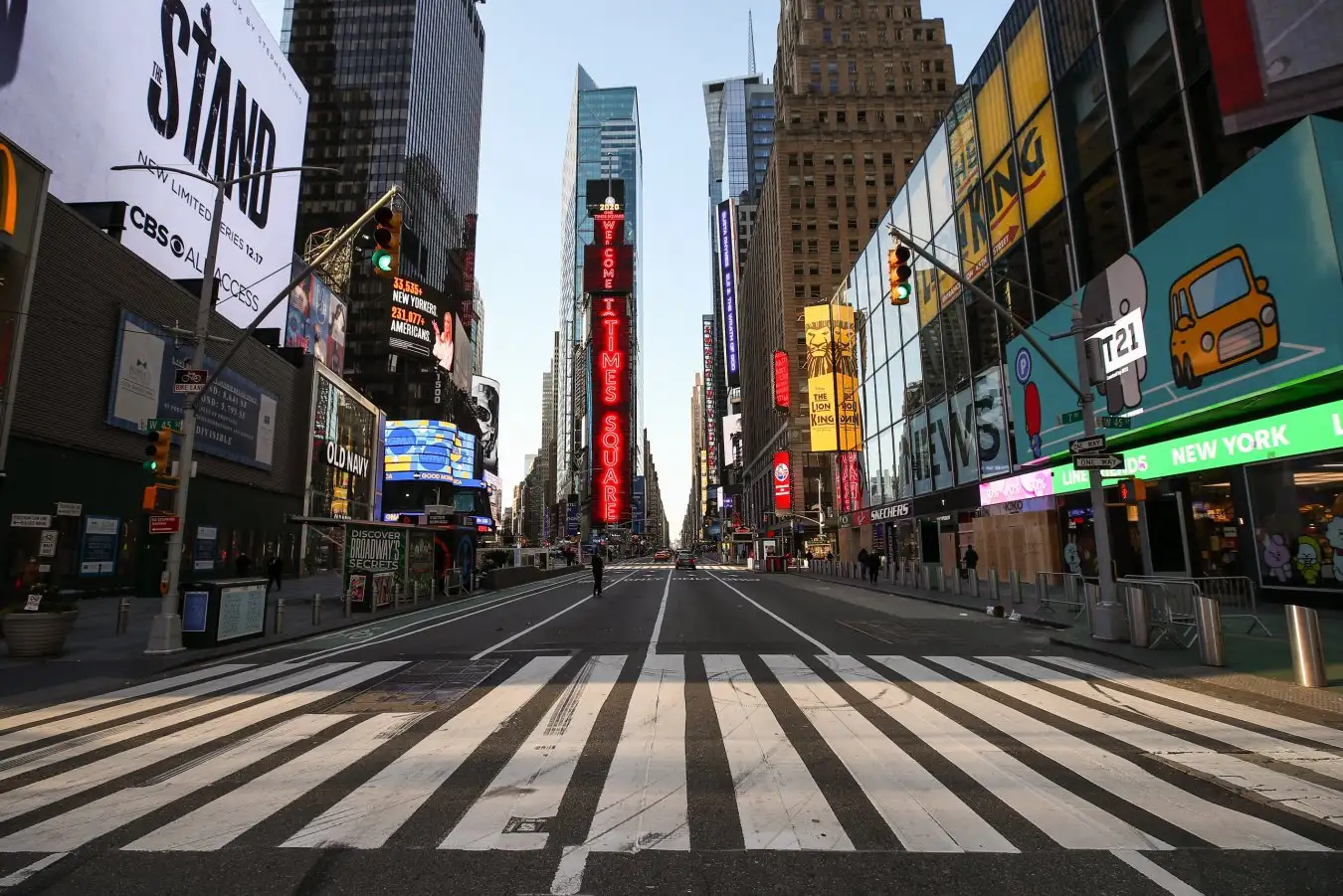
Lockdowns in 2020 led to lower emissions of nitrogen oxides from transport
Tayfun Coskun/Anadolu Agency via Getty Images
A drop in pollution during the covid lockdowns changed the chemistry of the atmosphere, driving a surge in methane levels that has concerning implications for future global warming.
Methane lasts only about a decade in the atmosphere but heats Earth far more than CO2. Its concentrations have been increasing since the 1980s, initially due mostly to venting and leaks during fossil fuel production. In the past two decades, these emissions have been compounded by a rise in microbes decomposing organic material in wetlands, agriculture and landfills.
In 2020-2022, the increase in atmospheric methane unexpectedly surged from about 20 million tonnes per year to about 40 million tonnes per year, before returning to about 20 million in 2023. New research suggests the main reason is that covid lockdowns reduced emissions from sectors like transportation, aviation and shipping, including emissions of nitrogen oxides (NOx).
These compounds catalyse reactions in the atmosphere that produce hydroxyl radicals (OH), which break down methane. Less NOx typically means more methane.
“It’s like having a hangover or something from our addiction to fossil fuels,” says Matthew Johnson at the University of Copenhagen in Denmark, who was not involved in the research. “We’re emitting [methane] pollution and the catalyst at the same time, so if we reduce emissions of the catalyst, the pollution takes over.”
A previous study by Shushi Peng at Peking University in China and his colleagues, looking just at 2020, had placed equal blame for the methane surge on decreased hydroxyl radicals and increased methane emissions from wetlands. But the researchers were surprised when the methane growth rate continued to spike in 2021 and 2022, even as the global economy revived. The new study, also by Peng’s team, attempts to explain why.
Hydroxyl radicals are too ephemeral to measure, although the gases that produce them can be measured by satellite. Natural and human emissions of methane also have to be estimated. The researchers modelled both these land-based sources and the atmospheric hydroxyl radical sink until they found results that matched measurements of methane concentrations.
They concluded that a drop of hydroxyl radicals in 2020-21 and a recovery in 2022-23 accounted for 83 per cent of the variation in the methane growth rate. Aviation emissions remained low in 2021, and transportation and shipping took time to rebound, says Peng.
Increased methane emissions from wetlands and inland waters accounted for the rest of the surge, the researchers found. The La Niña climate phase brought more precipitation to central Africa in 2020-22, causing the Sudd and Cuvette Centrale wetlands to expand and put out more methane. Wetter weather also boosted emissions from rice paddies in South and South-East Asia. In addition, warming has increased methane emissions from Arctic wetlands.
A decline in NOx pollution as countries like China and India electrify their economies could accelerate the methane growth rate again, Peng warns.
“The air will become more and more clean, so it means that we have less and less methane sink in the atmosphere,” he says. “So we need to reduce more and more anthropogenic emissions.”
But while some climate models project that hydroxyl radicals will decrease, others project that they will increase. The difficulty of estimating hydroxyl radical concentrations could also call this study’s results into question.
“I’m surprised that changes in OH are more important than the emission changes,” says Paul Palmer at the University of Edinburgh, UK. “If that’s true, then a re-examination of what controls OH in the global troposphere is warranted.”
Overestimating hydroxyl radicals could “mask the true magnitude of the change in methane emissions”, he adds.
Regardless of hydroxyl radicals, methane emissions from wetlands are expected to keep rising as global warming increases precipitation and boosts microbial activity in many places. That means humanity must cut its own methane emissions to limit climate change.
In a commentary published alongside the new study, Euan Nisbet at Royal Holloway, University of London and Martin Manning at Victoria University of Wellington, New Zealand, say China and India have “many potential easy wins” by capturing methane that is being vented from coal mines, landfill and sewage treatment. And huge amounts of methane continue to be leaked from oil and gas production around the world.
“We have to do something, because the system is starting to spin out of control,” says Johnson. “We’re just seeing that leading edge of increase in methane emissions due to the climate feedback.”
Topics:
- climate change/
- air pollution
Source link : https://www.newscientist.com/article/2514587-methane-surge-in-2020-was-linked-to-lower-pollution-during-lockdowns/?utm_campaign=RSS%7CNSNS&utm_source=NSNS&utm_medium=RSS&utm_content=home
Author :
Publish date : 2026-02-05 19:00:00
Copyright for syndicated content belongs to the linked Source.