
[ad_1]
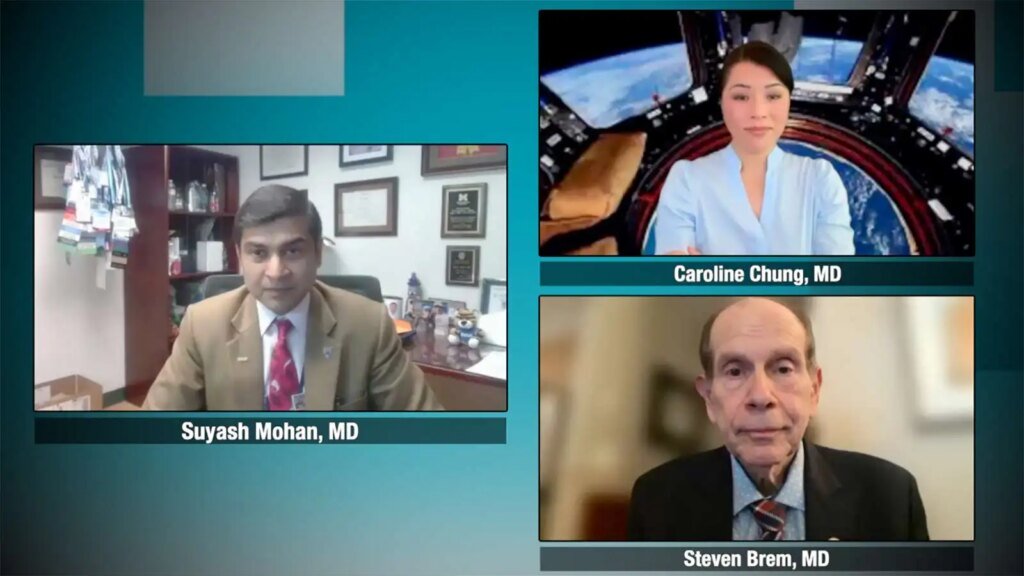
Following the American Society of Neuroradiology (ASNR) meeting, MedPage Today convened three leaders in neuro-oncology and brain tumor imaging for a virtual roundtable discussion on the evolving role of advanced MRI in brain tumor care. Moderator Suyash Mohan, MD, of the University of Pennsylvania in Philadelphia, is joined by Caroline Chung, MD, of the University of Texas MD Anderson Cancer Center in Houston, and Steven Brem, MD, also of the University of Pennsylvania.
In this first of four episodes, the panel discusses where advanced neuroimaging is already influencing patient care, from surgical planning and treatment navigation to radiation therapy decision-making. The conversation also explores how clinicians are moving beyond purely anatomic imaging toward quantitative and biologic markers that may help personalize care for patients with brain tumors.
Following is a transcript of their remarks:
Mohan: Hello, everyone and welcome. My name is Suyash Mohan. I’m a neuroradiologist at the University of Pennsylvania where I direct the neuroradiology clinical research division and I also co-direct our annual brain tumor CME.
I’m delighted to moderate the session on modern neuroimaging and the evolving role it plays in brain tumor care. We are going to focus on what changes management today, where advanced MRI truly adds value, where standardization and overuse are problematic, and what should we realistically expect from biomarkers and artificial intelligence over the next few years. Put differently, less of a crystal ball but more of practical points.
So joining me is Dr. Caroline Chung. She’s a nationally recognized leader in radiation oncology at MD Anderson Cancer Center. Our second panelist is Dr. Steven Brem, distinguished professor of neurosurgery here at University of Pennsylvania and he’s also the course director of our annual brain tumor CME, which has been successfully running for over a decade now.
I’m a radiologist and when someone asks a radiologist, “What do you do for a living?” I usually say we look at a picture and tell a story. But over the years, our pictures have gotten very complex. The kind of stories we are asked to tell have gotten very complex. We have moved from pure anatomic questions — like, where is the tumor? How big is the tumor? — to quantitative physiologic and functional metabolic imaging that serves not just a diagnostic snapshot, but as a longitudinal disease mapping and treatment navigation tool.
So Dr. Brem, what I would like to ask you more specifically is that when you look at a scan, what imaging features make you think or change what you will do next for a patient in the OR today?
Brem: So the gold standard is of course maximal safe resections. As a neurosurgeon, we want to get in and get out efficiently but safely and take as much of the tumor out. Almost any neurosurgeon can remove any tumor, but what you take out with it matters to the patient, so you want to minimize the toxicity.
So I’ll look first at the surround of the tumor and what is it? Is it on the motor area? Is it visual? Is the arcuate fasciculus involved? What about white matter changes? So I look for the sweet spot and the hotspot and the danger spots. I want to develop, as a surgeon, a corridor, what’s the best entry point? I look at a tumor not just as a round marble but more as an ellipse or look at the long axis, something Dr. Mitch Berger’s published on, but something that we kind of do empirically or heuristically for every case, so we don’t wind up removing 60%, but we get at least 80%, maybe 90%, 99%, 100% if we can, or even supratotal.
We have to position ourselves in such a way, so the corridor has to be safe. We’ll be doing trans-sulcal approach or transcortical approach. We’ll be going through the silent cortex or eloquent. We certainly don’t want to go through eloquent cortex or eloquent white matter. We’ve incorporated over the years, developed at Penn, other centers with NIH grants, very sophisticated DTI [diffusion tensor imaging] and white matter tracking, connectome, all kinds of tools to see what is the best approach for an individual patient, do that mapping. And we do a lot of preparation and we work with you and your colleagues to get the best entry … as well as to take out the tumor. Once we’re in the center of the tumor, it’s fairly straightforward.
Mohan: Excellent. I like your analogy of sweet spot and hotspot and danger spot. So, thank you. Dr. Chung, from the radiation oncology side, what imaging information truly changes how you contour, how you surveil that tumor or alter your treatment strategy in real life as opposed to just making us feel intellectually satisfied?
Chung: It’s a good question, and this is something that we’ve been pursuing very heavily at MD Anderson. When I first came and I got recruited to MD Anderson, it was actually to start up the MR program in radiotherapy. And so it’s still an evolving adoption of leveraging multiparametric imaging and multiparametric MR into radiation planning. It’s grown immensely over the last decade, but it is still an emerging field.
Many centers are still heavily relying on CT scans. And you can imagine in brain tumors, now I look at a CT scan and I wondered how I was even doing radiation treatment planning without the MR, let alone leveraging the tools that multiparametric MR can actually bring. And there are many new pulse sequences that we’re incorporating into radiation planning. As you know, with integrated MR linear accelerator devices, we now have the capability of using online MR guidance for therapy, looking at changes on a daily basis through the treatment.
We have a prospective clinical trial that I am the PI. We’re looking at weekly changes on the MR in patients with glioblastoma during the course of radiotherapy. And it was surprising, but not if you take a step back, and thinking that an aggressive tumor would actually sit completely idle through the entire course of radiotherapy in every single patient seems pretty unlikely.
When I had conversations with my own patients, this is where it got motivated. The very first funds to actually start this trial came from a donor who actually said, “This makes absolutely no sense. We need to look and if you don’t look, you’ll never see.” And so we started to see changes in subsets of patients that were quite dramatic in that we allowed the radiation oncologist to adapt the radiotherapy plan partway through the treatment to make sure that we were covering the entire area that we were concerned about.
Having said that, I would say that we’re still at the mercy of looking at the image as an image as opposed to what you were alluding to of what other quantitative metrics that are biologically meaningful could we actually tease out of this image? And this is where the really exciting parts start to emerge is that can we actually see changes in white matter disruption that show microscopic infiltration of that white matter? Can we confirm biologically that this is what’s happening? And there are prospective trials that are ongoing and that we’re pursuing ourselves in terms of getting more meaningful imaging path correlates to say, when we see this change in this voxel, this is what it could biologically mean.
We’ve partnered with mathematical oncologists and computational biologists to start to design mathematical models that can actually anticipate what that behavior is, not only from an AI data-driven method, but also applying the known physical features of tumor growth, the constraints around pressures in the tissues that we could actually potentially even measure with radiologic quantitative imaging biomarkers.
And so integrating all of this together, we can start to anticipate that we don’t need to just react once the imaging on radiation has changed. A lot of medicine today still remains very reactive. We treat the patient until we see a progression and then we say, oh, we need to change course. What if we could actually base our decisions on predictions and anticipate and have that predictive adaptive capability to say, we’re going to do this in advance of gross tumor progression once the patient’s already had even symptoms develop? Reversing many of those symptoms can be quite challenging and sometimes are irreversible.
And so it’s really changing the paradigm of medicine overall from a reactive perspective to a predictive piece. Now one of the challenges of that, you mentioned longitudinal imaging, and inconsistent imaging at each time point really prohibits us from measuring the effective changes that we’re looking for.
And so I have the privilege of co-authoring this paper with the Federation of American Scientists that actually call out the quantitative imaging is the necessary infrastructure to enable precision medicine with AI because if we want to track those longitudinal changes, we do need more consistent imaging to be taken.
To your point of, you were sort of alluding to it as you kicked off this podcast in terms of is some level of standardization too much standardization? And I think that we also have to be realistic that technology’s continuing to evolve. To say that you’re going to completely standardize across a person’s longitudinal journey would mean that we’d have to keep them on the same scanner indefinitely. I don’t think that’s what we’re saying here today. What we’re saying is if we are going to shift, let’s start to measure quantitatively and start to cross-calibrate what those measurements mean over time.
And this is something that I’m very passionate about, and I’ve been pursuing for quite some number of years in my career and we’ve actually, just spinning out of the RSNA QIBA [Radiological Society of North America Quantitative Imaging Biomarkers Alliance] effort and that’s been supported by RSNA for well over a decade, is now a new nonprofit organization called the Quantitative Medical Imaging Coalition that I have the privilege of serving as the founding co-president with Gudrun Zahlmann.
And these are the dedicated hundreds of volunteers that have been engaged with QIBA and we want to grow this out as an independent organization. It’s been helpful to be able to align and partner with existing organizations. We would love to explore further how to engage with Penn as an organization, as well as with ASNR. We’ve partnered with many of the existing imaging organizations in various efforts, such as ISMRM [International Society for Magnetic Resonance in Medicine], AIUM [American Institute of Ultrasound in Medicine], AAPM [American Association of Physicists in Medicine], etc. And so it’s an exciting time for us to be leveraging this kind of technology to really personalize care for patients.
The other piece around this is that I co-authored the National Academy of Science report on digital twins. And if we’re going to help bring digital twins to life, we have to do this with quantitative imaging because the data going in needs to have uncertainty quantification. The data going in needs to have a certain level of consistency for the models to even perform. So it all comes together in a way that I think is a collective effort by the community.
Mohan: No, I agree with you. It is really a collective effort and this effort is actually helping the needle move forward, as Dr. Brem was mentioning earlier, the survival curve moving towards the right. I also agree with you when you said that we have to be more predictive rather than reactive when it comes to dealing with an aggressive brain tumor such as a glioblastoma, because once it recurs, then the window of opportunity, which is already so narrow, it narrows even further.
One thing that was coming to mind when you mentioned the role of CT early on, one of my professors used to say back in the days that CT has no role in neurosciences, and he was pretty adamant about it. And at that time, we used to think that this is quite a harsh statement, but now realizing the complexity that we deal with in a tumor like glioblastoma, he was not actually wrong. CT and many times standard MRI techniques are not able to decipher the heterogeneity of this complex disease.
Please enable JavaScript to view the comments powered by Disqus.
[ad_2]
Source link : https://www.medpagetoday.com/meetingcoverage/asnrexpertvideoroundtable/121814
Author :
Publish date : 2026-06-17 19:13:00
Copyright for syndicated content belongs to the linked Source.