
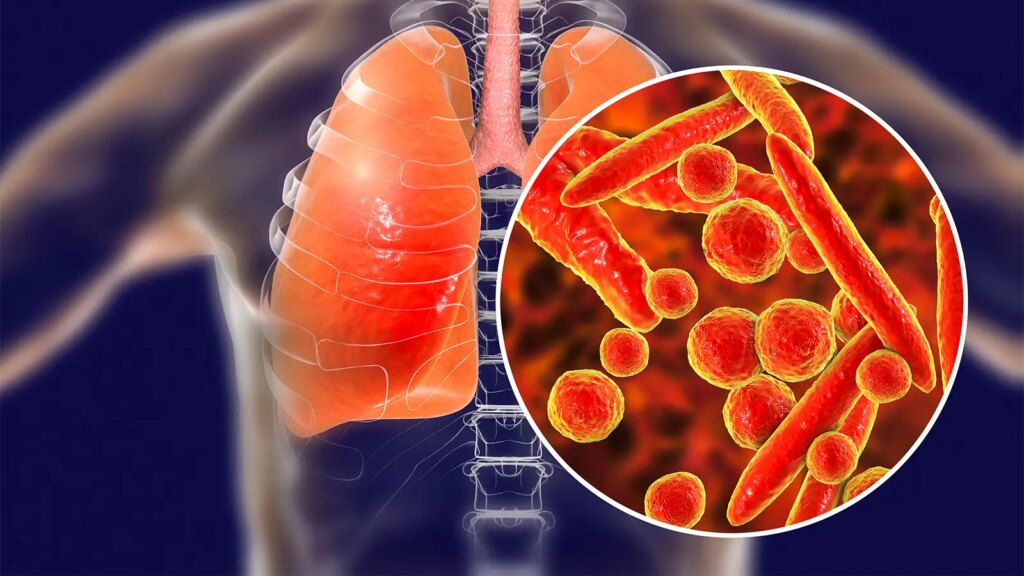
- Adjunctive corticosteroid therapy accelerated resolution of hypoxemia in hospitalized adults with Mycoplasma pneumoniae community-acquired pneumonia in a randomized trial.
- This finding reinforces 2024 recommendations for corticosteroids in the treatment of severe bacterial community-acquired pneumonia.
- Generalizability to patients not sick enough to be hospitalized and for other pathogens causing pneumonia is an open question.
Adjunctive corticosteroid therapy with betamethasone sped up resolution of hypoxemia in hospitalized adults with Mycoplasma pneumoniae community-acquired pneumonia (CAP), a randomized trial from Sweden showed.
Time to resolution of hypoxemia was shorter in those who received betamethasone compared with standard of care (HR 1.82, 95% CI 1.10-3.02, P=0.020), with an estimated median duration of 2.3 and 3.6 days, respectively, reported researchers led by Karl Hagman, MD, of Sahlgrenska University Hospital in Gothenburg, in Lancet Regional Health – Europe.
Time to hospital discharge was also shorter (HR 2.1, 95% CI 1.2-3.4, P=0.007) for patients in the betamethasone group, with an estimated median duration of hospitalization of 2.9 days versus 3.9 days in the standard care group.
The “clinically meaningful improvements for the participants and the healthcare system by shortening the need for oxygen treatment and hospital stay” with the corticosteroid didn’t come at the expense of more adverse events versus standard care, or any severe adverse events attributed to the drug, Hagman and team noted.
In an accompanying editorial, Bijan Teja, MD, PhD, and John C. Marshall, MD, both of the University of Toronto, wrote that “the results of the current trial suggest that it appears to be reasonable to add betamethasone to the treatment of hospitalized and hypoxic adults with Mycoplasma pneumoniae CAP.”
As the first randomized trial of corticosteroid treatment in this pathogen-specific population, the findings reinforce 2024 Society of Critical Care Medicine recommendations for corticosteroids in the treatment of severe bacterial CAP based on moderate certainty of evidence at the time.
“While there is some evidence supporting the broader application of corticosteroids in M. pneumoniae CAP in pediatric populations, whether these results can be generalized from this to other populations is an open question,” the editorialists cautioned.
“The clinical diagnosis of CAP encompasses a highly variable group of illnesses of bacterial, viral, or even fungal origin, and commonly evolving in the face of other life-limiting medical conditions,” they wrote. “The inconsistent results of recent clinical trials point to unrecognized heterogeneity in the syndrome and in its response to treatment.”
Differences between trials in disease severity, endpoints, study population, selection of corticosteroid agent and dosing, underlying patient biology, and the causative pathogen might all make a difference, Teja and Marshall pointed out.
“There may well not be a simple answer to the question of whether corticosteroids are beneficial in CAP: different populations may respond differently to treatment based on any of the listed factors, or even on the basis of varying patterns of country-level concomitant care,” they noted.
Hagman and colleagues said that severe M. pneumoniae CAP is thought to involve an exaggerated host immune response with its toxin inducing extensive inflammation and immune-mediated lung injury that corticosteroids might be helpful in mitigating.
The trial included 70 adults treated at eight Swedish hospitals for M. pneumoniae CAP and hypoxemia (oxygen saturation <93% and respiratory rate >20 breaths/minute) who didn’t have asthma or diabetes mellitus. Participants were randomly assigned to open-label treatment with either standard care without corticosteroids or a moderate dose of adjunctive oral betamethasone (initially 3 mg daily, then 2 mg daily on days 3-5). Both groups received antibiotic treatment with 200-mg doxycycline once daily for 10 days.
Median patient age was 42 years, and 57% were men. Hypoxemia resolved in all but two participants, who withdrew consent.
“Importantly, no signs of rebound inflammation were observed following completion of the betamethasone course,” Hagman and team noted.
Limitations of the study included its relatively small sample size, the absence of a placebo, and the potential for bias from the unblinded design. “However, we consider this unlikely, as both pulse oximetry measurements and oxygen titration were performed at the discretion of non-study clinical staff, and monitoring of oxygen saturation and respiratory rate generally is standardized,” the researchers wrote.
In addition, more control group participants received high-flow oxygen treatment, while bilateral infiltrates were more common in the betamethasone group. A post-hoc regression analysis adjusted for ratio of partial pressure of arterial oxygen to fraction of inspired oxygen at baseline showed results consistent with the primary analysis.
“Although these outcomes are clinically subjective, confidence in the study conclusions is increased by the authors’ findings of a more rapid decline in levels of an inflammatory marker, CRP [C-reactive protein], in betamethasone-treated patients,” Teja and Marshall pointed out.
The trial also included patients who were not critically ill. “Further research is warranted to assess efficacy in adults with milder disease,” Hagman and colleagues noted.
Please enable JavaScript to view the comments powered by Disqus.
Source link : https://www.medpagetoday.com/pulmonology/pneumonia/120887
Author :
Publish date : 2026-04-21 18:51:00
Copyright for syndicated content belongs to the linked Source.