


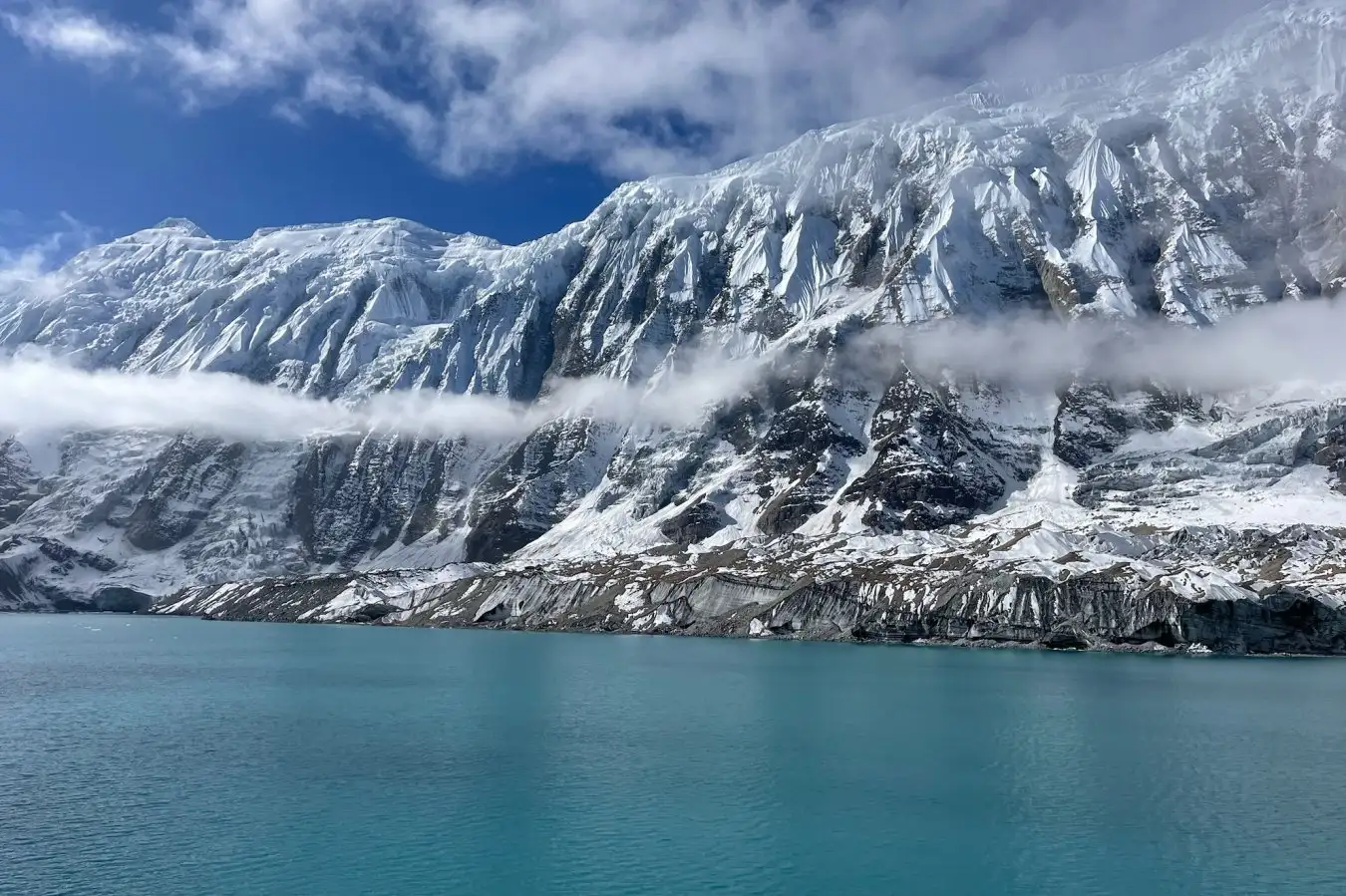
Core samples from a lake in Nepal reveal a random pattern of historical earthquakes
Zakaria Ghazoui-Schaus, BAS
While some have argued northern India and western Nepal are overdue for a massive earthquake, an analysis says this is a myth, as the area has been experiencing smaller earthquakes at random for millennia.
It is common for officials and media to speak about populated areas near fault lines like Istanbul, Seattle and Tokyo being “overdue” for violent earthquakes. Because the central Himalaya fault segment in India and Nepal last had a major recorded earthquake in 1505, some research has suggested that earthquakes there recur about every 500 years, and a great earthquake is now imminent.
But scientists have now found at least 50 earthquakes of magnitude 6.5 or larger have taken place in this area in the past 6000 years, including eight since 1505. And these earthquakes have been occurring randomly rather than at regular intervals.
“We have to stop discussing and having long debates over the periodicity of earthquakes in the Himalayas and come to an agreement that it’s a random process … and consider the risk within that framework,” says Zakaria Ghazoui-Schaus at the British Antarctic Survey, who led the study.
The collision of the Indian and Eurasian tectonic plates that cast up the Himalaya mountains continues to this day, forming one of the largest seismic zones on the planet. The 2400-kilometre fault under the mountain range generates violent earthquakes, such as the magnitude 7.8 disaster that killed nearly 9000 people in and around Kathmandu in 2015.
However, less evidence of earthquakes has been found on the central segment of the fault immediately to the west of the Nepali capital, leading to fears that pressure was building up in this “seismic gap” and would soon be released in a devastating earthquake of magnitude 8 or 9.
Ghazoui-Schaus argues this was a misconception based on a “knowledge gap” rather than a seismic gap. Researchers have typically looked for evidence of earthquakes in the Himalayas by digging trenches to find ruptures in what was the ground surface in the past. While this method was able to uncover large earthquakes, it missed smaller “shadow earthquakes” that didn’t break the surface.
“You are only going to have a very sparse record of the largest earthquakes”, with traditional paleo-seismology methods, says Roger Musson, a retired seismologist from the British Geological Survey. “Whereas for historical earthquakes, then the catalogue can be good down to about magnitude 4 or so.”
Because the record was primarily populated with large earthquakes, it led to calculations of a long “interevent interval,” also known as a “return period,” which is the average time between earthquakes of a certain magnitude in an area.
To uncover a better earthquake record in the central Himalaya, Ghazoui-Schaus and his colleagues trekked to Lake Rara in western Nepal in 2013 and took a four-metre sediment core from the lakebed with an inflatable raft.
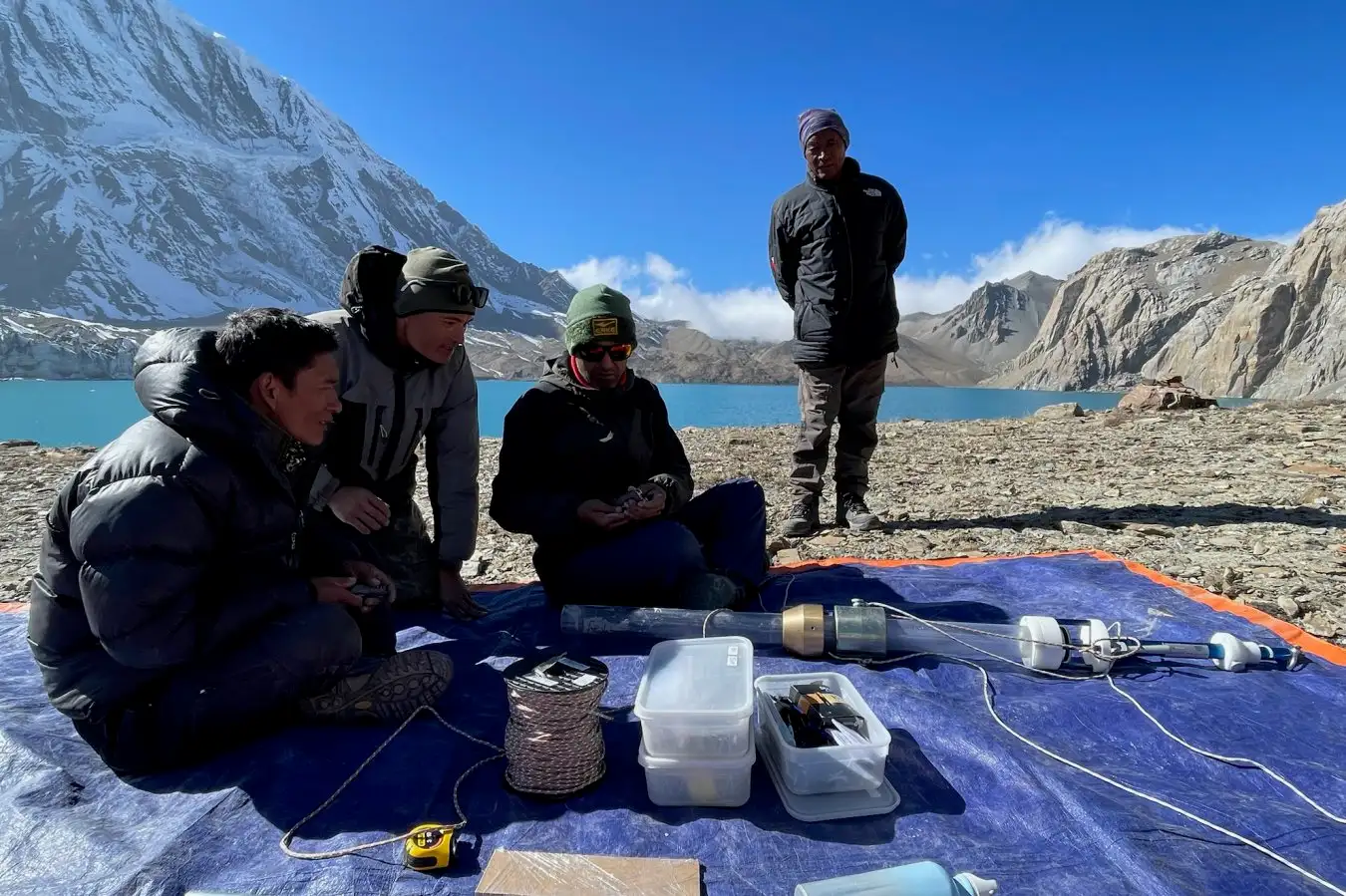
The research team preparing equipment for sediment core sampling at Rara Lake in Nepal
Zakaria Ghazoui-Schaus, BAS
They later analysed the core for turbidites, layers of fine sediments on top of coarser ones, which were deposited on the lakebed by underwater landslides triggered by earthquakes. The team has now identified 50 earthquakes of magnitude 6.5 or greater over the past 6000 years, dating each according to its depth in the core. These have likely released energy and lessened tension in the fault, Ghazoui-Schaus says.
Statistical analysis found the earthquakes tended to come in clusters, but these clusters occurred randomly. While that is what most seismologists would now expect based on the modern instrument record, Ghazoui-Schaus says it is one of the first times a paleo-seismological record has also confirmed it.
“If I have to build a house in western Nepal, I would definitely be more cautious in the way that I would build,” he says. And even though earthquakes come at random, calculating the average interval between them can still be useful as an indicator of seismic activity that could damage structures in an area like bridges or dams, according to Musson.
“If you’re planning for the next hundred years, you want to know how many earthquakes of a certain size are going to occur in that period,” he says. “And if you are prepared for that, then it doesn’t matter whether the earthquake happens next year or in 10 years’ time, because you’ve built your dam strong enough.”
Topics:
Source link : https://www.newscientist.com/article/2515421-nepal-and-northern-india-are-not-overdue-for-a-huge-earthquake/?utm_campaign=RSS%7CNSNS&utm_source=NSNS&utm_medium=RSS&utm_content=home
Author :
Publish date : 2026-02-11 20:35:00
Copyright for syndicated content belongs to the linked Source.