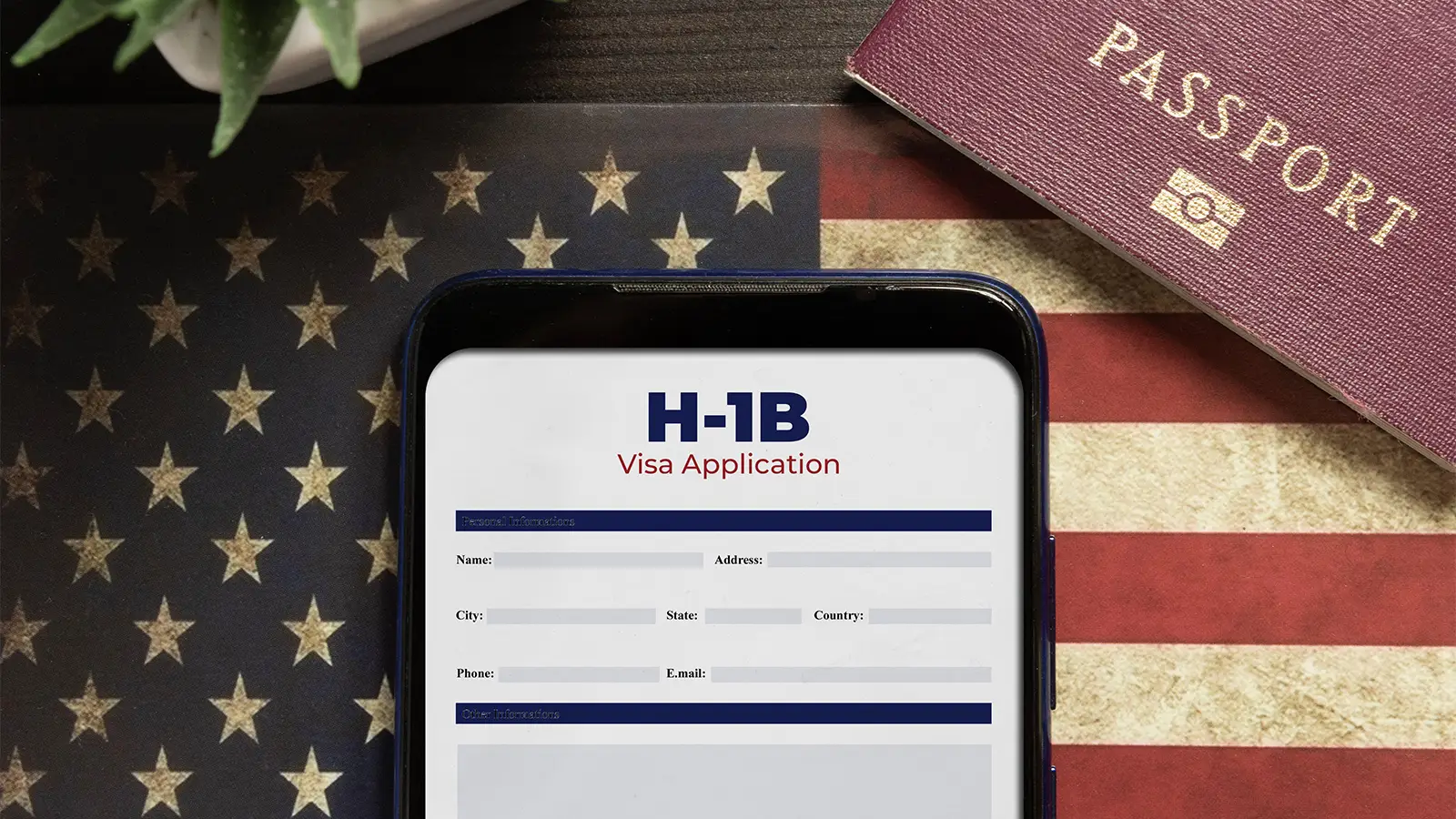
Bipartisan legislation introduced in the U.S. House of Representatives would exempt physicians and other healthcare workers from a new $100,000 H-1B visa application fee.
Reps. Mike Lawler (R-N.Y.), Sanford D. Bishop, Jr. (D-Ga.), Maria Elvira Salazar (R-Fla.), and Yvette Clarke (D-N.Y.) unveiled legislation that would exempt doctors and other health workers from the fee. If passed and signed into law, the bill would also prohibit any new H-1B fees from being imposed on these workers.
The H-1B visa program allows U.S. employers to hire highly skilled workers from abroad for specialty occupations, but since September, applicants have faced a $100,000 fee. Medical organizations have advocated for an exemption, petitioning the Department of Homeland Security (DHS), but physicians and other healthcare workers have yet to be exempt.
“Hospitals, community health centers, and other critical facilities are facing serious workforce shortages that threaten access to care,” Lawler said in a statement. “And they can’t pay a $100,000 price tag on new immigrant workers. Without the clarification provided in this bill, the physicians and the wider healthcare workforce would effectively be shut out of the H-1B program, furthering workforce shortages and limiting care options.”
Medical group leaders praised the bipartisan proposal and voiced their support.
“Representatives Lawler and Clarke and other members of Congress showed great leadership in introducing this legislation that would create a healthcare sector exemption from this inappropriate H-1B visa payment requirement,” Tim Johnson, senior vice president for the Greater New York Hospital Association, told MedPage Today in emailed remarks.
“Hospitals and other healthcare organizations simply want to have the doctors and other clinical staff they need to take care of their communities. Healthcare dollars should be used to pay healthcare workers, not to pay a penalty tax to the federal government,” he continued.
Late last year, Johnson’s association, whose member hospitals and health systems span four states, surveyed facilities about positions that could be affected by H-1B visa changes, and found that 25% had paused, deferred, or limited recruitment of physicians requiring H-1B visas.
Stacey Hughes, executive vice president of the American Hospital Association, remarked that the legislation would “maintain critical staffing for areas of the country where there are well-documented shortages of healthcare workers.”
Danielle Turnipseed, chief public policy officer for the Association of American Medical Colleges, said that the bill “helps by supporting our nation’s medical schools, academic health systems, and teaching hospitals that rely on highly educated international talent.”
The American Medical Association (AMA) pointed out that international medical graduates comprise about one-quarter of practicing physicians in the U.S., “often working in underserved areas with higher rates of poverty and chronic disease.”
A recent cross-sectional study led by Rishi Wadhera, MD, of Beth Israel Deaconess Medical Center in Boston, showed that the percentage of physicians sponsored by the H-1B visa program was significantly higher in vulnerable and underserved counties, reaching 2% of the physician workforce in counties with the highest poverty levels.
“The prohibitive increase in H-1B application fees will disproportionately affect rural and socioeconomically disadvantaged communities, which already experience the greatest healthcare workforce shortages,” Wadhera and colleagues wrote. “Physicians on H-1B visas are far more likely than their domestic counterparts to fill critical gaps in healthcare delivery systems, such as primary care and psychiatry.”
AMA President Bobby Mukkamala, MD, emphasized that the proposed legislation would “ensure the new $100,000 fee does not make it harder to recruit highly skilled physicians.”
When asked for comment, a spokesperson for DHS stated that the “recent changes to the H-1B visa program, including the increased fee, are intended to address concerns about program integrity and the impact on the U.S. workforce. The policy aims to ensure that employers prioritize hiring U.S. workers, particularly in high-skilled fields. The Trump Administration remains committed to safeguarding opportunities for American workers and maintaining the integrity of employment-based visa programs.”
Source link : https://www.medpagetoday.com/washington-watch/washington-watch/120377
Author :
Publish date : 2026-03-18 21:42:00
Copyright for syndicated content belongs to the linked Source.