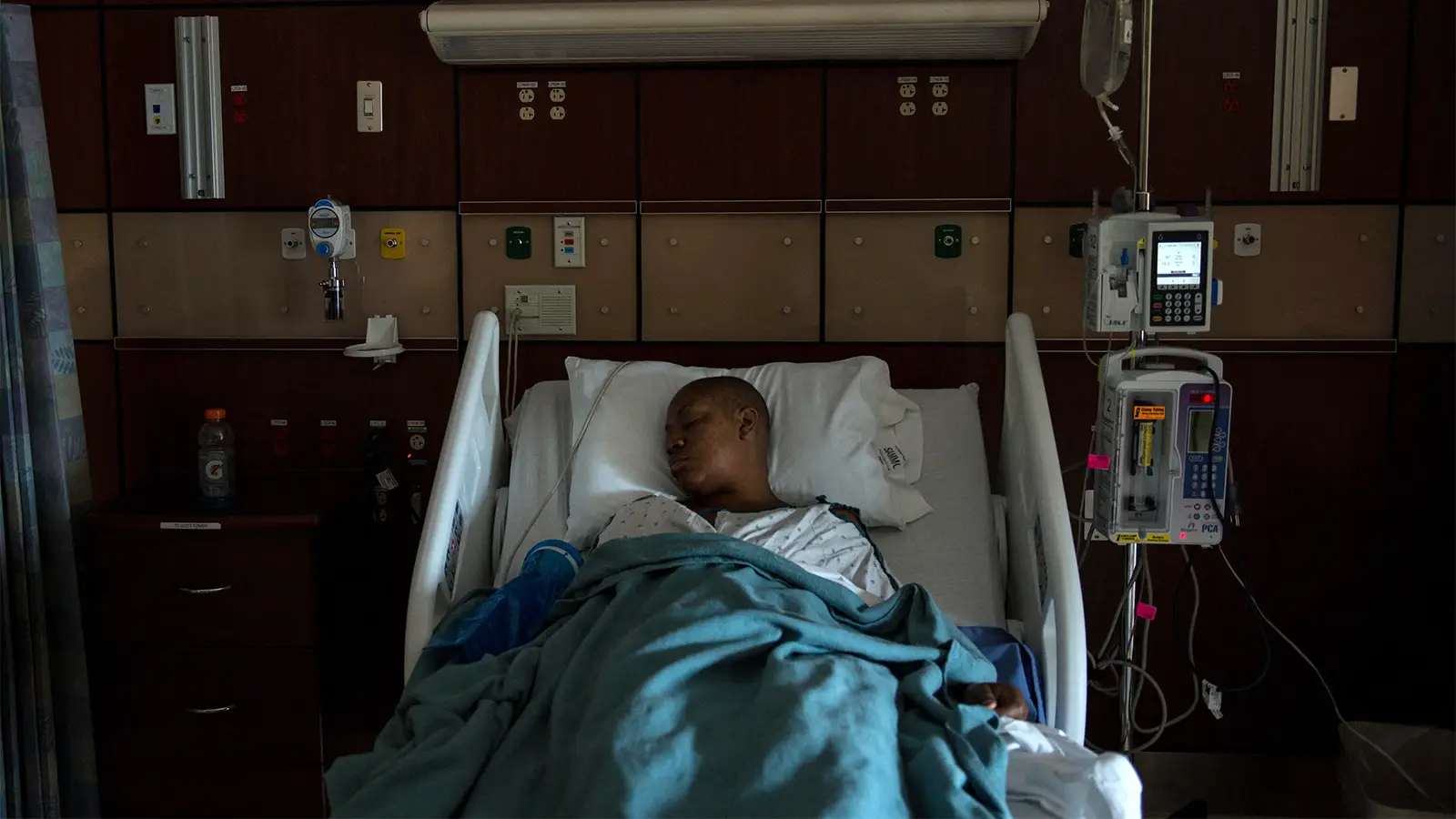
Mastectomy did not significantly improve survival for younger women with high-risk locoregionally advanced breast cancer, even though the more aggressive surgery predominated in the age group, data from a prospective study showed.
From 2010-2022, 60% of women ages 45 or younger had mastectomy, which led to a non-significant difference in overall survival (HR 0.74, 95% CI 0.40-1.38). Women younger than age 40 at the time of surgery also did not have a survival benefit with mastectomy. Instead, tumor biology and response to systemic therapy were the only significant determinants of survival.
The findings challenge assumptions about need for mastectomy in younger women with high-risk early breast cancer, reported Jennifer Tseng, MD, of City of Hope Orange County in Irvine, California, at the American Society of Breast Surgeons meeting in Seattle.
“Extent of surgery did not make a difference in how long patients lived or stayed cancer free in their breast and surrounding tissue,” Tseng said during a press briefing. “Histological grade and residual cancer burden [after systemic therapy] did make a difference in how long patients lived and their ability to stay cancer free in the breast and surrounding tissues. In other words, tumor biology and response to medical therapy make significant differences, but the choice of breast surgery does not.”
“More research is needed to identify the appropriate treatment protocols for younger patients,” she added. “Additionally, existing information may not be readily accessible to patients and the complete medical community involved in their care. For this population, in particular, communications and information sharing are powerful cancer care tools.”
The study is good news for younger women who value breast preservation, particularly at a time in life “when this might be very important to them,” said press briefing moderator Tina Hieken, MD, of the Mayo Clinic in Rochester, Minnesota. More granular data about patient and treatment characteristics in the published manuscript can help breast cancer specialists and patients interpret the findings within the context of current practice.
“It’s really nice to see that we’ve developed some equipoise with advances in systemic therapies, perhaps to permit young women to preserve their breasts,” said Hieken.
Historically, younger women with breast cancer have undergone mastectomy more often than older women. Multiple factors can influence choice of breast surgery, including the size of the tumor, a patient’s concern about cancer recurrence, family history, and genetic predisposition.
“However, there is an unclear benefit of more extensive breast surgery in cancer treatment success, especially for patients who have neoadjuvant therapy,” said Tseng. “This is important in that more extensive surgery can take a toll on women, including permanent loss of chest wall sensation, body image and self esteem issues, impacts on sexual well-being and arousal, mobility issues, and increased financial burden.”
To compare outcomes after breast-conserving surgery (BCS) and mastectomy, Tseng and colleagues retrospectively reviewed data from the I-SPY2 clinical trial, an adaptive clinical trial platform designed to improve outcomes in breast cancer by evaluating new and novel neoadjuvant therapies. Data analysis included 1,737 patients who participated in I-SPY2 from April 2010 to June 2022. Women 45 or younger accounted for about 40% of the study population.
The two age-defined cohorts did not differ significantly by patient or tumor characteristics, including race/ethnicity, hormone receptor subtype, tumor/nodal characteristics, or histologic grade. Additionally, residual cancer burden (RCB) class distribution after neoadjuvant therapy did not differ between the groups.
Not unexpectedly, younger patients underwent mastectomy more often (63.2% of cases) as compared with women >45 (51.5%). Over time, however, the BCS rate increased in younger women, after accounting for fewer than 25% of cases in 2010. Extent of axillary surgery did not differ between younger and older patients (sentinel node biopsy 65.0% vs 65.4%, axillary lymph node dissection 35.0% vs 34.6%).
After a median of 5.4 years follow-up or time to death, 80 OS events had occurred in the ≤45 age group versus 120 in the older patients, as well as 58 locoregional relapse events in younger patients and 75 in the >45 group. A multivariable analysis showed no difference in OS (P=0.346) or locoregional relapse-free interval according to the type of surgery.
The only significant influences on OS were histologic grade (III vs I/II, HR 2.46, 95% CI 1.08-5.58, P=0.031) and RCB (increasing hazard with extent of RCB, P=0.003 to P<0.001).
“We know that choice of surgery in breast cancer is multifactorial, and this study supports that young age alone does not necessarily require mastectomy,” said Tseng.
Source link : https://www.medpagetoday.com/hematologyoncology/breastcancer/121092
Author :
Publish date : 2026-05-04 14:34:00
Copyright for syndicated content belongs to the linked Source.