
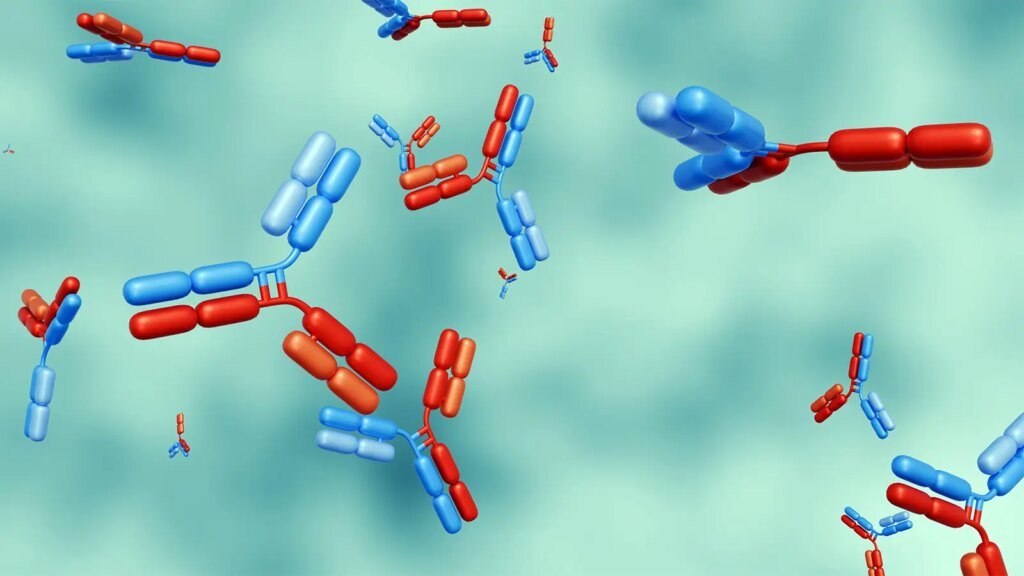
- Bleeding prophylaxis with an investigational factor VIIIa-mimetic bispecific antibody was superior to current standard of care in patients with hemophilia A with or without inhibitors.
- Depending on the regimen of the study drug, 64% to 95% of patients remained free of treated bleeding events during 26 weeks.
- Factor VIIIa mimetics that require less frequent subcutaneous administrations can help reduce the burden of treatment, researchers said.
Bleeding prophylaxis with the investigational factor VIIIa mimetic bispecific antibody Mim8 (denecimig) was superior to on-demand treatment and clotting factor concentrates among patients with hemophilia A with or without inhibitors, the phase IIIa FRONTIER2 trial showed.
Among 58 patients who received on-demand treatment before the trial began, the estimated mean annualized rate of treated bleeding events was 0.57 for those who received Mim8 once weekly and 0.20 among those who received Mim8 once monthly compared with 15.76 in those who continued to receive on-demand treatment, with relative decreases of 96.4% and 98.7%, respectively (P<0.001 for both comparisons), reported Maria Elisa Mancuso, MD, PhD, of the IRCCS Humanitas Research Hospital in Milan, and colleagues.
Additionally, of 196 patients who previously received prophylaxis with clotting factor concentrates during a run-in phase, the estimated mean annualized rate of treated bleeding events was reduced from 4.90 to 2.25 with weekly Mim8 (relative decrease 54%, P=0.006), and from 3.12 to 1.78 with monthly Mim8 (relative decrease 42.8%, P=0.006), they wrote in the New England Journal of Medicine.
“This finding indicates that Mim8 may enhance efficacy beyond that of current standard care,” Mancuso and team noted.
Depending on the regimen, 64% to 95% of patients receiving Mim8 remained free of treated bleeding events during 26 weeks of treatment.
In an accompanying “Science Behind the Study” editorial, Alok Srivastava, MD, of St. John’s National Academy of Health Sciences in Bengaluru, India, pointed out that these results “are consistent with existing benchmarks for efficacy and safety of new hemostasis products for hemophilia.”
“It is clear from the results … that the new factor VIIIa mimetic, Mim8, will increase therapeutic options for patients with hemophilia A,” he wrote.
Treatment of hemophilia A — caused by an inherited deficiency of clotting factor VIII — was transformed with the development of the bispecific humanized monoclonal antibody emicizumab (Hemlibra), the first non-factor medication for subcutaneous administration in patients with severe and moderate hemophilia A with or without factor VIII inhibitors.
Both emicizumab and Mim8 mimic the active form of factor VIII (factor VIIIa).
“Factor VIIIa mimetics that involve less frequent subcutaneous infusions can help reduce the burden of treatment,” explained Mancuso and colleagues. “These drugs are designed to emulate the cofactor function of endogenous factor VIIIa by bridging factor IXa and factor X to restore thrombin generation.”
Since Mim8 is estimated to have a thrombin-generation potency approximately 15 times higher than emicizumab ex vivo and a sequence-identical analogue of emicizumab in vitro, Srivastava pointed out that it “should therefore have similar clinical efficacy to emicizumab at 85% to 90% lower doses at different weight ranges.”
Because of its higher potency, Mancuso and colleagues noted that “Mim8 can be given as a one-time loading dose and a fixed, low-volume injection for all dose-administration frequencies,” and can also “be administered by means of a prefilled device to minimize administration errors and drug waste.”
The FRONTIER2 trial included 254 patients ages 12 years and older who were assigned to one of five groups during the 26-week main phase. Patients who had been receiving on-demand treatment before the trial were assigned 1:1:1 to continue on-demand treatment or receive Mim8 weekly or monthly. Those receiving clotting factor concentrates during a run-in phase were assigned in a 1:1 ratio to receive Mim8 weekly or monthly.
Of the patients who underwent randomization, 2% were female, 26% were adolescents (ages 12 to 17), 84% had severe hemophilia A, 12% had factor VIII inhibitors, and 95% weighed at least 45 kg.
Mim8 was administered subcutaneously in a fixed volume of 0.8 mL, and the dose was tiered according to body weight (30 to <45 kg or ≥45 kg).
Patients weighing 30 to <45 kg were given a one-time loading dose of 24 mg if receiving Mim8 once weekly or 40 mg if receiving Mim8 once monthly, and those weighing at least 45 kg were given a one-time loading dose of 55 mg if receiving Mim8 once weekly or 92 mg if receiving Mim8 once monthly.
Those in the lower weight group then received maintenance doses of 4 mg once weekly or 20 mg once monthly, and those in the higher weight group were given maintenance doses of 9 mg once weekly or 46 mg once monthly.
In total, 10% of patients receiving Mim8 reported injection-site reactions. No patients had a thromboembolic event or clinical evidence of neutralizing anti-Mim8 antibodies. Three percent of patients discontinued Mim8 due to adverse events or other reasons.
Please enable JavaScript to view the comments powered by Disqus.
Source link : https://www.medpagetoday.com/hematologyoncology/hemophilia/121032
Author :
Publish date : 2026-04-29 21:42:00
Copyright for syndicated content belongs to the linked Source.