
[ad_1]
Over the last 9 months, nurses have been protesting a federal regulation that they say would drive up student loan debt, exacerbate workforce shortages, and threaten patient access to care. Last week, they put their words into action by suing the Department of Education (DOE) over that rule.
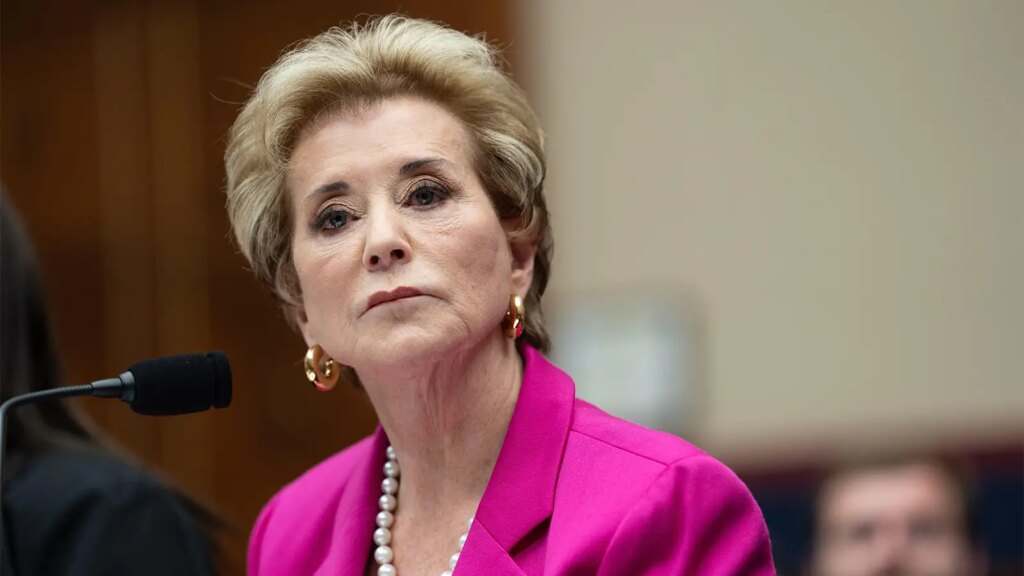
The American Nurses Association (ANA) and nine other national nursing organizations filed a lawsuit against the department and Secretary Linda McMahon last week.
The rule, which is slated to take effect July 1, excludes nurses from a definition of “professional degrees,” which substantially reduces the amount of money graduate nursing students can borrow from the federal government, according to an ANA press release.
Under new borrowing limits set by the One Big Beautiful Bill Act passed last July, students obtaining “professional degrees” are allowed to borrow $50,000 annually, or $200,000 in aggregate, whereas students in graduate programs are allowed to borrow only $20,500 annually or $100,000 in aggregate.
The nursing groups’ lawsuit argued that excluding nurses from the “professional degrees” category is unlawful and violates the Administrative Procedure Act. They called the DOE’s actions “arbitrary and capricious and not the product of reasoned decision-making” and said the department failed to “meaningfully … engage with public comments,” of which there were more than 80,000.
The rule borrowed language from a 1965 higher education law, which includes both a three-part test and a list of “professional degree” types, including doctors and dentists, among others, but not nurses. Importantly, that list was originally considered “non-exhaustive.” Under the final rule, the DOE eliminated language suggesting the list comprised a set of possible examples, instead stating that students “must be enrolled in a program leading to one of the listed degrees,” according to the lawsuit.
The plaintiffs said that if the rule is implemented, those who cannot afford to pay for advanced nursing programs out of pocket “will have no choice but to take on crushing, higher-interest debt” from private loans “or abandon their career aspirations.”
A typical advanced nursing degree can cost more than $38,000 annually, and total in-state tuition and fees for a doctor of nursing practice or a doctor of nurse anesthesia practice can exceed $100,000, according to 2025 data from the American Association of Colleges of Nursing.
The changes in the rule impact all advanced practice registered nurses (APRNs), including nurse practitioners, certified registered nurse anesthetists, clinical nurse specialists, and certified nurse midwives.
“The equation is simple: If we eliminate nursing students’ access to funding, we decrease the number of nurses in the workforce — leading to under-staffing and hazardous patient-to-nurse ratios in the places where you practice,” Elizabeth Woods, DNP, MSN, RN, of Emory University School of Nursing in Atlanta, wrote in a MedPage Today op-ed last year.
Last month, the American Association of Nurse Practitioners (AANP), the American Association of Colleges of Nursing, and several other health and education organizations also sued over the rule.
At the time, AANP CEO Jon D. Fanning, MS, said in a press release that the association had repeatedly warned the DOE that limiting graduate nursing students’ access to federal student loans would shrink the pipeline of future nurse practitioners at a time when patients already struggle to access care due to existing workforce shortages.
“If fewer students are able to pursue nurse practitioner education, patients could face longer wait times, reduced healthcare options, and greater difficulty accessing timely care,” he noted.
A third lawsuit was filed by more than two dozen states around the same time.
According to ANA President Jennifer Mensik Kennedy, PhD, MBA, RN, blocking access to higher federal loan amounts impacts not only APRNs, but all registered nurses, by exacerbating nursing faculty shortages.
“With so many faculty retiring, who’s going to teach the next generation of nurses? In 2024, we had over 80,000 qualified nursing applications turned away from nursing schools. And the number one reason was not enough faculty,” she said.
Teshieka “T.K.” Curtis-Pugh, MSN, RN, RN-BC, executive director of the South Carolina Nurses Association, noted that “we’re kind of cutting our nose off to spite our face at this point, because the people who have the desire and passion and willingness to do this [work] are being roadblocked from being able to move forward in their education.”
Most nurse faculty take a pay cut when they leave clinical care, and “if they can’t afford to go back to school, they won’t do it,” she added.
“There’s nothing wrong with deciding to be a nurse at the bedside if that’s what you want to do,” she said. “But there are other aspects of nursing that you cannot do without the advanced degree.”
Curtis-Pugh had planned to pursue a PhD in global health equity in the next couple of years, but the rule would make that dream “virtually impossible,” because she cannot afford to pay tuition for both her daughter and herself.
Curtis-Pugh said she is concerned for her own career but more concerned about the impact on APRNs, including the “dwindling” number of certified nurse midwives. In South Carolina, 14 counties currently lack an ob/gyn. The state also has the fifth highest rate of non-traumatic amputations related to peripheral vascular disease associated with poorly managed diabetes.
Amputations and delivering babies are things that APRNs can do, Curtis-Pugh explained. “This matters to people who don’t even know that it matters to them.”
Please enable JavaScript to view the comments powered by Disqus.
[ad_2]
Source link : https://www.medpagetoday.com/nursing/nursing/121545
Author :
Publish date : 2026-06-02 16:34:00
Copyright for syndicated content belongs to the linked Source.