[ad_1]
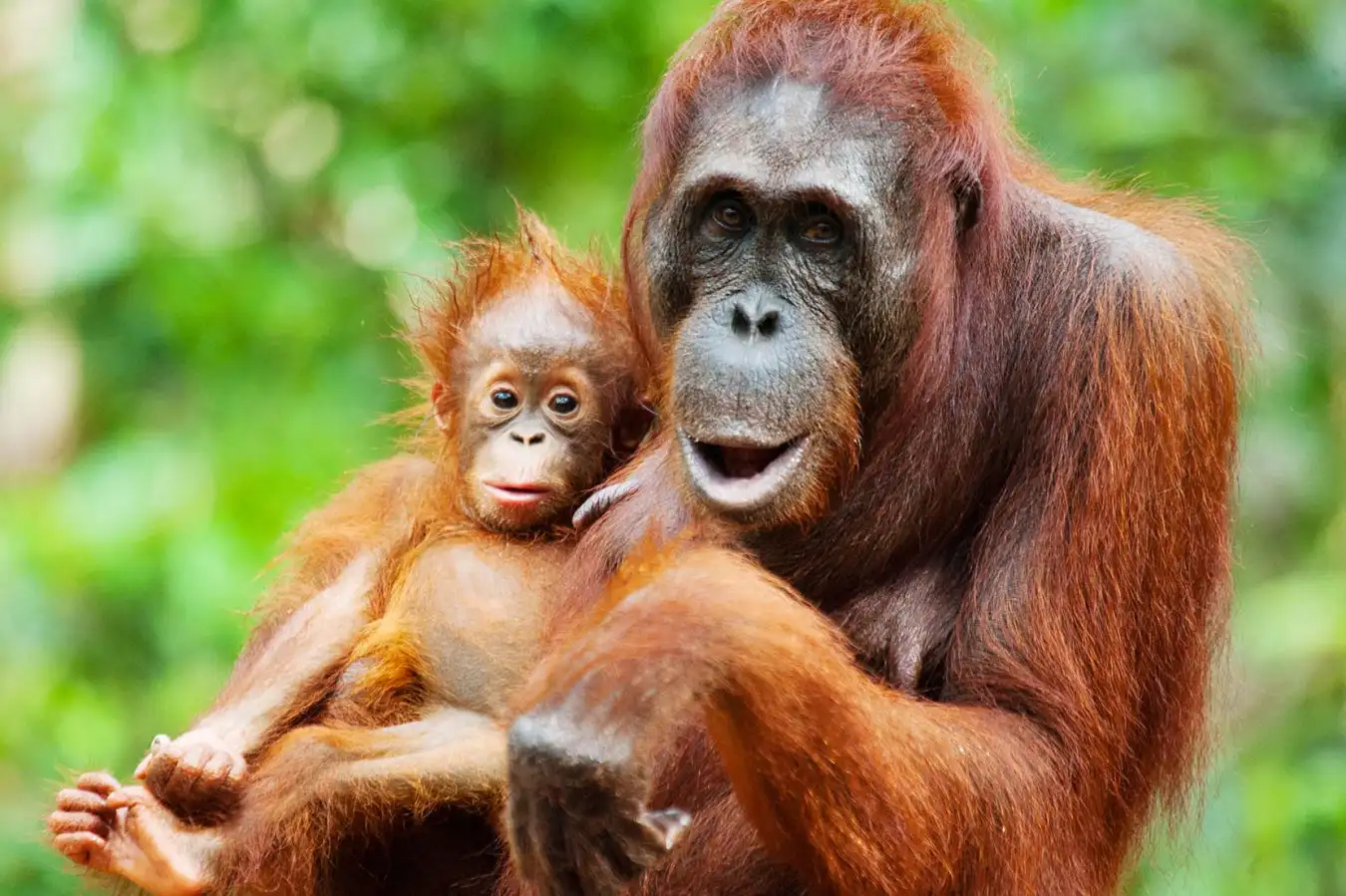
Female orangutans usually raise a single infant at a time
ANDREY GUDKOV/Alamy
Orangutan mothers seem to make trips into the territories of other mothers with similarly aged offspring so the youngsters can play together.
Play is essential to how many animals learn, strengthening social and motor skills, and teaching crucial behaviour. Yet orangutans are a solitary species, while mothers give birth to a single infant, which they raise alone for six to seven years. The young socialise together when they get the chance, but how often this happens and how it comes about are poorly understood.
“I think the assumption would be that orangutans require less play because they’re less social than the other apes, but orangutan males have to fight, so they have to practise that somewhere,” says Zarin Machanda at Tufts University in Massachusetts.
To dig into this, Odd Jacobson at the Max Planck Institute of Animal Behavior in Konstanz, Germany, and his colleagues have looked at 15 years’ worth of data on 31 wild Bornean orangutan (Pongo pygmaeus wurmbii) mother-offspring pairs. The data covers about 30,000 hours of observations that reveal where the animals were, whom they were with and what they were doing.
The team found that mothers with similarly aged offspring spent a disproportionately high amount of time together in the same area. Youngsters tended to play in these situations, and play was more likely if the mothers were closely related.
The distance the apes travelled increased in the days before and after the playdate, as the mothers headed into the neighbour’s territory and then home afterwards.
“Our study provides strong evidence that wild Bornean orangutan mothers adjust their ranging behavior to increase their offspring’s access to social play,” write Jacobson and his colleagues, who didn’t respond to New Scientist’s request for comment.
It is possible the young apes are just playing where orangutans have gathered near a plentiful supply of fruit, much like brown bear cubs have been seen playing together when their mothers converge on a river full of salmon. But the meet-ups happened regardless of how much fruit was available in the area, and the researchers found that the increased travelling meant less time feeding. This led them to suggest that these encounters are planned at a cost to the mothers’ own foraging, rather than being part of it.
It is almost impossible to determine intentionality with behavioural data like this, says Machanda, but she says “it’s possible that there’s something different about the way that mothers play with their babies and peers play, and they’re making a choice to get their babies socialised with peers”.
Adriano Lameira at the University of Warwick, UK, says the findings are in line with what we know about the huge investment orangutans make in raising their offspring and their cognitive capabilities.
He doesn’t think orangutan mothers call ahead to arrange playdates, though. Male orangutans use long calls to communicate their travel direction a day in advance, he says, but females aren’t thought to use long-distance calls for social coordination.
He thinks the meet-ups come down to what the orangutans can hear and see from the trees, their local knowledge – such as which trees are fruiting or where there are big lianas for youngsters to climb – and their ability to understand what others would do.
“One mother will likely be able to estimate, based on the other mother’s last location and typical range, which resources they will be searching for and where they will most likely be,” says Lameira.
Topics:
[ad_2]
Source link : https://www.newscientist.com/article/2532880-orangutan-mothers-seem-to-plan-playdates-for-their-offspring/?utm_campaign=RSS%7CNSNS&utm_source=NSNS&utm_medium=RSS&utm_content=home
Author :
Publish date : 2026-07-03 12:28:00
Copyright for syndicated content belongs to the linked Source.