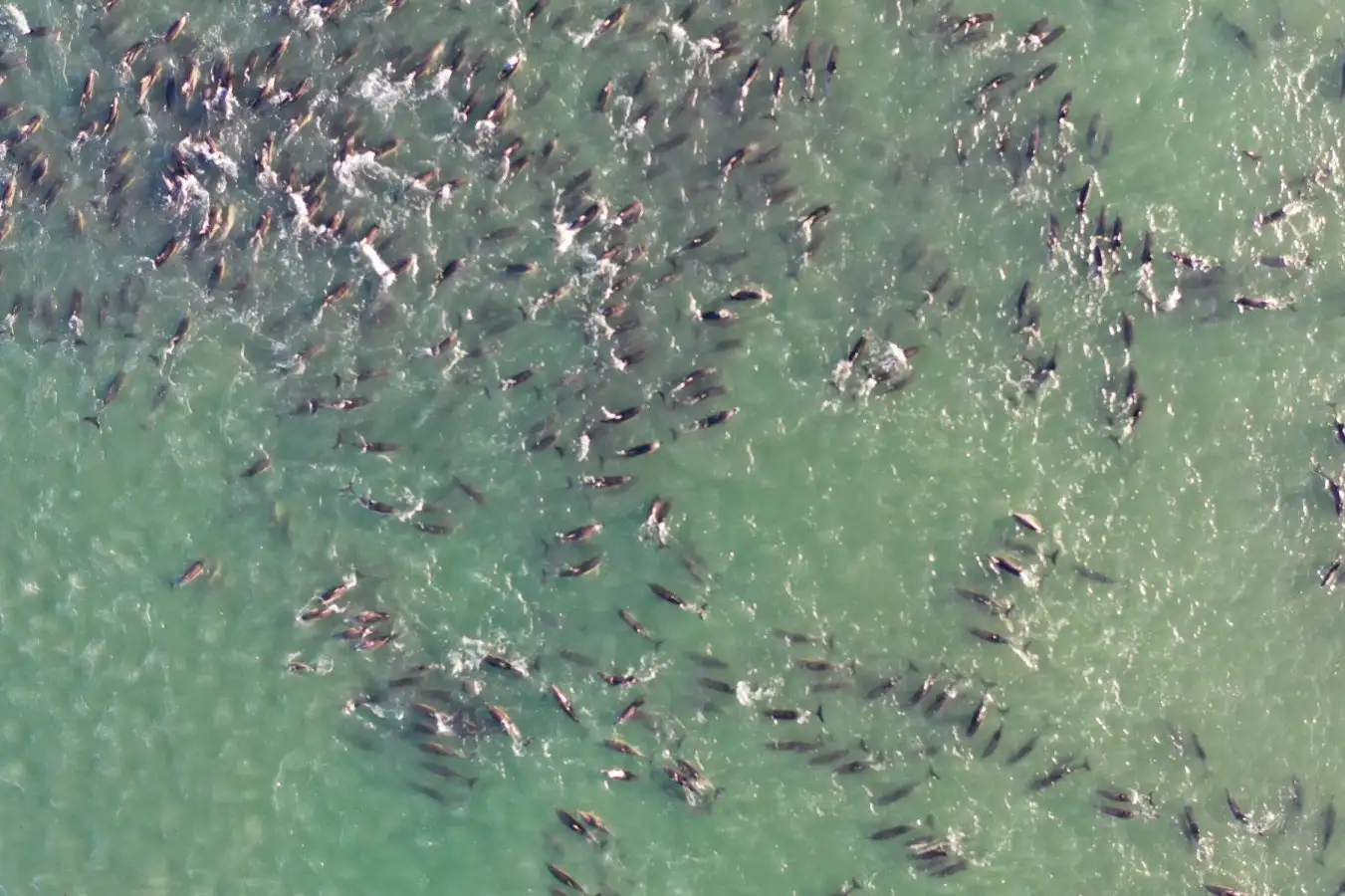
Dolphins stranded in shallow water in San Antonio Bay, Argentina
Hundreds of stranded dolphins in Argentina appear to have become trapped while escaping hungry orcas in a tragic lose-lose situation.
Videos shared on social media and citizen science platforms have helped scientists unravel the mystery behind two deadly mass stranding events in recent years, says Magdalena Arias at the National Scientific and Technical Research Council of Argentina.
“This doesn’t mean predators are always the cause of mass strandings, but it suggests that predator-prey interactions may sometimes trigger these events – particularly when combined with factors such as coastal geography, tides and the strong social behaviour of dolphins,” says Arias.
Marine mammals have been getting stranded in mass mortality events for millions of years, but scientists still debate why they happen. Possible explanations include human disturbance, toxic algae, infectious diseases, disorientation, overpopulation, natural disasters and group hunting efforts that take a wrong turn.
Some research teams have suggested that stranded pods might have been fleeing from predators. But that is difficult to document, as hunts cover large spaces and last a long time. “Often researchers only see the final result: a group of dolphins stranded on the beach that appear otherwise healthy,” she says.
In the past five years, common dolphins (Delphinus delphis) have been stranded three times in northern Patagonia – something that hadn’t happened previously – prompting Arias and her colleagues to investigate.
The researchers analysed video footage from drone cameras and mobile phones uploaded to the eWHALE citizen science platform and social media sites by tourists, guides, fishers and local residents.
They saw that, in 2021, about 350 dolphins were speeding towards San Antonio Bay in Rio Negro province, Argentina, with a pod of eight orcas (Orcinus orca) about half an hour behind them. At the mouth of the bay, some dolphins headed into the shallow port and lay low and still as if in hiding, while the orcas U-turned back into the sea. The next day, dozens of dolphins were found dead in the port.
Similarly, in 2023, about 570 dolphins raced towards the bay at high speed, followed by a group of orcas. Some of the dolphins rushed into the port, but local authorities and volunteers successfully rescued them after the orcas had turned away.
Necropsies of 38 dead animals from the 2021 event showed they had good body condition and no significant disease or injuries. Their stomachs contained no recent meals – suggesting they weren’t chasing prey. “This makes some of the most common explanations for strandings less likely,” says Arias.
Scientific and lay reports of orca sightings over recent years helped the team establish a chronological map of their presence in the area and revealed two confirmed reports of orcas hunting and killing common dolphins.
The dolphins probably sought refuge in shallow areas that interfere with orcas’ echolocation and movement – but then ended up getting stuck among the sandbanks and tidal channels themselves, says Arias.
Orcas, meanwhile, might deliberately chase dolphins towards bays in an attempt to corner them. In fact, two of the 2021 orcas had been repeatedly sighted using coastal features to trap sea lions, she says.
Prolonged stress and disorientation from the chase might have made the dolphins less likely to find their way back out to sea. Such cases probably occur across the globe and just haven’t been documented yet, says Arias.
“This study highlights the important contribution that citizen science can make to research, and how understanding these processes helps us not only explain mass strandings, but also better understand how marine ecosystems change – and how species respond to those dynamics,” she says.
Topics:
Source link : https://www.newscientist.com/article/2518849-orcas-may-be-to-blame-for-some-mass-dolphin-strandings/?utm_campaign=RSS%7CNSNS&utm_source=NSNS&utm_medium=RSS&utm_content=home
Author :
Publish date : 2026-03-11 00:01:00
Copyright for syndicated content belongs to the linked Source.