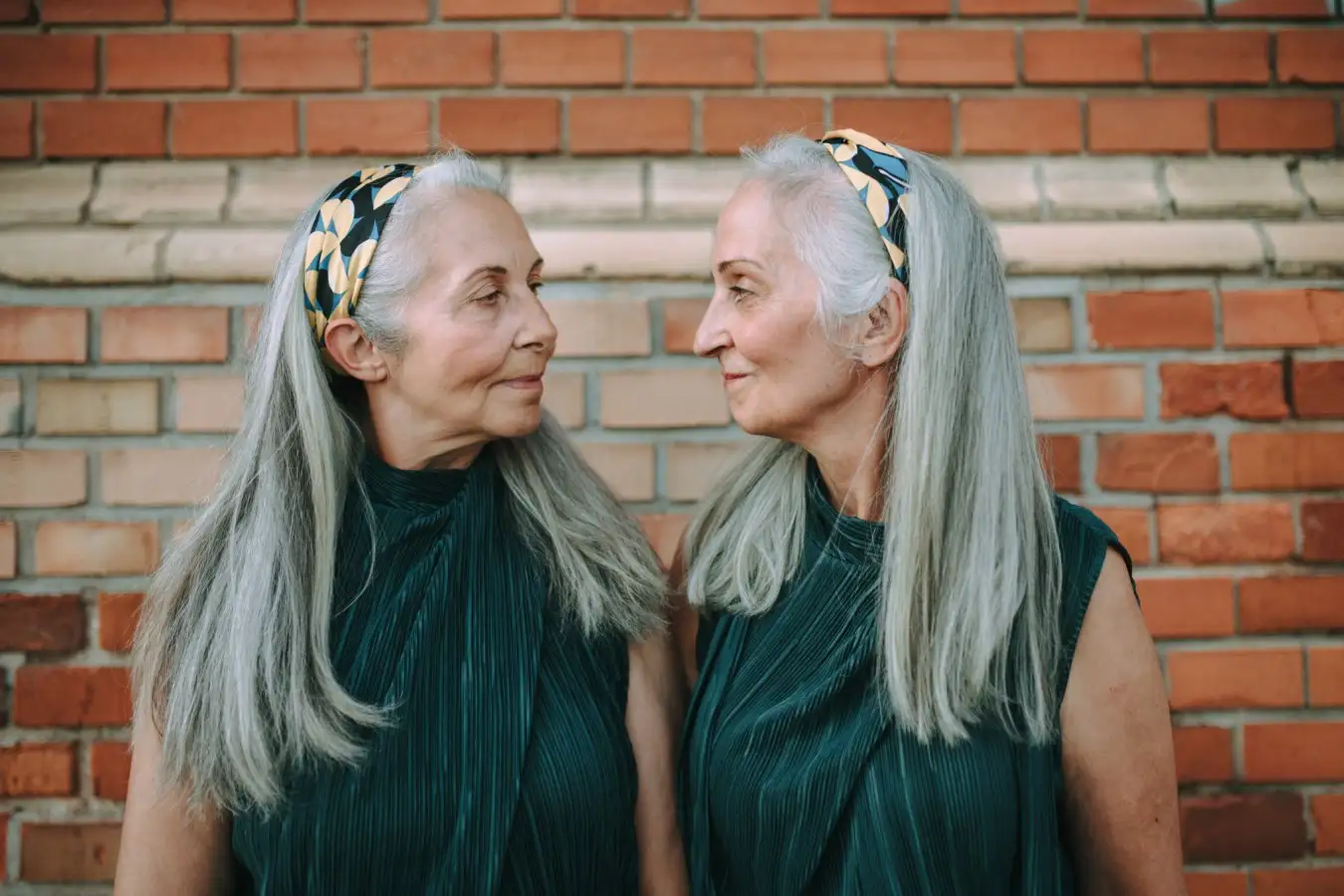
Studying twins is key to understanding the heritability of lifespan
Halfpoint/iStockphoto/Getty Images
In wealthy, relatively safe countries, how long people live now probably depends just as much on the genetic variants they inherit from their parents as on their environment and lifestyles. That’s the implication of a study reanalysing data from research in twins in Denmark and Sweden.
For people living in these nations, it may be no surprise that their lifespans are probably half down to their genes and half to their environment. But earlier studies of the twin data, performed decades ago, concluded that genes explained only a quarter of the variation in human lifespans.
“It shifts the balance a bit, saying, OK, there’s a bigger role for genetics, while the environmental contribution becomes a bit smaller,” says team member Joris Deelen at Leiden University Medical Center in the Netherlands. “But at least 50 per cent is attributable to environmental factors, so environment still plays a major role.”
Heritability is a measure of the extent to which variation in a particular trait is due to genetics, compared with how much is due to the environment. As the team notes, the heritability of any trait isn’t a fixed number that is true for everyone, everywhere, anytime. Rather, it applies to only a specific population in a specific environment.
The height of wheat is the classic example. If seeds are planted in a flat, uniform field, almost all variations in height will be down to genetics. But plant the same seeds across a more varied landscape and almost all the variations in height will be due to differences in soil, sunlight, water and so on. The heritability of height will be wildly different in these two situations.
For estimating heritability in human traits, geneticists often compare twins raised in the same household with those raised separately. For this study, Deelen and his colleagues mostly relied on studies of twins born in Sweden or Denmark between 1870 and 1935.
When they excluded deaths due to accidents or infections, as opposed to age-related conditions such as heart attacks, the heritability of lifespan went up to around 50 per cent.
This is more in line with what we know about ageing in animals, says Deleen. “I think it’s more realistic that it’s closer to 50 per cent than to 25 per cent.”
“What their paper assesses is the heritability of maximum lifespan under ideal conditions, assuming only age-related processes contribute, which is a much narrower question than overall lifespan,” says Peter Ellis at the University of Kent in the UK. It isn’t surprising that the heritability is higher for this narrower question, he says.
João Pedro de Magalhães at the University of Birmingham, UK, agrees. “The results are not entirely surprising.”
Findings like this show there must be a lot of gene variants responsible for the variations in human lifespan, and identifying them could help us develop life-extending drugs. But so far, very few have been found.
“It remains a major puzzle why so few human longevity-associated genes have been identified,” says de Magalhães.
One issue is that most people involved in studies like the UK Biobank are still alive, so the numbers aren’t there to provide the statistical power required. Deelen thinks it is also because the genetics are highly complex.
For instance, Ellis points out that there will be trade-offs, such as immune-calming variants decreasing the risk of autoimmune diseases but simultaneously reducing protection against infections. This means the team’s assumption that deaths from infection are unrelated to lifespan isn’t necessarily correct, he says.
De Magalhães also points out that the role of genetics looks very different when comparing species, rather than individuals within one species. “If you have the genome of a mouse, you cannot hope to live more than three or four years,” he says. “On the other hand, if you have the genome of a bowhead whale, you might live for more than two centuries.”
Topics:
Source link : https://www.newscientist.com/article/2513610-our-lifespans-may-be-half-down-to-genes-and-half-to-the-environment/?utm_campaign=RSS%7CNSNS&utm_source=NSNS&utm_medium=RSS&utm_content=home
Author :
Publish date : 2026-01-29 19:00:00
Copyright for syndicated content belongs to the linked Source.