[ad_1]
- Changes in moles aren’t the only early warning signs of skin cancer.
- Persistent sores, scaly patches, and other subtle skin changes can also be signs of the disease.
- Skin cancer is highly treatable when detected early, making it important to recognize overlooked warning signs and seek medical evaluation for concerning changes.
Skin cancer is the most common cancer in the United States, accounting for an estimated
While the disease is highly preventable and often highly treatable when caught early, many people don’t recognize its earliest warning signs.
Although changes in existing moles are among the best-known signs of skin cancer, the disease can also appear in less obvious ways.
Persistent sores, scaly patches, and other subtle skin changes are often overlooked or mistaken for less serious conditions, delaying diagnosis and treatment.
Healthline spoke to Paul Banwell, an internationally trained plastic surgeon and skin cancer specialist from the United Kingdom, and Tanya Evans, MD, a board certified dermatologist and medical director of the Skin Cancer Program at the Melanoma Clinic at MemorialCare Saddleback Medical Center in Laguna Hills, about commonly overlooked signs of skin cancer and the best ways to protect yourself from the sun.
This interview has been lightly edited for clarity and length.
Banwell: One of the most commonly overlooked signs is a sore or patch of skin that simply doesn’t heal after several weeks.
You should also be mindful of persistent scaly patches, shiny or pearly bumps, lesions that repeatedly bleed or crust over, or any new mark that continues to change. These can easily be mistaken for dry skin, eczema, or a minor injury, which is why they’re often ignored.
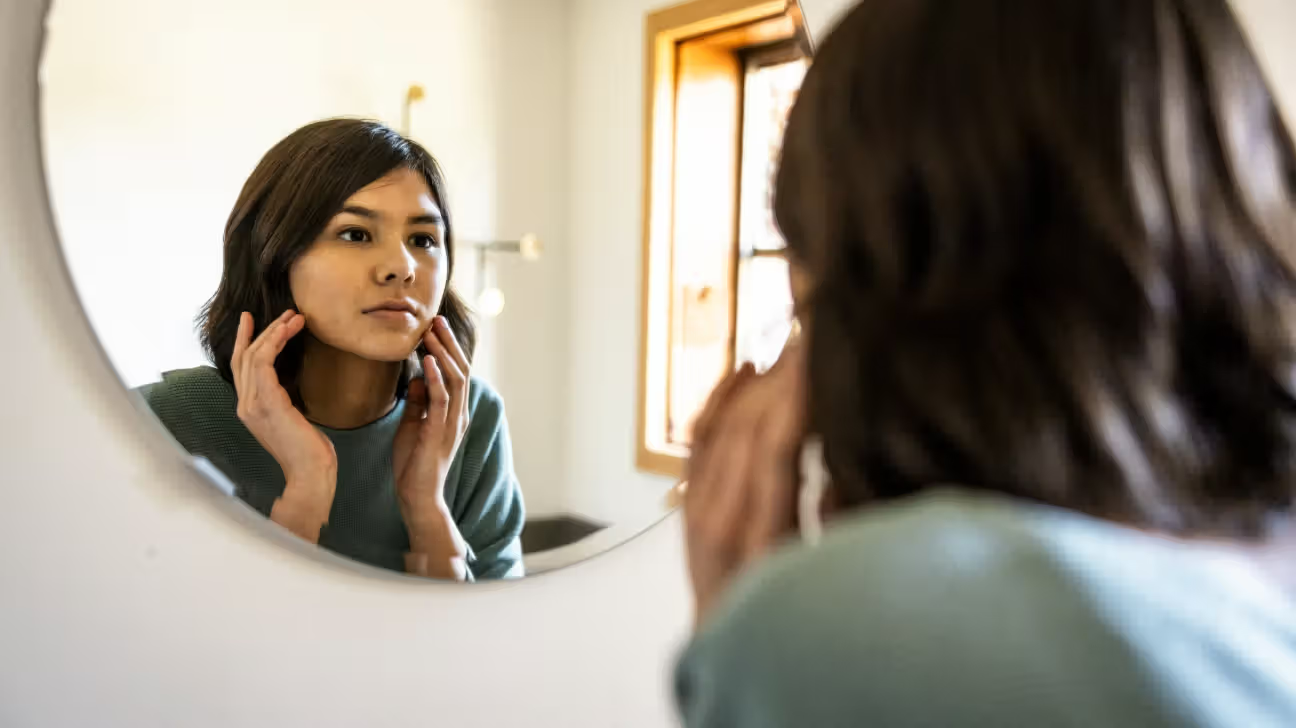
When it comes to moles, it’s important to know what is normal for your own skin. Rather than comparing yourself to someone else, get into the habit of checking your skin regularly so you’re more likely to notice any changes.
A mole that becomes larger, changes shape, develops uneven borders, alters in color, or starts itching, bleeding, or becoming tender should always be assessed. One of the most important warning signs is simply evolution – if something is changing over time, it’s worth getting it checked.
Evans: A powerful yet underutilized screening tool is the “ugly duckling” sign. This is a mole that simply looks different from all surrounding moles (nevi), even if it does not meet ABCDE criteria, is an independent predictor of melanoma.
Banwell: Protecting yourself from the sun doesn’t mean avoiding it altogether, but it does mean being sensible.
I recommend using a broad-spectrum sunscreen with at least SPF 30 every day, and SPF 50 if you’re spending extended periods outdoors.
Sunscreen should be applied generously and reapplied every 2 hours, or more often if you’ve been swimming or sweating.
Just as importantly, combine sunscreen with other forms of protection, including seeking shade during the hottest part of the day, wearing a wide-brimmed hat, UV-protective sunglasses, and clothing that covers exposed skin.
The biggest way to reduce your risk of skin cancer is to avoid repeated sunburn, particularly during childhood and adolescence, as this significantly increases the risk later in life. I also encourage everyone to carry out a quick skin check once a month. It only takes a few minutes and can help you spot changes early, when treatment is generally simpler and far more successful.
Ultimately, skin cancer is highly treatable when it’s caught early. My advice is always the same: if you notice a new lesion, a changing mole, or any area of skin that doesn’t look or feel quite right, don’t ignore it or hope it will go away. Getting it checked promptly could make all the difference.
Evans: UV exposure occurs on overcast days and is amplified by reflection off water, snow, and sand — protection should not be limited to sunny days.
It is also important to wear lip balm with SPF 50 or greater. The lips have minimal protective melanin pigment. Reapply the lip balm every 1-2 hours or after meals.
Another prevention method is to avoid indoor tanning. More than 10 tanning sessions are associated with a 34% increased risk of melanoma.
Also, avoid excess UV lamps for nail lacquer processing at nail salons, as skin cancer can develop around the nail bed for both toenails and fingernails.
Banwell: There are also several areas people routinely forget when applying sunscreen.
The ears, back of the neck, scalp, lips, tops of the feet, and backs of the hands are particularly vulnerable because they’re regularly exposed but often missed. If you have thinning hair or a parting, the scalp is especially important to protect with either sunscreen or a hat.
Evans: These overlooked areas are clinically significant: the head and neck account for the highest density of both basal cell and squamous cell carcinomas, with the scalp and ears showing particularly high rates in men.
[ad_2]
Source link : https://www.healthline.com/health-news/overlooked-skin-cancer-signs
Author :
Publish date : 2026-07-11 02:00:00
Copyright for syndicated content belongs to the linked Source.