
[ad_1]
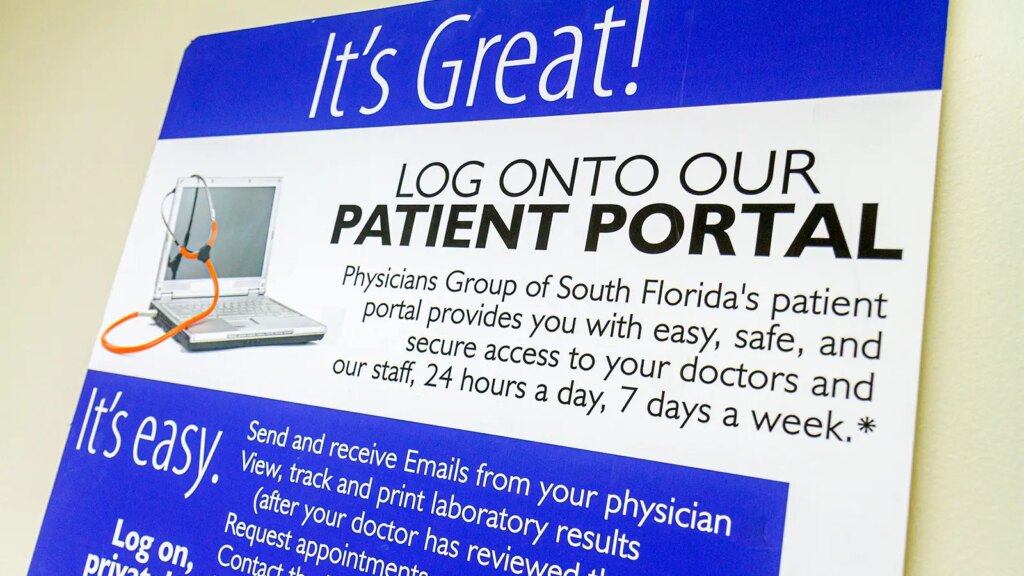
- A national analysis of electronic health record data showed that patient portal messaging has surged in recent years, signaling a significant change in the way physicians deliver care.
- The number of patient-authored portal messages rose from 0.99 per patient per year in 2020 to 2.5 in 2025, a more than 150% increase.
- Health systems should allocate time for inbox management within clinician schedules, editorialists suggested.
Patient portal messaging has surged in recent years, signaling a significant change in the way physicians deliver care, a cross-sectional analysis of electronic health record data showed.
In an analysis of national data from Epic Cosmos, the number of patient-authored portal messages rose from 0.99 per patient per year in 2020 to 2.5 in 2025, reported Michal Mankowski, PhD, of New York University Grossman School of Medicine, and colleagues in JAMA.
“Messages increased more than 150% during the last 6 years, and that has huge implications for healthcare,” Mankowski told MedPage Today.
He said his team took up the project because they were hearing from clinical colleagues that message volume was increasing, a sentiment that aligns with data from single centers or single healthcare systems. Mankowski said theirs is the first to assess changes in portal message volume on a national level.
They analyzed Epic Cosmos data from 2,067 hospitals and 47,100 clinics, totaling 1.77 billion office visits, 1.34 billion patient-authored messages, 3.25 billion clinician- and staff-authored messages, 1.59 billion telephone encounters, and 146 million telehealth encounters.
While patient portal messages rose, telephone encounters fell from 2020 to 2025, but to a much lesser extent, from 2.33 to 2.20 per patient per year, or just a 6% decline. There was a 17% increase in office visits over that time, from 2.37 to 2.77 visits per patient per year.
“Although our study doesn’t establish causality, we think portal messaging is a new modality, and it doesn’t replace the office visit, since we see a huge increase in messages and a slight increase in office visits,” Mankowski said. “Maybe messages are slightly replacing phone calls, but it’s still early to assess that.”
They also noted that telehealth visits spiked during the COVID-19 pandemic, but by 2025, they accounted for only 0.19 visits per patient per year.
Messaging intensity — the number of messages sent by each patient — also increased, rising from 2.2 to 5.4 messages per year among those who sent messages in the first place. Overall, about 42 million of the more than 139 million patients in the study, or some 30%, were message senders.
The messaging boom has resulted in a “substantial increase in total communication volume and clinician workload,” Melanie Molina, MD, MAS, of the University of California San Francisco, and Joseph Ross, MD, MHS, of the Yale School of Medicine in New Haven, Connecticut, noted in an accompanying editorial.
It represents a “structural change in care delivery,” they added. “The operational implications are immediate.”
“Health systems must account for message volume in staffing models, explicitly allocate time for inbox management within clinician schedules, and redesign workflows to integrate asynchronous care alongside visits,” they wrote. “Failure to do so risks further shifting uncompensated, after-hours work onto clinicians, or leaving patient attempts to contact their clinicians to go unanswered.”
Robert Doolan, MD, of the University of Colorado Anschutz, has led research on portal messaging in primary care and has helped implement changes at his own health system.
“These results don’t surprise me,” he told MedPage Today. “They just validate all the smaller studies and it really shows the scale of the issue.”
In Doolan and team’s research, inbox messaging was a key driver of physician burnout. Further work showed that adding blocks of time to clinicians’ schedules to respond to messages improved productivity overall.
Now, primary care physicians at Doolan’s facility will have about one or two blocks in their schedules for message response, depending on how many patients they are scheduled to see each day.
“We found if we right-sized it, we actually saw increased productivity,” Doolan said, “because clinicians were more efficient with the other things they were doing.”
Yanjun Gao, PhD, also of the University of Colorado Anschutz, cautioned that protected time alone may not be enough to cut physicians’ workloads. Another solution may be inbox triage, where multiple team members work together on messages before it gets to the physician. Having artificial intelligence draft responses may also be another helpful tool, Gao said.
“Scheduling time is a reasonable step, but it works best alongside clearer routing of what actually needs a physician, and reimbursement, so the time is funded rather than donated,” Gao told MedPage Today.
Please enable JavaScript to view the comments powered by Disqus.
[ad_2]
Source link : https://www.medpagetoday.com/practicemanagement/practicemanagement/121877
Author :
Publish date : 2026-06-22 21:43:00
Copyright for syndicated content belongs to the linked Source.