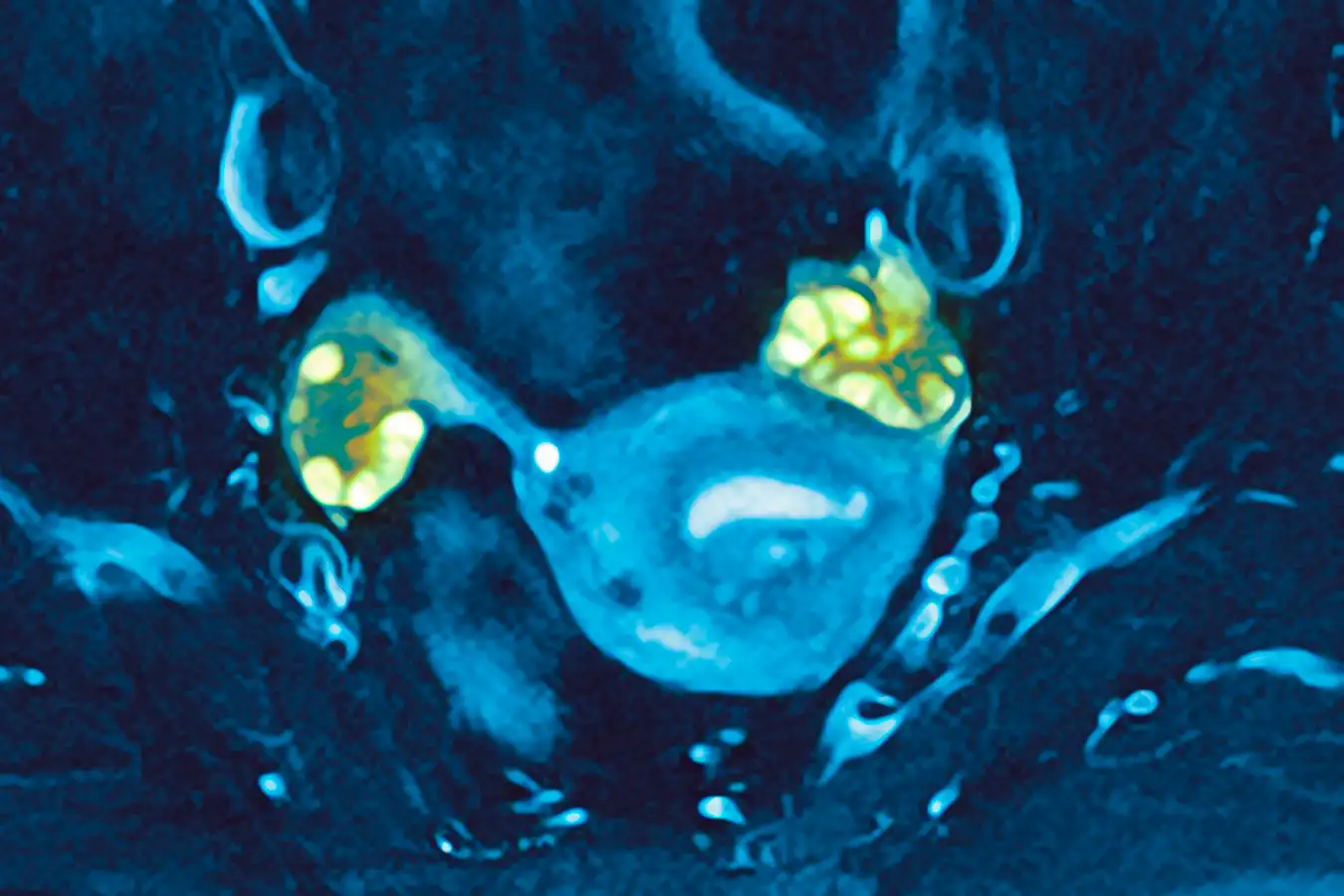
An MRI scan of polycystic ovaries (green)
GUSTOIMAGES/SCIENCE PHOTO LIBRARY
Polycystic ovary syndrome (PCOS) is notorious for disrupting hormones and fertility, but it may have some surprising benefits after the age of 40. Ageing seems to naturally reshape the affected ovaries, making periods more regular, delaying perimenopause and increasing fertility.
“Over the years, we’ve had so many women with PCOS telling us how they thought they would never be able to get pregnant without ART [assisted reproductive technology] and then they were so surprised because it happened in their 40s,” says Terhi Piltonen at Oulu University Hospital in Finland. “We call these children that they never thought they would have ‘evening stars’.”
Piltonen and her colleagues studied how PCOS influences the menopausal transition using data from 1849 women who were born in Finland in 1966 and had had regular health checks ever since as part of the Northern Finland Birth Cohort study.
When the women were 31 years old, 380 of them met the criteria for PCOS, meaning they had at least two of three characteristic features: irregular or no periods, high levels of testosterone and elevated anti-Müllerian hormone, which is a hormone produced by small follicles in the ovary.
By the age of 46, only 3 per cent of these women had reached late perimenopause or menopause, compared with 18 per cent of women without the condition. This delayed menopausal transition is consistent with a smaller study in Sweden that found women with PCOS reached menopause four years later, on average, than those without the condition.
Piltonen believes this delayed transition may occur because women with PCOS are born with a larger reserve of eggs, which prolongs their fertile period.
In young adulthood, these extra eggs are problematic because they crowd the ovary and make it “too tight”, says Piltonen. Often, several eggs try to mature at the same time, but get stuck midway because of the crowding. These underdeveloped eggs look like dark spots on ultrasounds and were previously misidentified as cysts, hence the misleading name “polycystic ovary syndrome”, which will soon be formally changed. Because it is challenging for the eggs to reach full maturity and be released, ovulation occurs infrequently or not at all, periods are irregular and opportunities to become pregnant are fewer.
At the same time, the hormone imbalances associated with PCOS can cause weight gain, metabolic problems, acne and excess body hair.
As egg numbers naturally dwindle with age, however, the ovaries of women with PCOS become less crowded and it is easier for their eggs to mature properly and be released, says Piltonen. “This is why women with PCOS often find that their menstrual cycle becomes more regular as they get older,” she says. It also explains why some who previously had difficulties conceiving suddenly find themselves highly fertile, she says.
Piltonen believes that the delayed menopause caused by PCOS is likely to be beneficial because the drop in oestrogen that occurs at menopause is associated with weaker bones, thinner skin, higher risks of heart disease and other complications. One study found that women who reached menopause after the age of 55 lived two years longer, on average, than those who reached it before the age of 40.
PCOS may even have had evolutionary advantages in our ancestors when food resources were limited and childbirth was riskier, says Piltonen. Being able to store extra energy by carrying more weight, having longer gaps between childbirth to recover and continuing to reproduce at older ages may have given women with PCOS an edge, she says. “PCOS is so common that I think it must have had some benefits.”
Topics:
Source link : https://www.newscientist.com/article/2525632-pcos-postpones-perimenopause-and-allows-pregnancies-at-older-ages/?utm_campaign=RSS%7CNSNS&utm_source=NSNS&utm_medium=RSS&utm_content=home
Author :
Publish date : 2026-05-07 16:00:00
Copyright for syndicated content belongs to the linked Source.