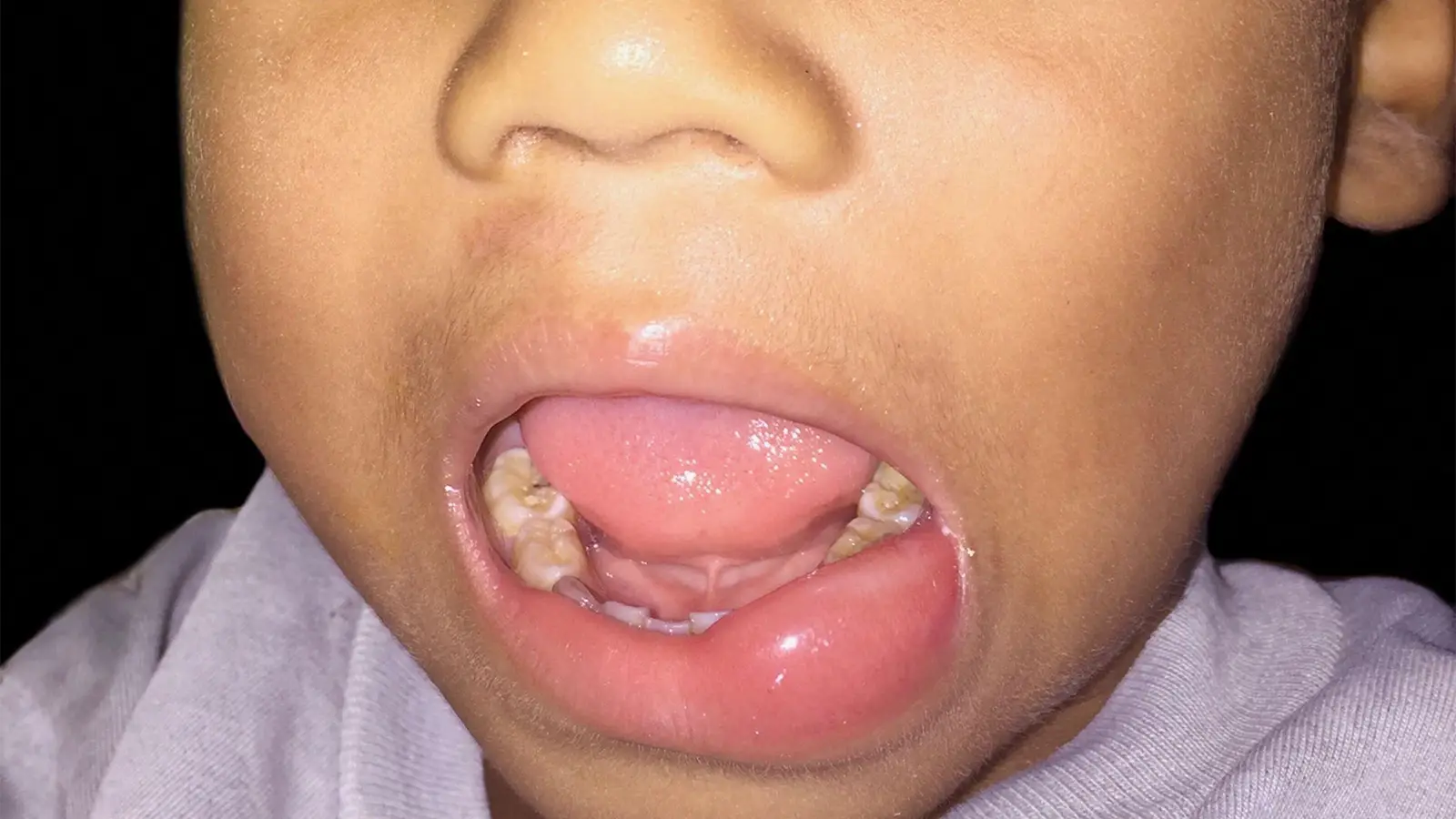
Evidence for the treatment of hereditary angioedema (HAE) in younger children is growing, with expanding treatment options.
A pasteurized formulation of purified C1 inhibitor (Berinert) was approved in 2009 for use in patients ages 12 years and older with acute HAE attacks, while prophylactic treatment with pasteurized, nanofiltered C1 inhibitor concentrate (Cinryze) has been available for adolescents and adults since 2008.
“Together, these developments mark a major turning point in the management of patients with HAE,” wrote William R. Lumry, MD, of the AARA Research Center in Dallas, in a review in the American Journal of Managed Care. “In many cases, new treatments have been life altering, allowing people with the condition to pursue academic, professional, and personal interests for the first time in their lives.”
The indication for those early agents expanded down to children as young as 2 years in acute treatment and as young as 6 years in prevention in 2017 and 2018, respectively, and others have followed.
However, a 2022 Cochrane review on long-term prevention agents lamented the dearth of evidence for children ages 10 years and under. Those researchers found only one study reporting on children specifically, with just 12 participants who were 6 to 11 years old; none of the studies that included both children and adults presented results by age. One post‐hoc analysis of kids ages 12 to 17 years included just nine randomized to lanadelumab (Takhzyro) or placebo — “too low to make definitive statements,” the authors wrote, adding that they “cannot be sure if the drugs are more or less effective in … children versus adults.”
By the time the 2026 treatment guidelines specifically directed at management of pediatric HAE were published in January, though, the situation had improved enough for moderate to strong evidence on a number of treatment recommendations. The guideline authors pointed to “significant advances” since the first international pediatric HAE consensus document was published in 2017.
Acute Treatment
For acute treatment, it noted that the only approved treatment for neonates and infants is IV plasma-derived C1 inhibitor, which is recommended with moderate evidence. Children ages 2 to 12 years can use that same agent, recombinant human C1 inhibitor concentrate, or icatibant, with a high level of evidence for all three agents. Adolescents also have the option of ecallantide (Kalbitor) and sebetralstat (Ekterly) with a high level of evidence.
“Given the favorable safety profiles and demonstrated efficacy, each of these treatments is considered a first-line therapeutic option,” the guideline authors wrote.
Even more recently, interim results from the KONFIDENT-KID trial showed that sebetralstat in an orally disintegrating tablet formulation worked for the on-demand treatment of HAE attacks in children ages 2 to 11 years. In the data presented at the Global Angioedema Leadership Conference in March, the 35 children treated had a mean 0.7 attacks per patient per month, with a median time to treatment of 25 minutes and median times to symptom relief and complete resolution in the largest dose group (150 mg) at 1.5 and 12 hours, respectively. No serious or treatment-related adverse events or difficulty swallowing were reported with the tablets. The drug developer announced it planned to approach the FDA with a new drug application for treatment of patients ages 2 to 11 before the end of 2026.
Novel deucrictibant also had positive results in the RAPIDe-3 trial in patients ages 12 and older for on-demand treatment of HAE attacks. In results presented at the American Academy of Allergy, Asthma & Immunology (AAAAI) annual meeting in March, researchers reported onset of symptom relief at a median 1.28 hours and complete symptom resolution at a median 11.95 hours. The drug developer said it plans to seek FDA approval this year.
Long-Term Prophylaxis
Long-term prophylactic treatment is “rarely needed in children under 6 years of age,” according to the guidelines. When it is needed in that group, the guidelines point to subcutaneously administered, prefilled lanadelumab injection as the only approved treatment option down to 2 years of age.
However, as the guidelines were being prepped for publication in December 2025, the FDA approved another option for that young group: the once-daily oral pellet version of berotralstat (Orladeyo) for children ages 2 to 11. Approval centered on interim data from 29 patients in the APeX-P trial in which the median HAE attack rate dropped from 0.96 per 4-week period with standard of care down to zero with berotralstat. No drug-related grade 3/4 or serious adverse events, deaths, or discontinuations related to adverse events occurred.
The guidelines also state that off-label IV plasma-derived C1 inhibitor concentrate may be considered intermittently for kids ages 2 to 6 years.
Kids ages 6 to 12 also have the option of lanadelumab, while those 12 and older have a wider range of additional prophylactic choices, including garadacimab (Andembry) via autoinjector and berotralstat. All are recommended as first-line therapeutic options in the guidelines.
Another option has come on the scene for patients as young as 12 years, with the FDA greenlighting donidalorsen (Dawnzera) for HAE prophylaxis in August 2025. The guideline authors said that the pivotal OASIS-HAE trial “does not provide sufficient data to make a specific recommendation” for the treatment of children.
At the AAAAI meeting, Lumry’s group presented a subgroup analysis of patients ages 12 to 17 in the study’s long-term extension. In these seven patients, mean HAE attack rates were 95% lower over 52 weeks versus at baseline. Those who had switched to donidalorsen from a prior long-term prophylactic drug upon enrollment had a 55% reduction in monthly HAE attack rates compared with the rate on their prior treatment. No severe or study drug-related, treatment-emergent adverse events occurred in the group.
Source link : https://www.medpagetoday.com/spotlight/hae/121319
Author :
Publish date : 2026-05-18 18:45:00
Copyright for syndicated content belongs to the linked Source.