[ad_1]
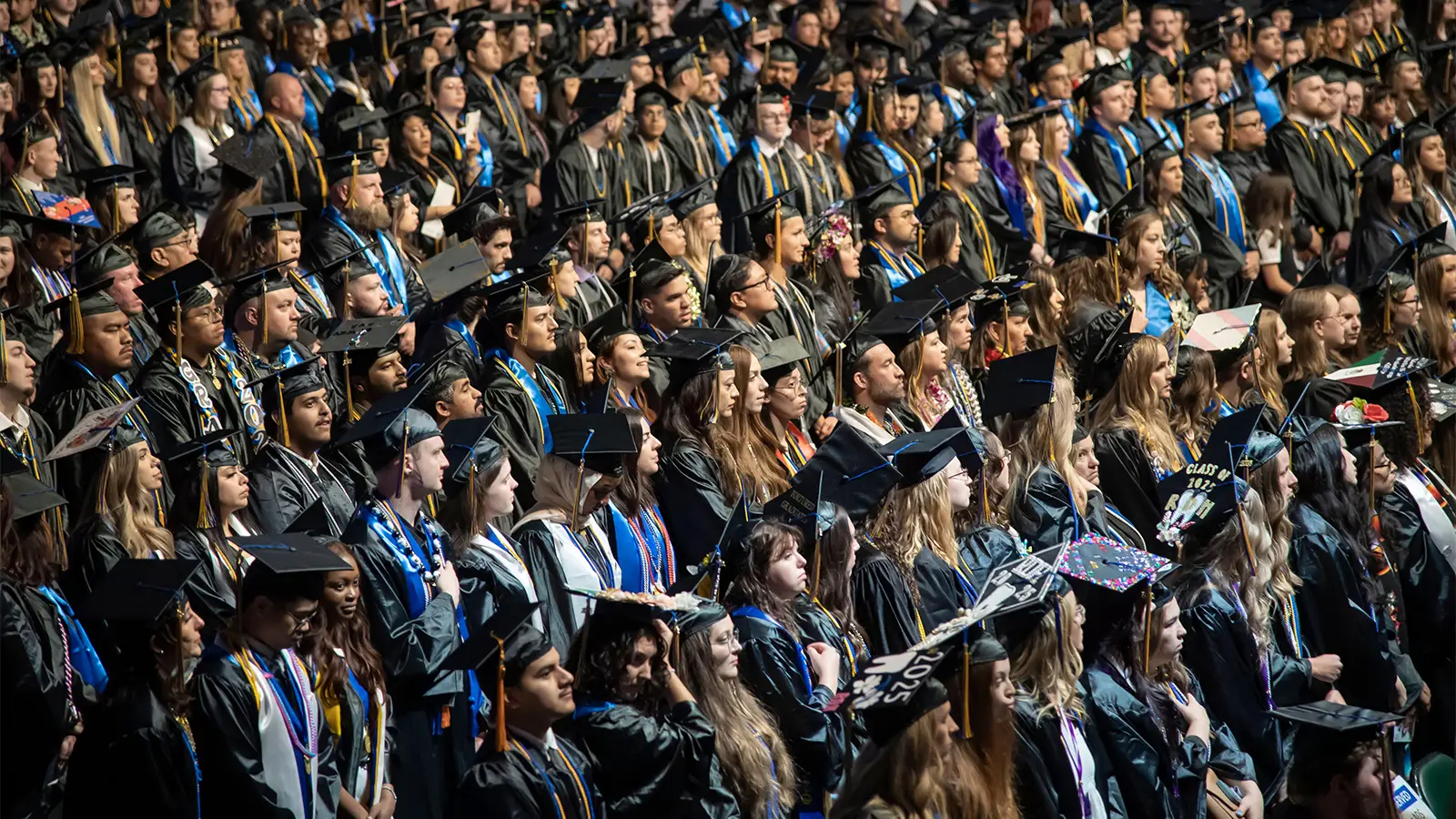
Something happened at graduation ceremonies this spring that should cause every health system CEO, hospital administrator, and digital health investor to rethink their development, implementation, and marketing strategies: college graduates booed. Not a policy. Not a controversial claim. They booed speakers who praised artificial intelligence (AI).
These young people should not be ignored. They are the country’s future investors, business leaders, teachers, data scientists, analytics professionals, nurses, doctors, parents, and, most importantly for our purposes, patients.
Generation Z is anxious about AI. These young people did everything their parents, teachers, and prospective employers asked of them. They went to college (and many went into debt), building skills they thought would be marketable and lead to a meaningful career. While they were whiling away their time in the classroom, the market changed and employers embraced a technology that may limit these graduates’ immediate usefulness.
Their anger could shape AI adoption. Actually, it should.
I have spent considerable time in this column examining AI from inside healthcare — how it integrates into clinical workflows, how it alleviates documentation burden, how it might someday address the healthcare staffing crisis that will erode care. Let me be clear: I believe in AI’s potential, but I also think I have been considering AI from the wrong altitude. While having micro conversations about how AI could solve specific problems, I may have overlooked a macro problem: trust.
The Confluence Nobody Wants to Name
The college graduating class of 2026 was born in the wake of the 9/11 terrorist attacks. This generation has watched the U.S. engage in war after war after war, it has witnessed parents and loved ones lose jobs during the Great Recession, and it has endured a pandemic. And now, this generation is living through an affordability crisis that is partly caused by our insatiable appetite for technology.
Electricity costs are rising — not coincidentally at the precise moment when energy-sucking AI data centers are multiplying across the U.S. landscape. Local and state policymakers are beginning to push back, asking hard questions about water usage, energy consumption, and what exactly they are getting in return for hosting these facilities in their backyards; but even so, the environmental cost of AI will be real, measurable, and increasingly visible to young people.
At the same time, some of the country’s top firms, which are the traditional entry point for bright, ambitious graduates, are shedding jobs. The layoffs are due not only to fears about a recession, but because the entry-level analyst roles, the research associate positions, the junior communications strategist jobs, are disappearing into AI-powered platforms that do in seconds what a team of 20-year-olds used to do in a week.
Add to these factors the very public reckoning with the fact that billionaires are steering this transformation. Tech executives are accumulating wealth at a velocity that feels almost physically offensive to a generation that is drowning in student debt and facing housing prices that have structurally excluded them from the middle-class trajectory their parents navigated.
So, where does healthcare fit into this confluence of events that is driving Gen Z’s rejection of AI? We may have contributed to the trust gap, and public health may ultimately pay the price.
The Promise We May Have Overstated
Startups focused on AI now take up about 60% of investment in digital healthcare.
The promises I have highlighted in this column on behalf of healthcare AI have been extraordinary: reduced clinician burnout, resolution of the nursing staffing crisis, lower administrative costs, faster drug discovery, and more equitable diagnosis.
Those promises are exciting, but I will admit the evidence so far is considerably more modest.
In late May, research from the University of Pennsylvania suggested certain AI applications may actually increase nursing costs. This finding is not isolated, and it is a signal that the relationship between AI investment and AI-generated savings is neither linear nor guaranteed. (In other industries, leading companies are already admitting that AI is expensive, and the results may not justify the costs.)
Healthcare organizations are betting operational strategy on projected efficiencies that have not yet materialized and may not ever come to be, at least not at the scale or speed that financial models are assuming.
They must stop doing so because, as demonstrated, AI already has a trust problem, with only 42% of Americans open to AI being used in their healthcare (a 10-point decline from 2024). People may be comfortable asking Claude or ChatGPT to help them draft an email or explain a medication side effect, but many still have questions about the safety of AI in patient care.
Since the pandemic, Americans have had declining confidence in science and medicine. Coupled with trust gaps in AI in healthcare, we could see a further erosion of trust in traditional medicine. We have been too busy implementing AI and have not spent enough time addressing the trust gap driving others away from “traditional” medicine.
A Call to Action Regarding AI
The healthcare leaders making decisions about AI adoption are operating in an environment that is far more volatile and politically charged than their implementation plans were designed for. Hospital executives, revenue cycle management leaders, practice managers, and clinical leaders are being asked to bet on AI at precisely the moment that AI’s broader social contract is being renegotiated in graduation halls, town council meetings, congressional hearings, and in the electricity bills of families.
Healthcare innovation has always been shaped by forces outside the clinic, and AI is not exempt. Industry leaders need to understand they are not just implementing a technology; they are placing a significant institutional bet on a technology whose public legitimacy is actively being contested.
Success of AI and other digital healthcare technologies will not depend only on the science behind them or their usefulness, but on our ability to prove and communicate that usefulness in a way that convinces an increasingly skeptical public.
The graduates who booed commencement speakers this spring were telling us something. Whether we listen — and what we do with what we hear — is up to us.
[ad_2]
Source link : https://www.medpagetoday.com/opinion/prescriptionsforabrokensystem/121546
Author :
Publish date : 2026-06-02 16:37:00
Copyright for syndicated content belongs to the linked Source.