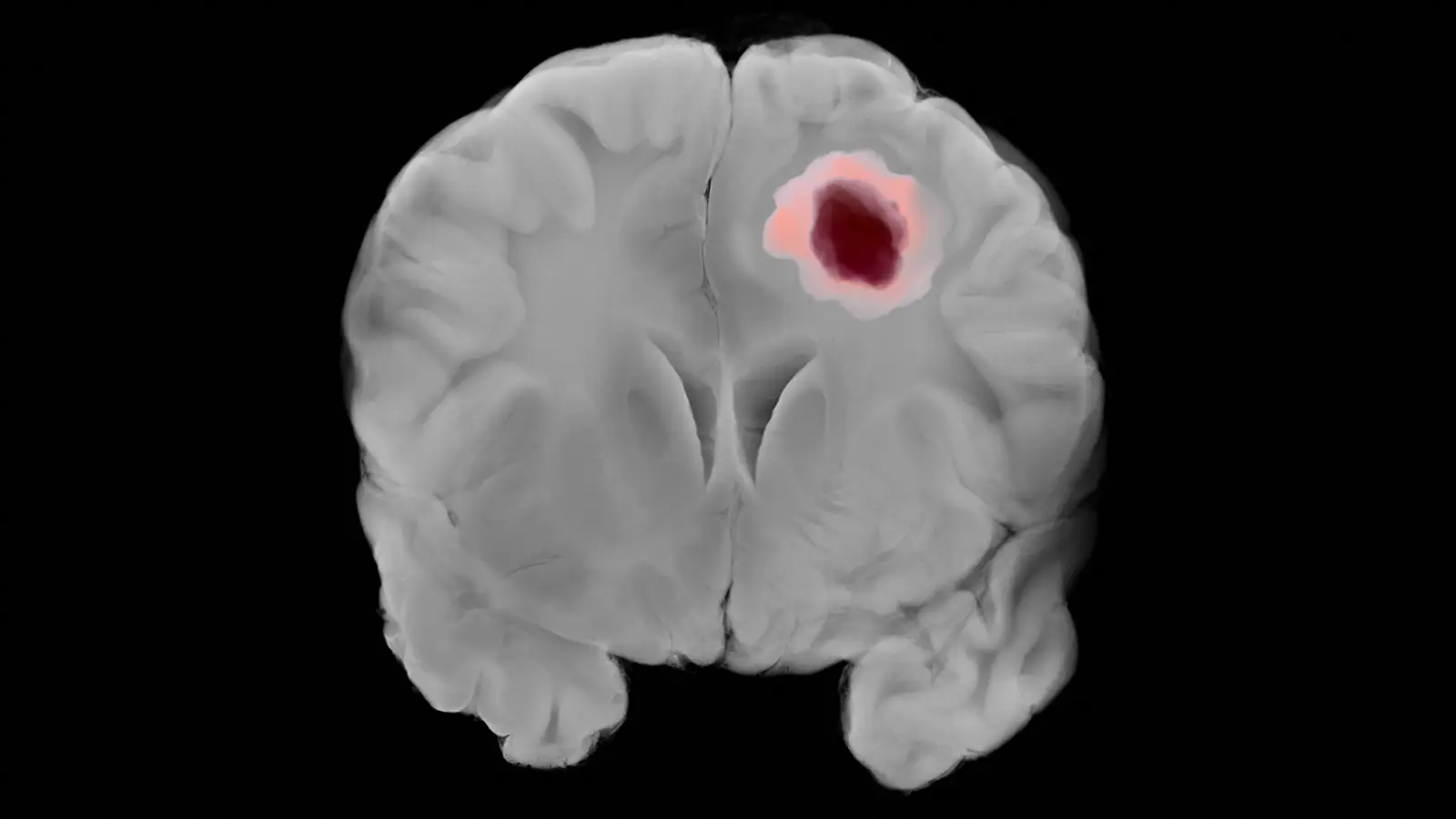
- An adjuvant personalized DNA vaccine caused no serious adverse events and extended overall survival in nine patients in a phase I study compared with historical outcomes.
- Median overall survival was 16.3 months and the survival rate at 24 months was 33%, including one long-term survivor who was still alive 4 years from the time of initial surgery.
- Only about 10% to 15% of patients with this type of brain cancer survive up to 2 years.
An adjuvant personalized DNA vaccine was safe and demonstrated promising efficacy among patients with MGMT-unmethylated glioblastoma in a phase I trial.
The vaccine caused no serious adverse events and extended overall survival in the nine patients included in the study compared with historical outcomes, reported Tanner M. Johanns, MD, PhD, of Washington University School of Medicine in St. Louis, and colleagues in Nature Cancer.
Specifically, median overall survival was 16.3 months and the survival rate at 24 months was 33%, including one long-term survivor who was still alive 4 years from the time of initial surgery.
Median progression-free survival (PFS) was 8.5 months, with a 6-month PFS rate of 66.7%.
“This study demonstrates that personalized neoantigen DNA-based vaccines can provide a potential adjuvant therapeutic option for patients with [glioblastoma], with encouraging outcomes as demonstrated by one-third of patients surviving 24 months or longer,” the authors wrote.
Co-author Albert H. Kim, MD, PhD, also of Washington University School of Medicine, told MedPage Today that only about 10% to 15% of patients with this cancer survive up to 2 years.
“The trial was small, so I don’t want to oversell, but I think [the 2-year survival rate of 33%] suggests a signal,” he said.
“Glioblastoma is a very challenging cancer,” Kim added. “If you take all-comers, the median survival is somewhere around a year and a half. And there’s a subset of these glioblastoma patients — MGMT-unmethylated — who won’t respond to chemotherapy. That MGMT-unmethylated subgroup does even worse. So, this is a bad disease, and it needs an urgent set of solutions.”
Kim pointed out that while immune checkpoint inhibitors have transformed the treatment of many cancer types, they haven’t really worked in glioblastoma.
“There are a variety of reasons for that,” he noted. “Unlike melanoma and other cancers, glioblastoma is probably what people would describe as ‘immune cold.’ So, it’s just more difficult to fire up the immune system against glioblastoma. This vaccine is a way around that.”
The vaccine targets neoantigens — tumor-specific antigens unique to an individual patient’s cancer cells that their immune cells can recognize.
Kim suggested that, as with pancreatic cancer — another historically challenging cancer to treat — transformative therapies are becoming available for glioblastoma.
“It happened with melanoma 10 or 15 years ago,” he pointed out. “When I met a melanoma patient at that time, that person was dead in 6 months — that was the prognosis if you had a brain metastasis for melanoma. Then, a couple of years later, you had Jimmy Carter [whose melanoma had metastasized to his brain when he was 90] living to 100.”
“Transformation, I think, is also just around the corner for glioblastoma patients,” he said.
Johanns and colleagues sampled an individual patient’s tumor at multiple sites and then designed a personalized DNA vaccine containing up to 40 neoantigens with the objective of broadening the immune response.
Among the nine patients, median age was 59 years, 67% were male, and 100% were white.
They received injections of the vaccine, on average, about 10 weeks after undergoing surgery and radiation treatments. The vaccine was then administered every 3 weeks for a 9-week period, and then every 9 weeks thereafter as long as patients were able to participate.
A median of four doses were given to each patient. There were no unexpected toxicities or dose-limiting toxicities reported in the study cohort, and most of the reported adverse events were grade 1 and related to injection-site reactions.
All of the patients except one who were taking an immune-suppressing steroid showed an increase in immune cell activity, indicating a response to the vaccine.
An ongoing phase I trial is also assessing the personalized neoantigen DNA-based vaccine in combination with PD-1 blockade therapy for patients with newly diagnosed MGMT promoter-unmethylated glioblastoma.
Source link : https://www.medpagetoday.com/hematologyoncology/braincancer/121251
Author :
Publish date : 2026-05-13 19:48:00
Copyright for syndicated content belongs to the linked Source.